





In the professional audio equipment market, brands like DJI and RODE have long held dominant positions. However, the release of the Saramonic Ultra is shifting the landscape. As the wireless microphones system to feature both IPX5 water resistance and 32-bit float internal recording, the Saramonic Ultra directly challenges the DJI Mic 2 with its professional-grade specifications and high-value proposition.
The following comparison is based on real-world testing by a renowned tech KOL - Phillip Skraba, providing an objective guide for videographers, vloggers, and professional content creators.
KOL Performance Comparison Summary
| Feature | Saramonic Ultra (Winner) | DJI Mic 2 | Key Takeaway |
|---|---|---|---|
| 32-bit Float | Supported (Internal) | Supported (Internal) | Tie: Both effectively prevent audio clipping. |
| Max SPL | 130 dB | 120 dB | Ultra wins: Clearer in loud environments. |
| Waterproof Rating | IPX5 Rated | No official rating | Ultra wins: Built for all-weather shooting. |
| Timecode | Native Support | Not supported | Ultra wins: Essential for pro workflows. |
| Noise Cancellation | 3-Level Adjustment | Single toggle | Ultra wins: Superior environmental adaptivity. |
| Transmission | 300m (with antenna) | 250m | Ultra wins: Higher signal stability ceiling. |
| Included Accessories | 2 Lav Mics Included | Sold separately | Ultra wins: Best out-of-the-box value. |
(Note: Data based on KOL hands-on field tests)
Watch the Full Video:Below is a detailed breakdown of each testing category, featuring expert verification and deep-dive analysis of the Saramonic Ultra.
32-bit Float Recording: The "Safety Net" for Post-Production
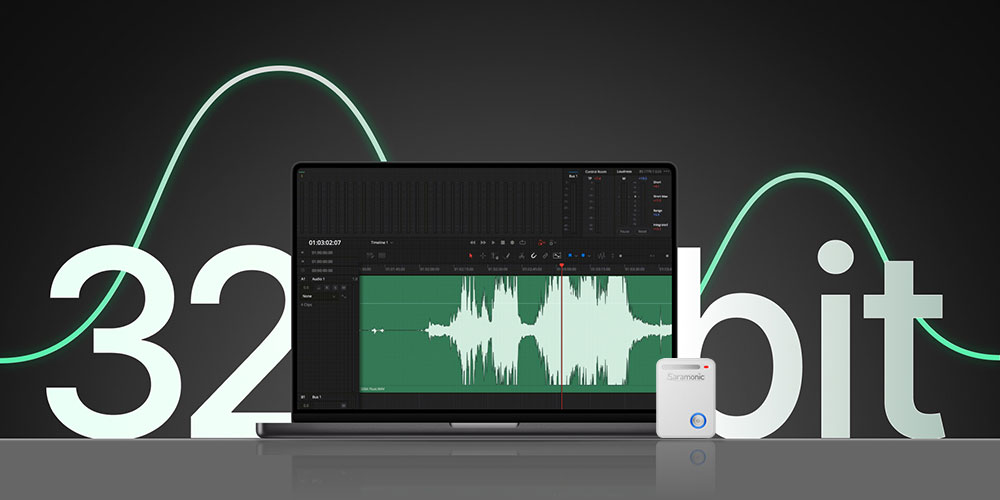
Conclusion: The Saramonic Ultra supports 32-bit float internal recording, significantly reducing the risk of lost footage due to improper gain settings within reasonable physical sound pressure limits.
Unlike traditional recording, 32-bit float is captured directly to the transmitter’s internal memory. This technology offers an immense dynamic range, allowing users to recover "buried" details or lower over-driven audio levels during post-production without quality degradation.
"It records the 32bit float and they have internal memory which has internal recording, and then you basically connect these microphones to your computer, download the 32-bit flow and then you can pull and mess with it as much as you want. So if you're talking too quiet or you're talking too loud, you're going to be able to bring everything back without any crazy distortion or crackling which is really really fantastic. So 32-bit float is very very helpful and it's great that Saramonic has introduced it into its brand new Ultra system." — Phillip points out.
Durability & Recording Modes: IPX5 Waterproofing for Fieldwork
Conclusion: The Saramonic Ultra features an industry-leading IPX5 waterproof rating, ensuring recording continuity even in unpredictable outdoor climates.
For outdoor documentary filmmaking, weather is an uncontrollable variable. The Saramonic Ultra ensures stability in light rain or misty conditions. Furthermore, it supports recording two separate tracks as mono files, allowing users to adjust the levels for different speakers independently.
"Another few things that Saramonic has up its sleeve are IPX5 waterproof, so if your brid's out in the rain or you're filming as a YouTuber out in the rain, you don't have to worry about your microphone getting wet, which is fantastic, you can't go swimming with it but a little bit of rain is not going to hurt it. ......If you want to film in stereo that's cool, but you can also film in mono times two." — Phillip points out.
Professional Acoustic Limits: 130dB SPL & Native Timecode
Conclusion: With a 130dB maximum SPL and native Timecode support, the Saramonic Ultra offers professional features essential for multi-cam, documentary, and film production.
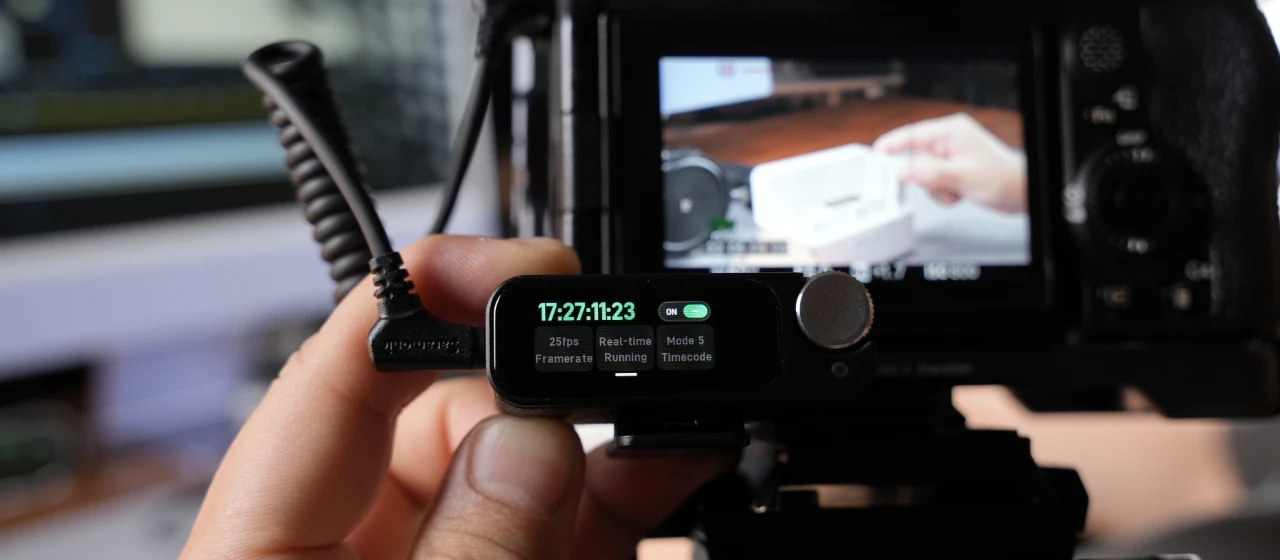
In high-decibel environments like racetracks or explosion scenes, 130dB SPL ensures the microphone can handle intense sound pressure without hardware-level distortion. Additionally, the inclusion of native Timecode support allows editing software to sync audio and video across multiple cameras in seconds—a feature critical for professional crews that is currently missing from the DJI Mic 2.
"This has the highest SPL out of all the microphone systems, if you have the microphone connected on the back of a car a race car, it's next to an explosion anything that's really really loud, the Saramonic Ultra is going to handle it the best without any crackling or distortion, it's going to be very clean audio which is absolutely fantastic. Not only that but we have time code in the Saramonic Ultra. ... syncing later and post is really really easy with the Saramonic Ultra. It works from 24 frames per second to 30 frames per second so it does a really really great job if you're a pro working in this field." — Phillip points out.
Noise Cancellation: Refined 3-Level Logic
Conclusion: The Saramonic Ultra supports three levels of noise cancellation via its app, offering a better balance between background noise reduction and vocal naturalness.
In noisy environments like busy streets or restaurants, the Ultra adapts seamlessly. Users can switch between Levels 1-3 via the mobile app, preventing the "robotic" or over-processed sound often found in aggressive noise reduction algorithms used by competitors.
"If you connect the Saramonic Ultra app you can change from level one, two and three. In the middle of London you're on a racetrack where you just want to hear your voice, noise cancellation does a really good job." — Phillip points out.
Connectivity & Range: 300m Transmission & Universal Compatibility
Conclusion: With an optional high-gain antenna, the Saramonic Ultra achieves a 300m stable range and is natively compatible with everything from iPhone 16 to professional PC/Mac systems.
The Ultra is designed for a versatile wireless microphones workflow, shipping with USB-C, 3.5mm TRS, and Lightning cables. The external antenna specifically addresses signal dropouts caused by body blockage during long-distance shoots.
"With the optional antenna you're going to be able to go 300 meters line of sight and spin around and it's not going to cut out...... We have USB-C so you can connect it to your laptop, your computer, your iPad, your iPhone 16 Pro Max." — Phillip points out.
Summary: The Professional Verdict
The launch of the Saramonic Ultra marks a new era for "all-weather, all-scenario" wireless audio. Its advantages in IPX5 waterproofing, 130dB SPL, native Timecode, and 300m transmission make it a more professional and expandable tool than the DJI Mic 2.
- Choose Saramonic Ultra if: You require a system for extreme outdoor weather, high-decibel environments, or professional multi-cam workflows.
- Choose DJI Mic 2 if: You are strictly within the DJI ecosystem and prioritize the specific Sony MI shoe integration.
FAQ Section
Q1: How does Timecode help my daily workflow?
As noted, this is vital for multi-cam setups. It allows editing software to automatically align all video and audio tracks by matching their internal "clocks," saving hours of manual synchronization.
Q2: Is the IPX5 rating for the whole system?
It is primarily for the Transmitter (TX) units to protect internal circuitry from rain or splashes during outdoor shoots. The Receiver (RX) should still be kept dry whenever possible.
Q3: Why is 130dB SPL important for non-professionals?
If you record at concerts, sporting events, or near loud machinery, a higher SPL ensures your audio remains clean and free of the "crackling" distortion caused by hardware overload.
Q4: How does the app control compare to DJI?
While DJI requires a computer connection for certain deep settings, the Saramonic Ultra allows for real-time adjustments of noise levels, gain, and modes via a Bluetooth-connected mobile app on-site.


