

Quick Summary
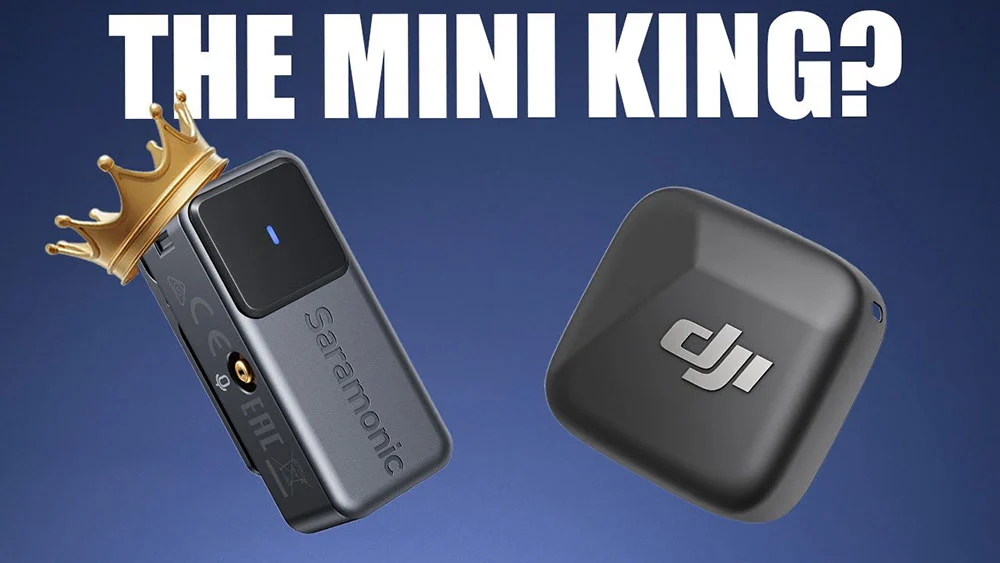
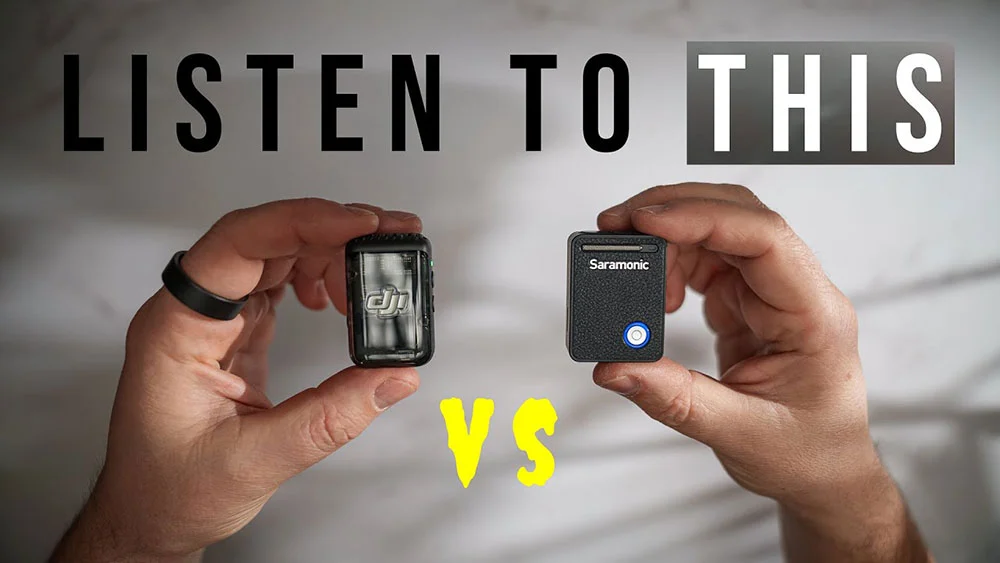
Saramonic Air vs Rode Wireless Go compares two popular wireless microphones designed for modern content creators. Based on hands-on KOL testing, Saramonic Air offers a more advanced recording workflow with a color display, magnetic mounting, a larger 9.7 mm microphone capsule, built-in noise reduction, and a -6 dB safety track. Rode Wireless Go focuses on a minimalist design and compact size but lacks on-device monitoring and audio safety features. For creators prioritizing reliability, vocal presence, and long shooting sessions, Saramonic Air is the more future-ready wireless microphone choice in 2025.
TL;DR – The Short Answer
- Best for minimalist setups: Rode Wireless Go
- Best for modern creators: Saramonic Air
Why Saramonic Air stands out: A color screen for real-time monitoring, fuller vocal sound from a 9.7 mm capsule, dual-level noise reduction, a -6 dB safety track, long battery life, and broad device compatibility make it better suited for today’s YouTube, vlogging, and mobile production workflows.
Introduction: Why Wireless Microphones Matter More Than Ever
As video content creation enters an era where audio quality directly defines professionalism, creators are paying closer attention to the reliability, monitoring, and intelligent features of their recording gear.
For budget-conscious creators who still demand professional-level performance, Saramonic Air and Rode Wireless Go are two wireless microphones that are frequently compared head-to-head. This in-depth review combines core specifications with real-world Techfluencer testing feedback to determine which system better fits modern content creation workflows.
“Rode feels minimal. The Saramonic feels modern.” — Techfluencer
Design & User Experience: A Color Display and Magnetic Mounting Make a Real Difference
Conclusion first: Saramonic Air delivers a generational leap in user interaction.
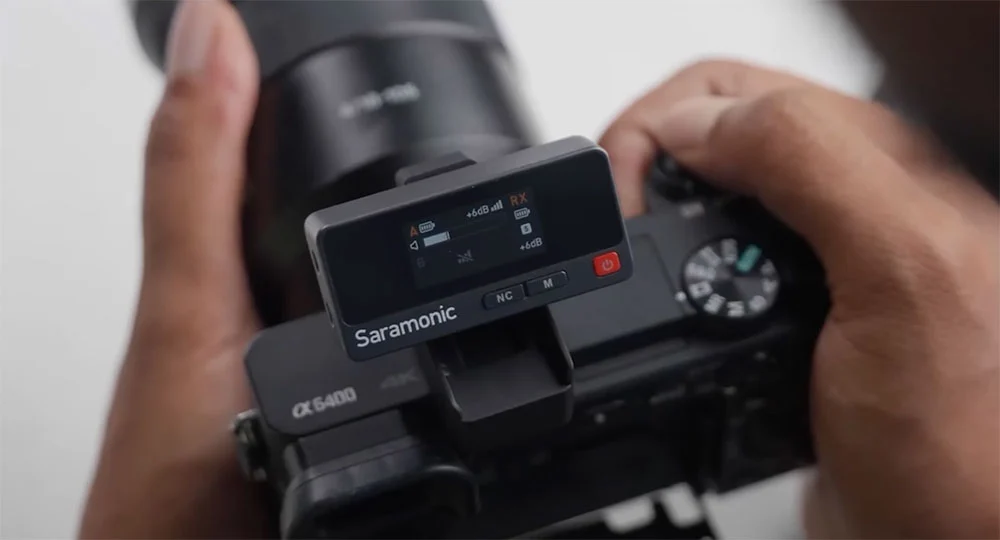
While the Rode Wireless Go follows an ultra-minimalist design philosophy, the Saramonic Air features a 1.05-inch color display, allowing creators to monitor critical information—audio levels, battery status, and connection state—at a glance. This significantly reduces the risk of recording errors in fast-paced shooting environments.
Rode’s compact “matchbox-style” transmitter weighs just 31g, which keeps it portable and discreet. However, the lack of visual feedback can become a limitation. As the reviewer noted:
“You look down and there’s no proper screen, no detailed feedback. You can’t quickly check levels without looking at the camera. That’s where the Saramonic Air steps in.”
Additionally, the magnetic mounting accessory included with Saramonic Air was highly praised, especially for solving the common issue of clips slipping on thin clothing—an area where Rode’s traditional clip can struggle.
| Feature | Rode Wireless Go | Saramonic Air |
|---|---|---|
| Display | Basic LED indicators | 1.05" color TFT screen |
| Wearing options | Clip-on | Clip + magnetic mount |
| Transmitter weight | 31g | Lightweight design |
| Blind operation | Limited | Excellent (full visual monitoring) |
Sound Quality & Core Audio Performance: A Larger Capsule Delivers Fuller, More Natural Vocals
Conclusion first: Thanks to its 9.7 mm microphone capsule and enhanced dynamic performance, Saramonic Air produces vocals that sound fuller, cleaner, and more immersive.
Rode Wireless Go delivers clear speech but can sound relatively thin. In contrast, Saramonic Air emphasizes vocal body and clarity, reducing the need for heavy post-processing. The reviewer highlighted this difference:
“That 9.7 mm capsule is way bigger, and you hear it instantly. Voices feel fuller, clearer in the mids—just more alive. It gives this real sense of presence that actually helps keep people engaged. ”
| Parameter | Rode Wireless Go | Saramonic Air |
|---|---|---|
| Microphone capsule | Standard compact capsule | 9.7 mm large-diaphragm capsule |
| Noise floor | More noticeable in practice | Very low noise performance |
| Bit depth | 24-bit | 24-bit |
| Safety track | Not supported | Supported (-6 dB safety track) |
| Built-in EQ | No | Vocal boost / treble lift / bass enhancement |
Noise Control & Recording Reliability: Noise Reduction and Safety Track Provide Real Peace of Mind
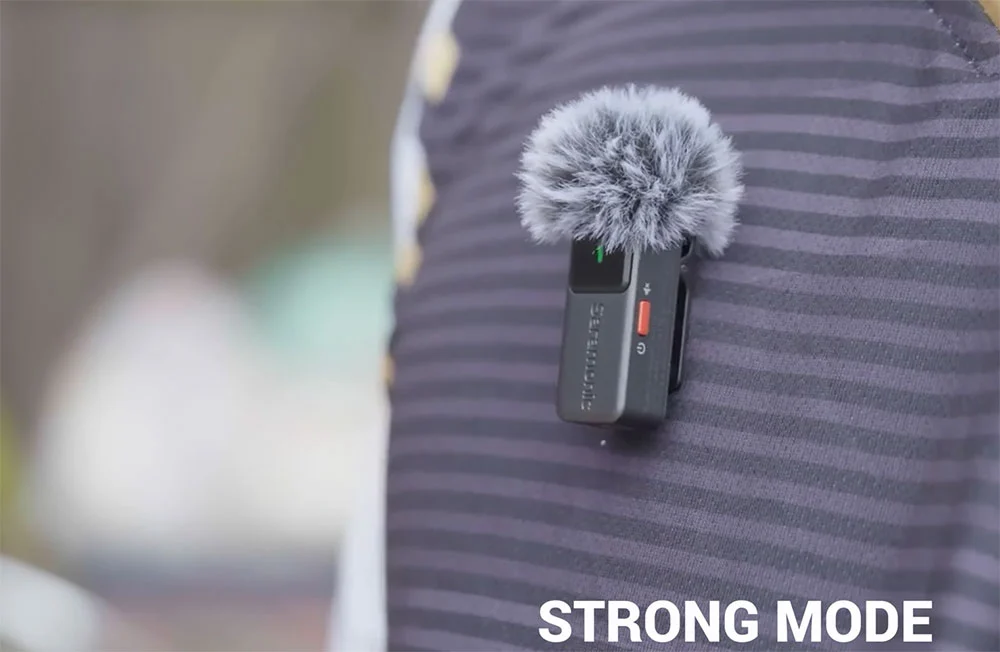
Conclusion first: In outdoor and high-noise environments, recording reliability matters more than raw specs. Saramonic Air integrates two levels of noise reduction along with a -6 dB safety track, offering an additional layer of protection against unpredictable sound spikes.
After testing on a busy street, the reviewer commented:
“The Road has no onboard noise control. That means you're stuck relying on mic placement, wind protection, and cleaning it up in post. And yeah, it works, but honestly, you never really feel safe. But Saramonic Air changes that instantly. You’ve got two noise control levels, and both sound totally natural. Light mode cuts out that constant hum without killing the room tone. Strong mode handles busy streets. Outdoor chatter, no stress. And worth mentioning, the minus 6 del safety track. We cannot tell you how many times that gave us peace of mind. sudden loud sounds.”
For sudden loud sounds—such as laughter or shouting—the built-in limiter helps control peaks smoothly, preventing clipping and preserving usable audio.
Compatibility, Connectivity & Battery Life: Designed for Long Shoots and Multi-Platform Workflows
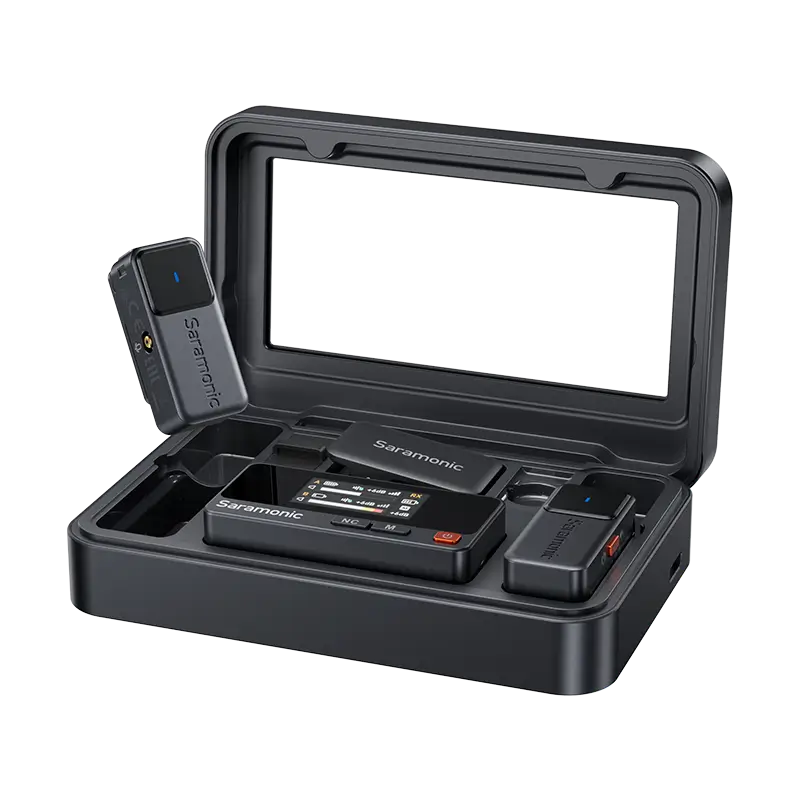
Conclusion first: Saramonic Air stands out with broad device compatibility and an impressive up to 48 hours of total battery life (with charging case support), making it well-suited for long-form recording, mobile livestreaming, and travel-based production.
It supports USB-C, Lightning, and 3.5 mm TRS outputs, enabling seamless use across smartphones, cameras, and computers. One feature the reviewer emphasized as a major advantage:
“The receiver can pass power to your phone while it records. That’s huge for long outdoor shoots where battery life suddenly becomes a real worry. And you can output to two devices at once. One feed to a camera, another to a live stream box. But road can't touch that.”
In terms of wireless range, Saramonic Air’s claimed 300 m transmission distance proved noticeably more stable in open environments compared to Rode’s 70 m rated range.
Monitoring & Control: Real-Time Feedback vs. Recording by "Luck"
Conclusion first: The Saramonic Air provides professional-grade monitoring tools that are entirely absent on the Rode Wireless Go, giving creators full control over their audio signal before it reaches the camera.
One of the most significant frustrations with the Rode Wireless Go is the lack of a headphone jack and limited gain control (only three presets). Creators often have to rely on the camera's small screen or simply "trust their luck" that the audio isn't clipping. The Techfluencer team highlighted this as a major pain point:
“The Rode gives you three gain presets and no headphone monitoring. You trust the camera screen or you trust your luck. Then the Saramonic, and it gives full visual feedback on the receiver and you get a headphone jack for direct monitoring. So you know your levels, you know your noise setting, you know your battery, whether you need to adjust anything before the take and that removes anxiety from the entire workflow.”
| Feature | Rode Wireless Go | Saramonic Air |
|---|---|---|
| Headphone Jack | No (Must monitor via camera) | Yes (Direct monitoring) |
| Gain Control | 3 Fixed Presets | Granular / Adjustable |
| Visual Feedback | Minimalist (LED only) | Full System Status (TFT Screen) |
| Workflow Feeling | High Anxiety | High Confidence |
Final Verdict: Which Wireless Microphone Should You Choose?
Choose Rode Wireless Go if: You prefer an ultra-minimalist design, already rely on a streamlined post-production workflow, and need a familiar backup wireless microphone.
Choose Saramonic Air if: You are a modern content creator who values on-device monitoring, noise control, safety tracks, long battery life, and workflow efficiency.
As the reviewer summarized:
“The Road still works. It's simple, proven, tiny, familiar. If you just want a basic wireless kit with zero extra options, it still fits that space. But the Sammonic Air feels built for today. Better control, better dynamics, better monitoring, and along with wider compatibility, longer range.”
To learn more about the latest news from Saramonic, join in our official social media: Facebook, Youtube, Instagram, X, Facebook Group.
Frequently Asked Questions
Does the noise reduction on Saramonic Air affect vocal realism?
A: In light mode, noise reduction suppresses ambient noise while preserving natural room tone, resulting in clean yet realistic vocals.
Can Saramonic Air charge a phone while recording?
A: Yes. The receiver supports power pass-through, making it ideal for long mobile shoots and livestreaming.
What are the main advantages of Rode Wireless Go?
A: Its strengths lie in compact size and brand ecosystem familiarity. However, in terms of features and audio safety, Saramonic Air provides more modern utility.