


The Professional 32-bit Float Wireless Lav Battle
As wireless microphone systems fully embrace the 32-bit Float audio era, the logic behind gear selection is shifting. Early decisions focused simply on "Does it support 32-bit?" or "Can it prevent clipping?" Today, the real differentiator is how seamlessly the system integrates into your filming and post-production workflow.
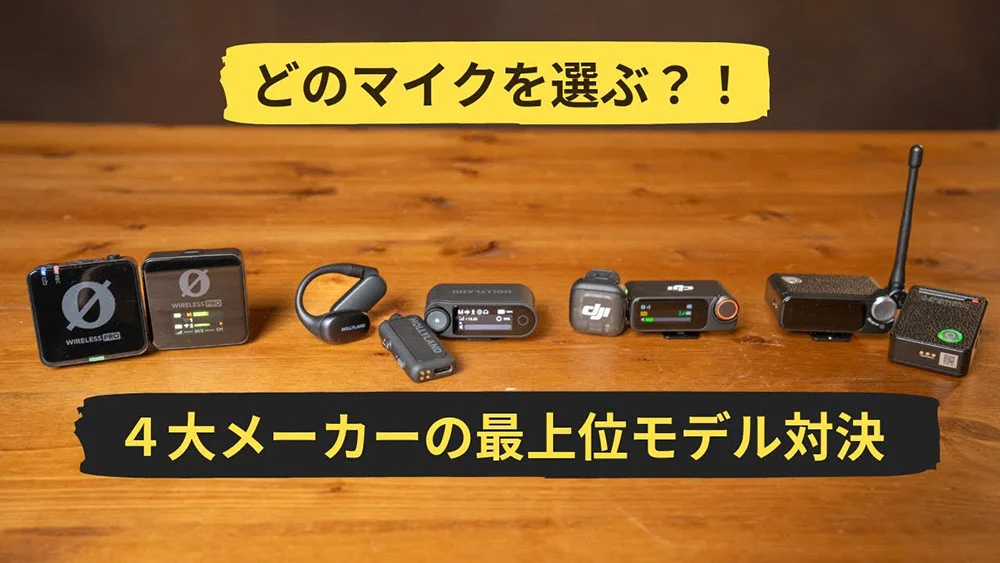
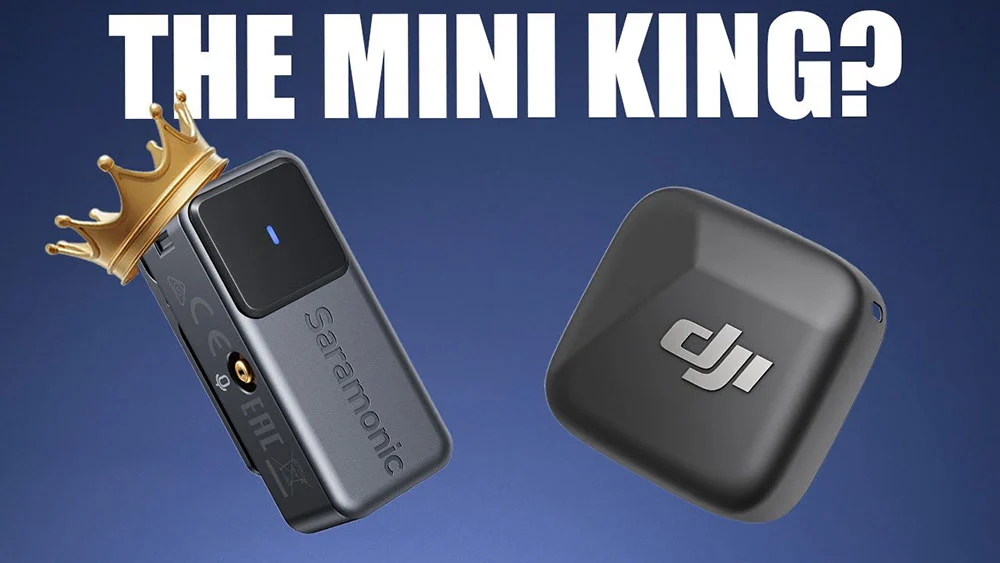
Based on comprehensive real-world testing by professional creators, this comparison pits the industry-standard RØDE Wireless PRO against the next-gen Saramonic Ultra. As the market for professional wireless microphones continues to evolve, we analyze specs, system logic, and usability to help you choose between ecosystem stability and creative flexibility.
Core Hardware & Acoustic Specs: The Intent Behind the Numbers
The Bottom Line:
- RØDE Wireless PRO wins on internal storage capacity and ecosystem redundancy.
- Saramonic Ultra excels in acoustic headroom and environmental resilience, designed for complex and extreme shooting scenarios.
Both systems represent distinct design philosophies. RØDE equipped the Wireless PRO with 32GB of internal storage per transmitter, supporting roughly 40 hours of 32-bit float recording. This emphasizes "extreme redundancy"—your audio is safe even if you forget to export your primary files.
Saramonic Ultra takes a different path: prioritizing environmental adaptability with an IPX5 rating, a higher Max SPL (Sound Pressure Level), and extended range via external antennas. It is built for high-dynamic-range environments.
Key Specifications Comparison
| Feature | RØDE Wireless PRO | Saramonic Ultra |
|---|---|---|
| Internal Storage | 32GB (≈40 hrs 32-bit) | 8GB (≈10 hrs 32-bit) |
| Signal-to-Noise Ratio (SNR) | 72 dB | 90 dB |
| Max SPL | 123.5 dB | 130 dB |
| Weather Resistance | None | IPX5 Waterproof |
| Transmission Range | 260m (Internal Antenna) | 300m (External Antenna) |
| Timecode Support | Yes | Yes |
“That’s about the volume of a jet engine, so I doubt you’ll find anything too loud for this system.” — KOL Review Reference

Ecosystem Integration vs. Cross-Platform Utility
The Bottom Line: Wireless PRO acts as a "system node" within the RØDE ecosystem, while Saramonic Ultra is a versatile "cross-platform tool" for diverse devices.
1. The RØDE Ecosystem Advantage
- Connects directly to RØDE Connect via the charging case.
- Native Timecode and Safety Channel support.
- Wireless pairing with RØDECaster Pro II / Duo consoles.
2. The Saramonic Native Compatibility Approach
The Saramonic Ultra also supports Timecode for professional sync but focuses on solving common "on-the-go" pain points:
- Mobile Playback without Unplugging: Listen to audio through phone speakers while the receiver is still plugged in.
- Native Sony MI Shoe Integration: Supports direct digital audio via the Sony Multi-Interface Shoe, eliminating cables.
Usability Deep Dive
1. Screen Placement & Interface
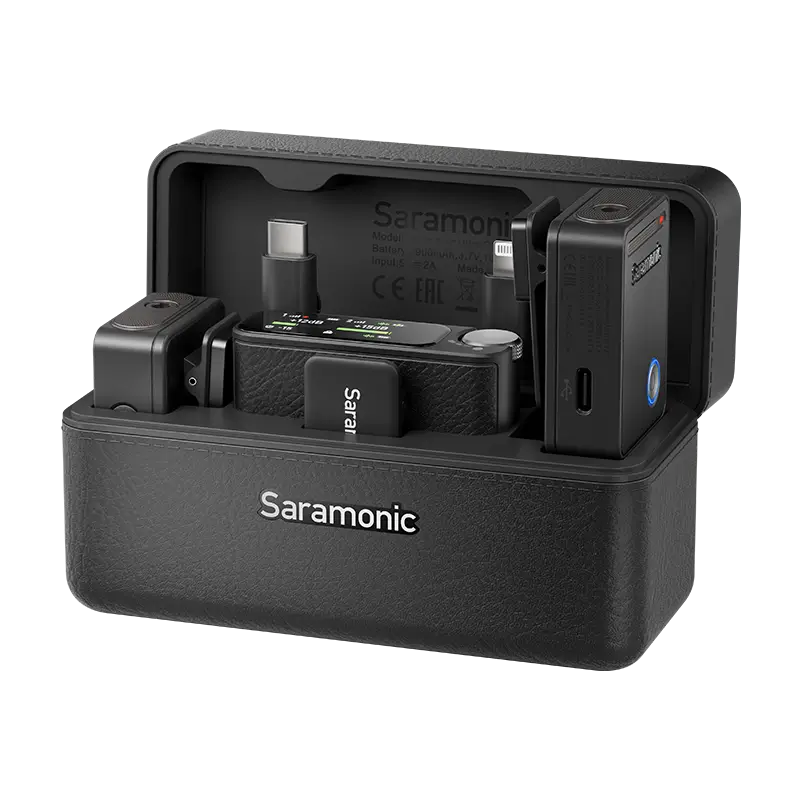
The Saramonic Ultra features a larger, side-mounted screen with a clickable thumbwheel for tactile control. This is more ergonomic for photographers checking levels at eye level. Furthermore, when using the Sony MI adapter, the Saramonic Ultra’s hinge allows you to adjust the angle on the camera even more, making it more versatile for different shooting heights.
2. Charging & Long-term Durability
- Saramonic Ultra: Uses Contact Pins. Less physical wear and tear.
- RØDE Wireless PRO: Uses USB-C plugs. Increases risk of mechanical failure over time with frequent use.
Audio Performance Comparison: Noise Floor & Post-Processing
Both systems provide professional-grade audio with a measured noise floor of -56 dB at a -3 dB peak level. If you want to learn more about how microphone noise floor affects your final mix, it's important to note their differing profiles:
- Wireless PRO: Noise is concentrated in the low-end (below 500 Hz).
- Saramonic Ultra: Noise is distributed more evenly, often resulting in a "cleaner" raw sound.
The Verdict: Which One Fits Your Workflow?
RØDE Wireless PRO is an ecosystem-centric tool, while Saramonic Ultra is a cross-platform system built for real-world, unpredictable environments.
Choose RØDE Wireless PRO if you:
- Are deeply integrated into the RØDE ecosystem.
- Require massive internal storage for multi-day shoots.
- Primarily work in fixed-studio environments.
Choose Saramonic Ultra if you:
- Are a mobile creator or Vlogger frequently on the move.
- Use Sony cameras and want a cable-free MI Shoe setup with flexible viewing angles.
- Record in extreme or outdoor environments (IPX5 rating needed).
FAQ
Is 8GB of internal memory enough for the Saramonic Ultra?
A: Yes, for most. It holds about 10 hours of 32-bit float audio. For multi-day trips without offloading, RØDE’s 32GB is safer.
Pins vs. USB-C charging—which is better?
A: USB-C allows data transfer while charging; Contact Pins offer lower physical wear and "grab-and-go" convenience. (Internal files on the Ultra are still accessed via a side USB port).
Do external antennas really help in cities?
A: Absolutely. In 2.4 GHz congested areas, external antennas provide much-needed stability against interference.