

If you’ve ever recorded a video with your phone or camera, you already know the problem: the image might look great, but the audio sounds distant, noisy, or flat.
That’s why wireless microphones have become essential for content creators, vloggers, and filmmakers. But here’s the issue—most people still choose the wrong one.
Not because they lack budget.
Not because they don’t understand specs.
But because they focus on the wrong things.
Many buyers compare bit depth, transmission range, or price… yet ignore the most important factor:
A wireless microphone should be chosen based on your recording scenario — not just its specifications.
In reality, every wireless mic is designed with a different level of risk tolerance in mind. The question is simple: How much failure can you afford in your audio?

Step 1 – Identify Your Recording Scenario (Not Your Budget)
Before looking at any product, you need to define how you actually use your microphone.
Beginner / Mobile Creator
If you mainly shoot with a smartphone or action camera, your priority is simple:
- Lightweight and portable
- Plug-and-play
- Minimal or no post-processing
Typical use cases include TikTok, daily vlogs, and street interviews.
Content Creator / Small Studio
If you create content regularly, your expectations change:
- More consistent audio quality
- Flexibility across different setups
- Some level of control (gain, monitoring, etc.)
This includes YouTube creators, interview setups, and live streaming.
Professional Video Production
At this level, audio is no longer optional—it’s critical:
- Stable signal in complex environments
- Multi-camera synchronization
- Efficient post-production workflow
Common scenarios include documentaries, branded content, and commercial shoots.
Film / Broadcast Level
For high-end production, the priorities are completely different:
- Zero signal dropouts
- Maximum reliability
- Seamless integration into professional workflows
This applies to film crews, broadcast teams, and large-scale productions.
Step 2 – Understand What Actually Matters
Instead of overwhelming yourself with specs, focus on what they mean in real-world use.
2.4GHz vs UHF — Convenience vs Reliability
Most wireless microphones use 2.4GHz, which is:
- Easy to set up
- Widely compatible
- Great for everyday use
However, it can be affected by Wi-Fi and crowded environments.
UHF systems, on the other hand:
- Offer stronger signal stability
- Perform better in complex or long-distance scenarios
If your recording cannot afford signal dropouts, UHF is still the safer choice.
32-bit Float Recording
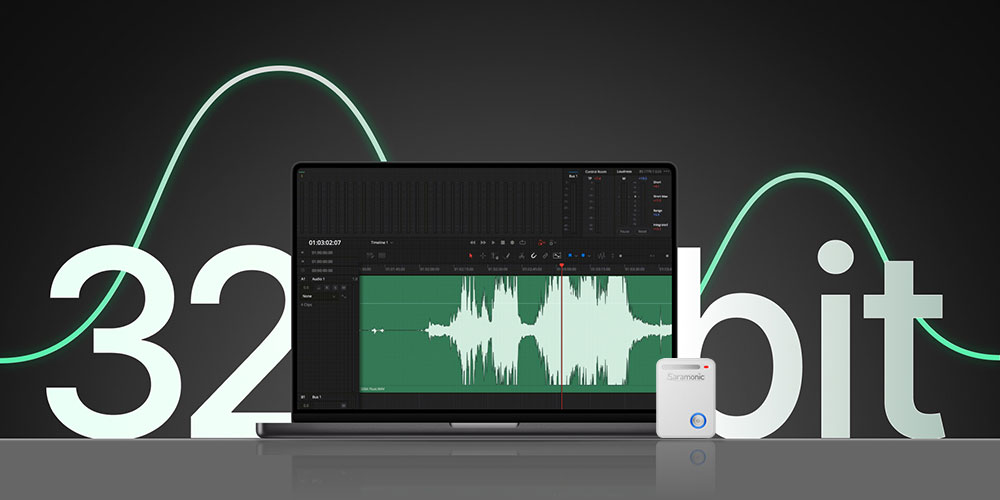
One of the biggest innovations in modern wireless mics is 32-bit float recording.
In simple terms:
- You don’t have to worry about audio clipping
- You don’t have to perfectly set gain
- You can recover audio in post-production
This feature is especially valuable for unpredictable environments.
Timecode
If you’re recording with multiple cameras, syncing audio manually can be time-consuming.
Timecode allows:
- Frame-accurate synchronization
- Faster editing workflow
- Less risk of misaligned audio
For solo creators, it may be unnecessary. For teams, it can save hours in post.
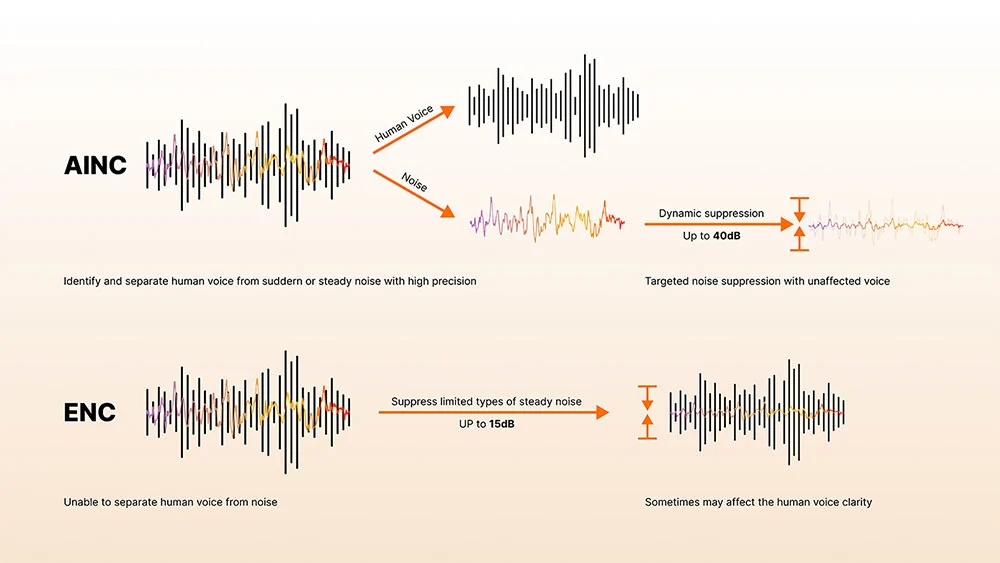
AI Noise Cancellation
AI-based noise reduction has improved significantly:
- It can reduce background noise like traffic or wind
- It helps clean up audio in uncontrolled environments
Modern AI noise cancellation can dramatically improve audio clarity—even in challenging environments like streets or crowded spaces.
In many everyday scenarios, it can deliver clean, usable sound without additional setup. To learn more about What Is AI Noise Cancellation.
Step 3 – Choose the Right Wireless Mic for Your Needs
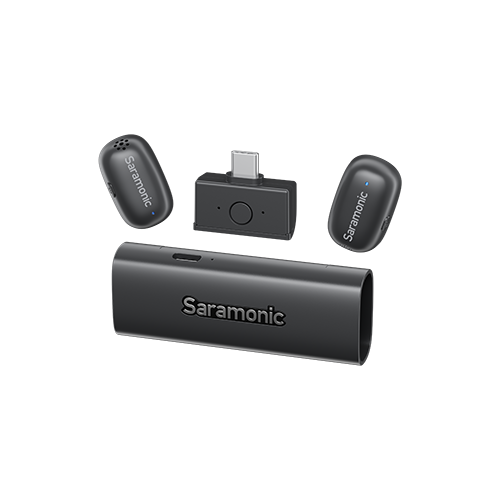
Just Want Better Audio Than Your Phone? Go Ultra-Light
Go for: Saramonic Air SE
If your goal is simple—make your audio sound clean without changing how you shoot—this is the easiest place to start.
The biggest strength of the Air SE isn’t just its size. It’s how effortlessly it fits into your workflow.
Why it works so well:
- At just 5g, it’s almost invisible on camera and comfortable for all-day use
- The built-in AI noise cancellation can automatically reduce common background noise like traffic, wind, or crowded environments
- A safety track helps prevent unexpected volume spikes from ruining your recording
- The modular design even allows it to double as a handheld mic for quick interviews
What this means for you:
You don’t need to adjust settings, monitor levels, or fix audio later. You just clip it on—and it works.
If you want a lightweight, no-hassle upgrade from your phone’s built-in mic, this is the most efficient choice.
Want More Control Without Complexity?
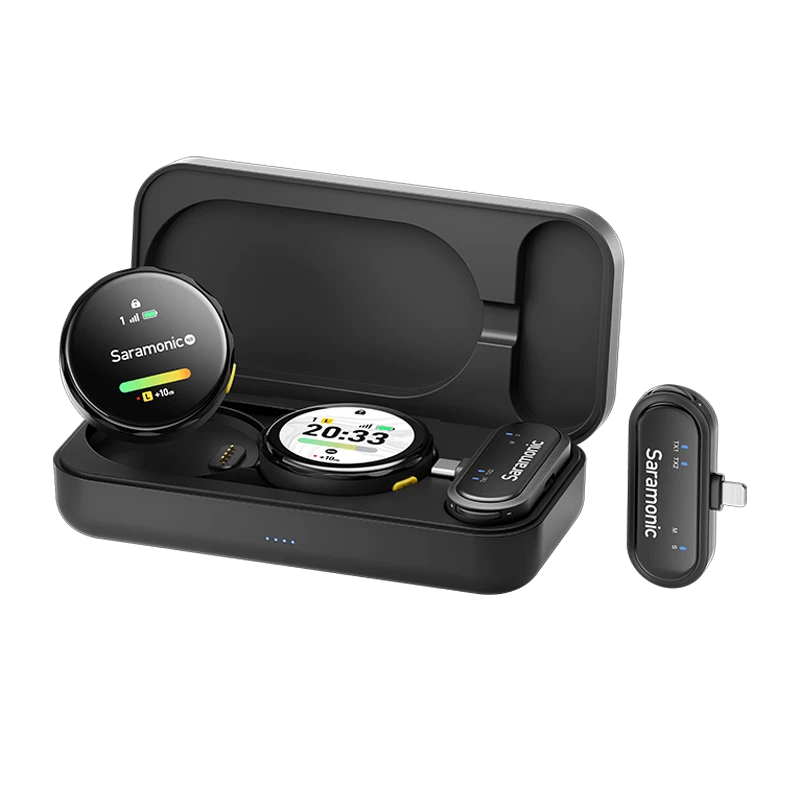
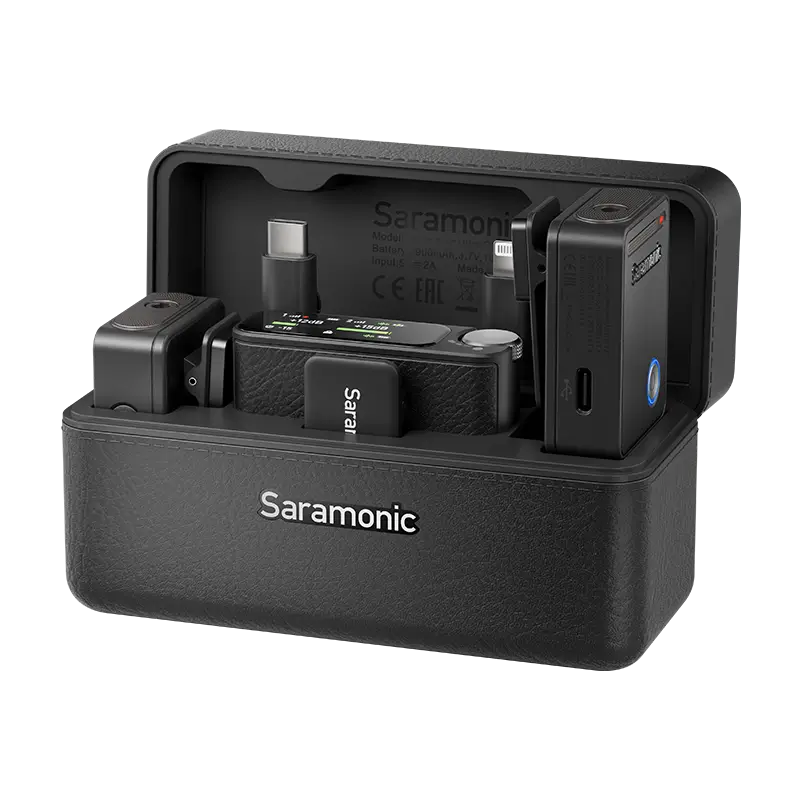
Go for: Saramonic BlinkMe
If you’re ready for more control—but don’t want to deal with complicated audio gear—this is your next step.
What makes it different:
- A full-color touchscreen system lets you adjust settings visually, just like using a smartphone
- Built-in onboard recording (8GB) allows you to review or recover audio anytime
- Fine gain control + safety track gives you more precision without overwhelming complexity
- The receiver doubles as a charging case, making it easy to carry and use on the go
What this means for you:
You can actually see and control your audio in real time—without needing professional audio knowledge.
👉 Compared to Saramonic Air SE:
- More control and flexibility
- Less “fully automatic,” but far more powerful
If you want to move beyond plug-and-play and start shaping your sound, this is the most intuitive upgrade.
Care About Sound Quality but Still Want Portability?
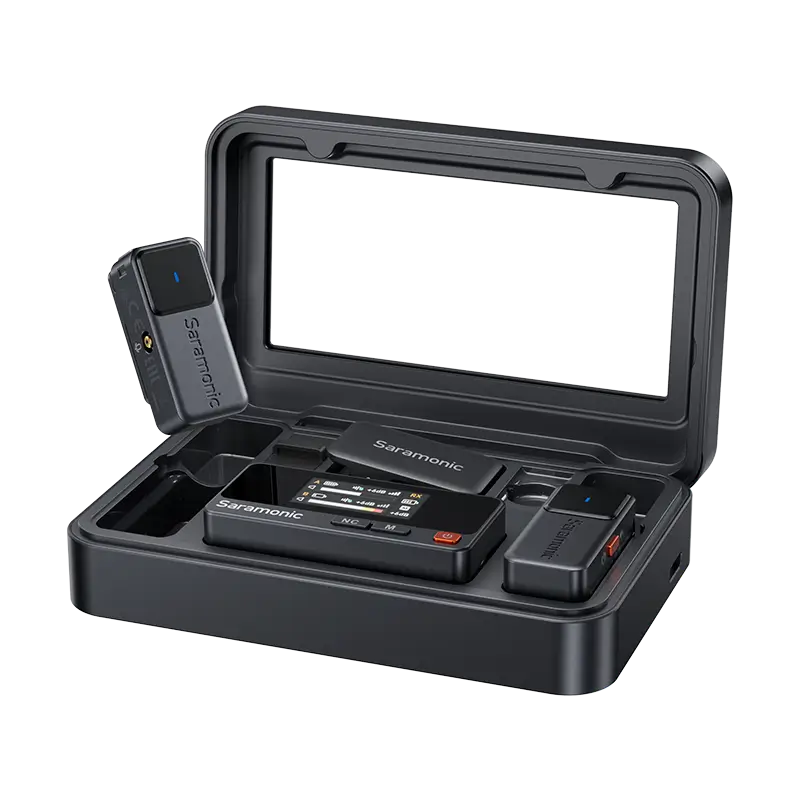
Go for: Saramonic Air
For most serious creators, this is the sweet spot.
If your content depends on how your voice actually sounds—not just being heard—this level matters.
Why this stands out:
- A larger microphone capsule captures more detail, giving your voice a fuller and more natural tone
- Longer transmission range provides more flexibility when filming in open or dynamic environments
- Built-in noise reduction + limiter + safety track helps keep audio clean and controlled
- A real-time display and headphone monitoring give you confidence while recording
- Extended battery life with charging case supports long shooting sessions
What this means for you:
You get noticeably better audio quality without carrying bulky equipment or relying heavily on post-production.
👉 Compared to Saramonic Ultra:
- More portable and creator-friendly
- Fewer advanced production features
If audio quality is part of your brand, this is where you should invest.
Shooting Multi-Cam or Outdoor Projects? Step Up
Go for: Saramonic Ultra
Once your projects involve multiple cameras, outdoor environments, or higher production standards, your microphone needs to do more than just sound good.
Why this is a major upgrade:
- 32-bit float recording protects your audio from clipping or incorrect gain settings
- Built-in timecode keeps audio and video perfectly synchronized across multiple cameras
- High sound pressure handling means it can capture loud environments (events, sports, engines) without distortion
- Water-resistant transmitters (IPX5) make it reliable in outdoor conditions
- External antenna + long-range transmission improve signal stability in complex setups
What this means for you:
You spend less time fixing problems in post—and more time focusing on the creative side.
👉 Compared to Saramonic Air:
- Adds workflow efficiency + recording safety
👉 Compared to Saramonic K9 UHF:
- More portable and easier to use
- Slightly less robust in extremely complex RF environments
This is the turning point where your gear starts working with your production workflow, not against it.
Working in High-Stakes Environments? No Compromise
Go for: Saramonic K9 UHF
If you’re working in environments where audio failure is not acceptable, you need a system built for maximum reliability.
What makes it truly professional:
- Digital UHF transmission provides significantly stronger anti-interference performance than typical 2.4GHz systems
- Ultra-low latency ensures real-time audio accuracy for live or broadcast situations
- 32-bit float onboard recording (expandable storage) gives maximum flexibility in post-production
- Timecode support enables seamless multi-camera workflows
- Built for durability with professional-grade construction and flexible power options
What this means for you:
Even in crowded RF environments, long distances, or complex productions, your audio remains stable and usable.
👉 Compared to Saramonic Ultra:
- Stronger signal reliability in extreme conditions
- Designed for team-based, large-scale productions
👉 Trade-off:
- Larger and more complex
- Overkill for casual creators
When reshooting is not an option, this is the system professionals rely on.

Quick Decision Guide
If you’re still unsure, here’s a simplified way to choose:
| Your Situation | Recommended Model | Why |
|---|---|---|
| Beginner / Mobile | Saramonic Air SE | Lightweight, simple, no setup needed |
| Entry Creator | Saramonic BlinkMe | Easy control with visual interface |
| Serious Creator | Saramonic Air | Best balance of sound quality and portability |
| Advanced Production | Saramonic Ultra | Timecode, 32-bit float, outdoor reliability |
| Professional | Saramonic K9 | Maximum stability and workflow integration |
Final Thoughts: You’re Not Buying a Mic — You’re Buying Peace of Mind
At the end of the day, choosing a wireless microphone is not just about sound quality.
It’s about confidence.
- Beginners are buying simplicity
- Creators are buying efficiency
- Professionals are buying reliability
The best wireless microphone is not the most expensive one. It’s the one that fits your workflow, your environment, and your expectations. Choose based on how you create—not just what the specs say. If you’re ready to find the right fit, explore Saramonic’s full range of wireless microphone solutions—from beginner-friendly options to professional production systems.
To learn more about the latest news from Saramonic, join in our official social media: Facebook, Youtube, Instagram, X, Facebook Group.
FAQ
What is the best wireless microphone for vlogging?
Lightweight and easy-to-use options like Saramonic Air SE are ideal for beginners and mobile creators.
Do I need 32-bit float recording?
If you record in unpredictable environments, it can prevent audio clipping and save recordings.
Is UHF better than 2.4GHz?
UHF is more stable in complex environments, while 2.4GHz is easier for everyday use.
Can AI noise cancellation remove all noise?
No. It helps reduce noise, but good recording conditions still matter.