



On a film set, the director shouts “Action!” but can’t instantly hear confirmation from the camera operator. At a large concert backstage, the stage manager tries to coordinate lighting changes but is interrupted by another team member using the same channel. During a large drone light show, the production director needs to communicate with both drone pilots and ground technicians, yet the traditional push-to-talk communication style slows everything down.
These scenarios highlight a common challenge in fast-paced production environments: traditional communication tools are often not efficient enough.
For decades, teams have relied on the walkie-talkie, a handheld two-way radio device. While reliable, it uses a push-to-talk system where only one person can speak at a time. That’s why many professional teams are adopting a new solution: the wireless intercom headset system. These systems provide real-time, hands-free communication that dramatically improves coordination and workflow efficiency.
But what exactly are they, and how do they differ from traditional walkie-talkies? Let’s break it down.
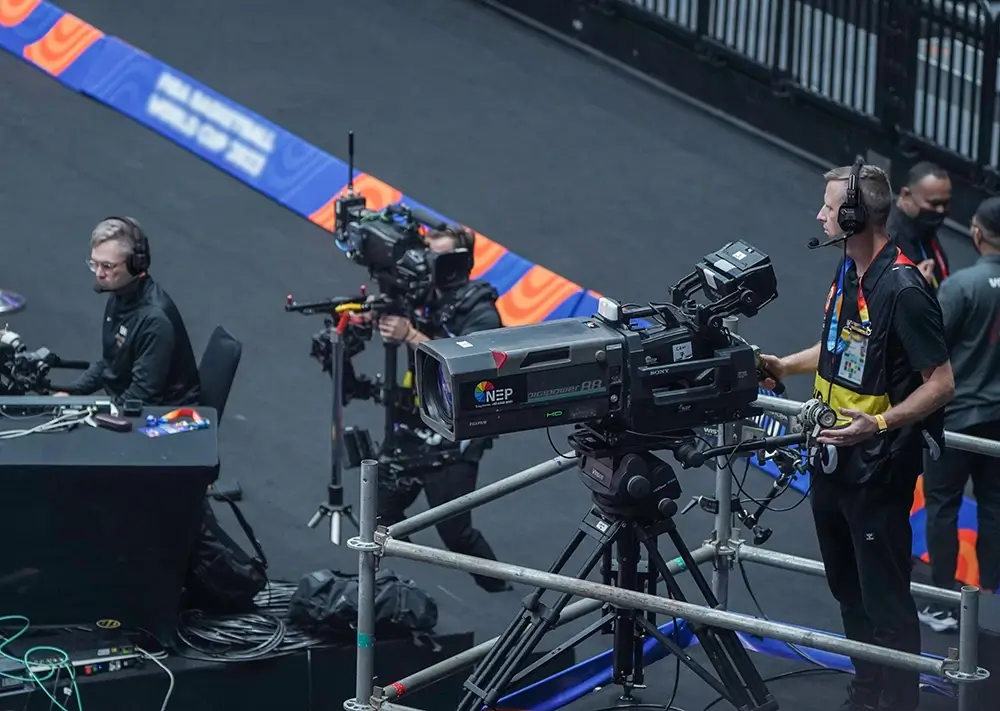
What Is a Wireless Intercom Headset System?
A wireless intercom headset system is a team communication solution that integrates wireless transmission technology directly into a headset. It allows multiple team members to communicate simultaneously in real time within a defined operating range.
Unlike traditional radios, these systems are designed for continuous group communication. Team members can speak and listen at the same time without pressing any buttons.
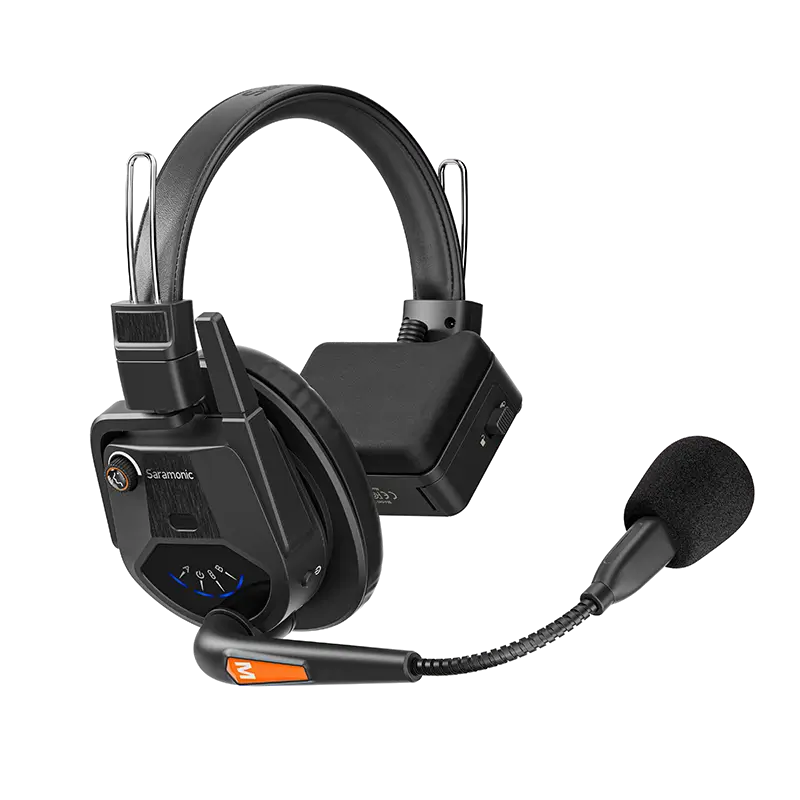
Professional systems such as the Saramonic WiTalk9 wireless intercom headset system are commonly used in film production, live events, broadcast environments, and large technical operations where instant coordination is essential.
Key Characteristics
- Full-Duplex Communication: The most important feature is full-duplex communication, which allows participants to speak and hear simultaneously—similar to a phone call.
- Hands-Free Operation: Once connected, users can communicate freely without pressing push-to-talk buttons. This allows them to keep both hands on their equipment.
- Real-Time Group Communication: Many systems support multiple users in a single communication group, enabling real-time team coordination.
- Noise Reduction Technology: Professional headsets often include environmental noise cancellation (ENC) or digital signal processing (DSP) to maintain clear voice communication even in loud environments.

Understanding Communication Modes: Simplex vs Half-Duplex vs Full-Duplex
To understand why wireless intercom systems are so efficient, it helps to understand the three fundamental communication modes used in radio technology.
Simplex Communication
This is one-way communication. Information flows in only one direction, similar to a radio broadcast where listeners can hear the signal but cannot respond.
Half-Duplex Communication
Half-duplex allows communication in both directions, but not at the same time. Users must take turns speaking. This is how traditional walkie-talkies operate. When one person presses the push-to-talk button, everyone else must wait until that person finishes speaking.
Full-Duplex Communication
Full-duplex communication allows simultaneous two-way communication. Multiple participants can speak and listen at the same time, enabling natural conversations and faster decision-making. This is the communication model used by wireless intercom headset systems.
Full-Duplex Intercom vs Walkie-Talkie
| Feature | Full-Duplex Intercom Headset | Traditional Walkie-Talkie |
|---|---|---|
| Communication Mode | Full-duplex (simultaneous speaking and listening) | Half-duplex (one person speaks at a time) |
| Operation | Hands-free communication | Push-to-talk button required |
| Communication Efficiency | High efficiency and natural conversation | Slower communication due to turn-taking |
| Audio Clarity | Optimized voice transmission with noise reduction | Limited bandwidth and lower voice clarity |
| Privacy | Audio heard only through the headset | Audio often broadcast through a speaker |
| Comfort | Wearable headset design | Handheld device |
| Typical Range | About 200–500 meters line-of-sight | Up to several kilometers |
| Best Use Cases | Fast-paced teamwork and coordination | Simple command communication |
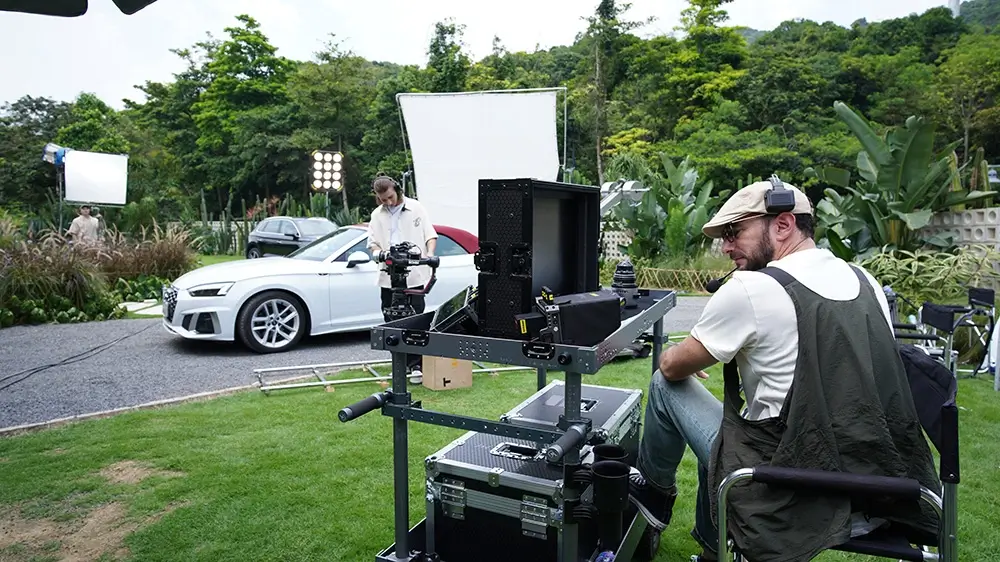
Typical Applications of Wireless Intercom Systems
Because of their efficiency and reliability, wireless intercom headset systems are widely used across many professional industries.
- Film Production and Broadcasting: Directors can communicate instantly with camera operators, lighting teams, and production assistants, ensuring precise coordination during filming.
- Live Events and Stage Productions: Stage managers rely on wireless intercoms to coordinate lighting cues, sound technicians, and stage crew during concerts, theater performances, and large shows.
- Sports Events: Broadcast teams, camera crews, and production coordinators use intercom systems to synchronize coverage and manage live event logistics.
- Industrial and Construction Work: In noisy work environments, headset systems allow crane operators, ground crews, and supervisors to communicate clearly and safely.
- Drone Shows and Technical Operations: Large-scale drone shows require constant communication between drone pilots, production directors, and technical teams. Full-duplex communication ensures commands are delivered instantly and accurately.
How to Choose the Right Wireless Intercom Headset System
If you’re considering upgrading your team’s communication system, there are several key factors to evaluate.
- Team Size: Determine how many users need to communicate simultaneously. Many systems support 2, 4, 6, or 8 participants, while advanced systems allow larger groups.
- Communication Range: Most professional systems offer a line-of-sight range of approximately 200–500 meters. Walls, buildings, and interference can reduce the effective range.
- Battery Life: For full production days, long battery life is critical. Systems with replaceable batteries or external charging options provide more flexibility.
- Noise Reduction: If your team works in loud environments—such as concerts or construction sites—choose systems with strong environmental noise cancellation.
- Durability: Outdoor users should consider weather resistance and durability ratings to ensure reliable operation in demanding conditions.
- Pro Tip: Pay attention to the wireless frequency band used by the system. Some professional intercom systems operate in the 1.9 GHz band, which can experience less interference than the commonly used 2.4 GHz spectrum.
Conclusion
Traditional walkie-talkies still have advantages in certain scenarios, especially when extremely long communication distances are required. However, for professional teams that depend on fast, continuous coordination—such as film crews, event production teams, and technical operators—a full-duplex wireless intercom headset system provides a far more efficient communication experience. By enabling natural, real-time conversations, these systems help teams work faster, safer, and more effectively.
Ultimately, choosing the right communication technology is not just about convenience—it directly impacts team productivity and operational success.
To learn more about the latest news from Saramonic, join in our official social media: Facebook, Youtube, Instagram, X, Facebook Group.
Frequently Asked Questions
Can wireless intercom systems communicate with walkie-talkies?
In most cases, they cannot communicate directly because the two systems use different transmission protocols, frequency bands, and communication technologies.
What is the typical range of a wireless intercom headset?
Most professional systems provide a line-of-sight communication range between 300 and 500 meters. Actual range may vary depending on obstacles and wireless interference.
Why do film crews prefer wireless intercom headsets?
Film production requires constant coordination between multiple departments. Full-duplex communication allows directors, camera operators, and technical staff to communicate instantly without interrupting workflow.
Are full-duplex intercom systems more expensive than walkie-talkies?
Yes. Because they use more advanced wireless technology and integrated audio systems, professional wireless intercom solutions typically cost more than traditional radios. However, many teams find the productivity improvements well worth the investment.
.webp)