


💡 Key Takeaways
- DECT (1.9GHz): The professional gold standard. Operates in a less congested, dedicated band to significantly reduce interference from Wi-Fi. Best for large crews and mission-critical reliability.
- 2.4GHz: Globally universal and budget-friendly. While highly versatile, it operates in a shared, crowded spectrum. Best for small teams in controlled indoor environments.
- The Verdict: If your workflow depends on uninterrupted, real-time coordination where communication failure is not an option, DECT is the superior long-term choice.
Why Wireless Intercom Systems Fail in Crowded Environments
If you've ever used a wireless intercom on a busy film set, trade show, or live stadium event, you've likely experienced the frustration of audio cutting in and out or sudden disconnections.
Most users assume this is a range or battery issue. It's not.
The real culprit is RF Congestion (Radio Frequency interference). In a typical modern venue, hundreds of devices—smartphones, Wi-Fi routers, and Bluetooth headsets—all compete for space on the 2.4GHz band. This "spectral noise" leads to packet loss and "robotic" audio.
This is where the choice between DECT and 2.4GHz becomes the most critical decision for your production workflow: Dedicated vs. Shared Spectrum.
What Is DECT (1.9GHz) Technology?
DECT (Digital Enhanced Cordless Telecommunications) is a wireless standard specifically designed for high-quality, real-time voice communication.
The "Dedicated Lane" Advantage
Unlike 2.4GHz, DECT operates in the 1.9GHz band (1880–1930 MHz). This frequency is legally reserved for voice in many regions, meaning your intercom isn't competing with the venue's Wi-Fi or the audience's mobile data traffic.
Key Technical Benefits:
- Significantly Reduced Interference: Operates outside the 2.4GHz and 5GHz Wi-Fi clutter, providing a cleaner signal path.
- Predictable Performance: Because it uses TDMA (Time Division Multiple Access), DECT provides dedicated time slots for each user, ensuring consistent, low-latency communication.
- Better Obstacle Penetration: The lower frequency of 1.9GHz generally provides slightly better wall penetration and signal stability in obstructed environments compared to 2.4GHz.
- High Security: Includes 64-bit (or higher) encryption to prevent unauthorized eavesdropping.
What Is 2.4GHz Wireless Technology?
The 2.4GHz band belongs to the ISM (Industrial, Scientific, and Medical) spectrum. It is the "Wild West" of wireless frequencies—open, free, and incredibly crowded.
Why It's Popular:
- Global Compatibility: You can use a 2.4GHz system in New York, London, or Tokyo without worrying about local frequency laws.
- Cost-Effective: Mature technology makes these systems attractive for entry-level users and small creators.
The Trade-Off:
The same openness that makes 2.4GHz convenient also makes it vulnerable. While modern 2.4GHz systems with AFH (Adaptive Frequency Hopping) can mitigate some noise, they still occupy the same physical space as Wi-Fi. In high-density RF environments, this "contention-based" ecosystem can lead to unpredictable performance.
Head-to-Head Comparison
At its core, the difference between DECT and 2.4GHz is not just frequency, but how the spectrum is managed: dedicated allocation vs shared contention.
| Feature | DECT (1.9GHz) | 2.4GHz Wireless |
|---|---|---|
| Interference Resistance | ⭐⭐⭐⭐⭐ (Dedicated Band) | ⭐⭐ (Highly Congested) |
| Signal Stability | Ultra-Stable | Variable (Depends on Local Wi-Fi) |
| Transmission Range | Excellent (Better Wall Penetration) | Moderate (Easily Blocked) |
| Latency | Low | Variable (Can spike under load) |
| User Capacity | High (Scalable for large crews) | Limited (Usually < 8-10 units) |
| Global Use | Region-Specific (US vs. EU) | Globally Universal |
| Price Point | Professional / Premium | Budget-Friendly |

Why these differences matter:
- Interference Resistance: DECT performs better because it operates in a protected, less congested band outside the Wi-Fi spectrum.
- Latency: DECT uses TDMA to ensure predictable timing, while 2.4GHz uses CSMA/CA (collision avoidance) which can cause delays when the band is busy.
- Transmission Range: The 1.9GHz wave suffers less attenuation through physical obstacles than the higher-frequency 2.4GHz wave.
Why Professionals Prefer DECT
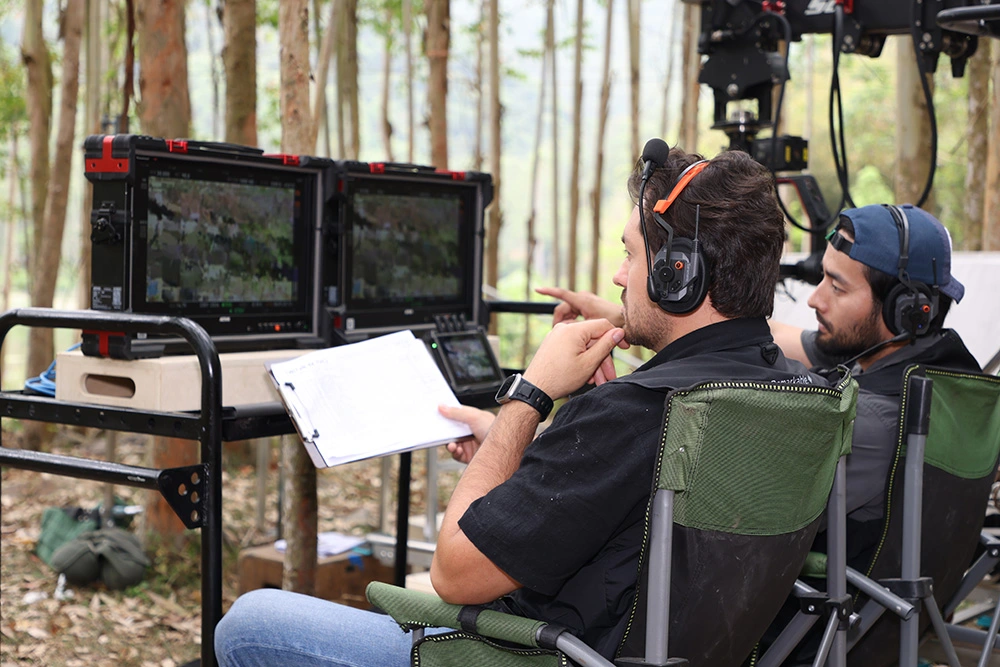
In professional production, predictability is more valuable than a low price tag. A director cannot miss a cue, and a camera operator cannot lose comms during a live broadcast.
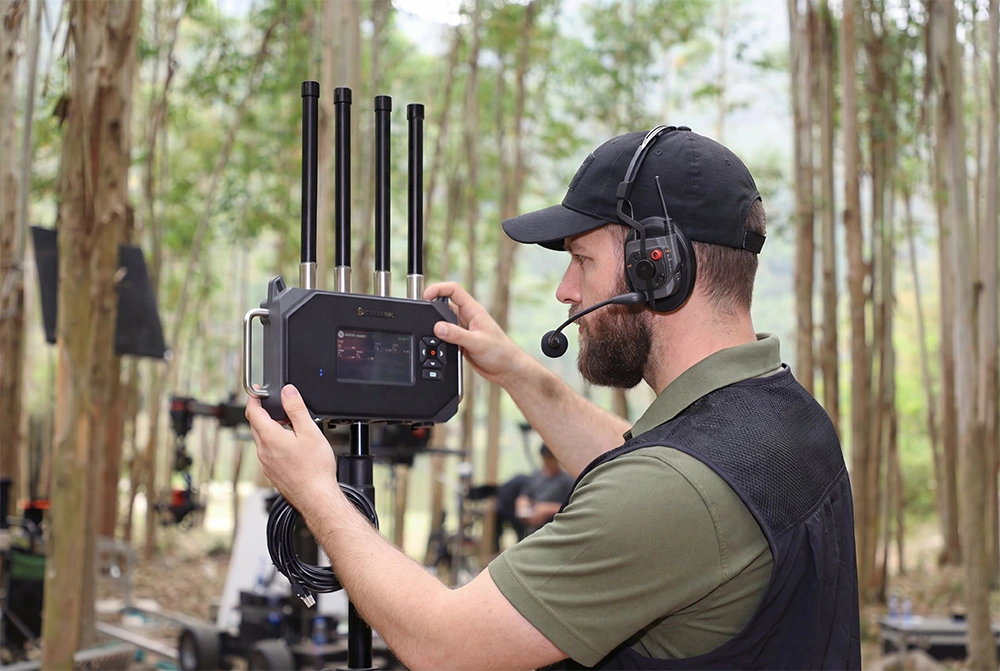
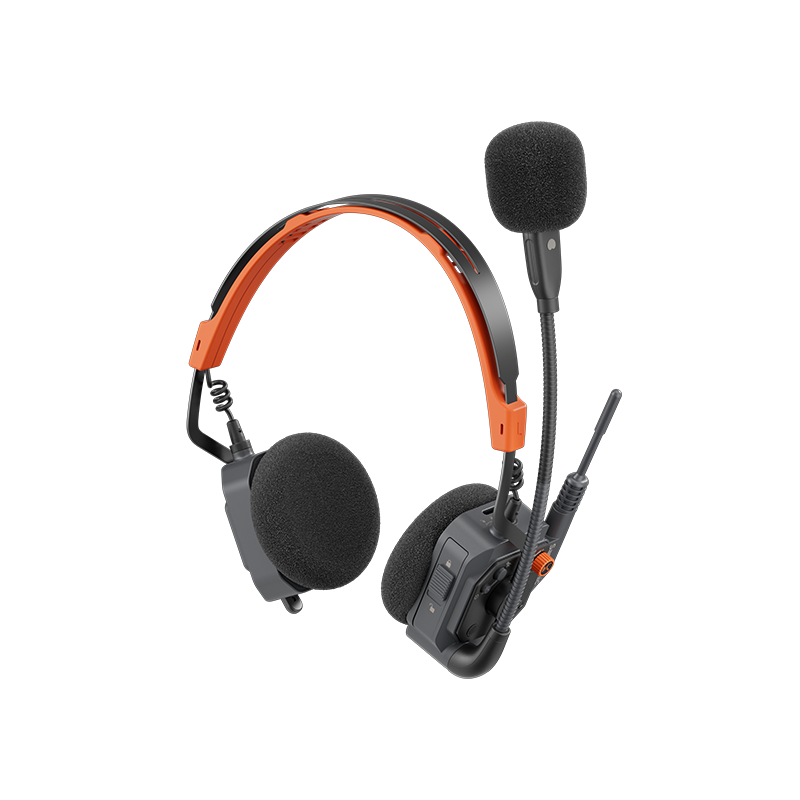
Intercom systems like the Saramonic WiTalk9 X leverage DECT technology to ensure that communication remains crystal clear even in RF-heavy environments. By using a protected band, DECT provides the high-interference tolerance required for:
- Live Broadcasts & Sporting Events
- Large-scale Stage Productions
- Complex Film Sets with Multiple Wireless Systems
Key Insight: In RF engineering terms, DECT offers a controlled spectrum environment, while 2.4GHz operates in a contention-based ecosystem.
Common Misconceptions
- "Higher frequency means better performance." → False. While 2.4GHz has more bandwidth, DECT's 1.9GHz offers better reliability for voice due to its dedicated nature.
- "2.4GHz works everywhere, so it's always better for travel." → Partial Truth. While 2.4GHz is universal, you sacrifice reliability. Professional teams often carry regional DECT versions to ensure stability.
- "DECT is 100% interference-free." → False. No wireless system is perfect. DECT can still be affected by other nearby DECT systems or extreme RF noise, but it is significantly more robust than 2.4GHz.
Real-World Scenarios: Which One Should You Choose?
Choose DECT if:
- You work in Film Production, Live Broadcast, or Theatre.
- You operate in Congested RF Environments (Expos, Stadiums, Concerts).
- You have a Large Crew (8+ people) requiring full-duplex communication.
- You need Reliable Non-Line-of-Sight (NLOS) performance through walls or obstacles.
Choose 2.4GHz if:
- You are a Solo Creator or Small Team in a controlled home studio.
- Budget is your primary constraint.
- You travel internationally frequently and need a "one-size-fits-all" frequency for simple needs.
Final Verdict: DECT vs 2.4GHz
The battle of DECT vs. 2.4GHz isn't about which technology is "newer," but which is more reliable.
- 2.4GHz is a flexible, cost-effective solution for simple, controlled environments.
- DECT is a reliability-first technology that ensures your team stays connected when the stakes are high.
If your work depends on uninterrupted, real-time coordination, investing in a DECT 1.9GHz system is the safer long-term choice for your professional toolkit. Check more about our intercom system solutions.
To learn more about the latest news from Saramonic, join in our official social media: Facebook, Youtube, Instagram, X, Facebook Group.
Frequently Asked Questions
Is DECT better than Wi-Fi intercom?
Yes, for professional use. DECT offers superior stability and significantly less interference from Wi-Fi networks, making it the industry standard for broadcasting and film production.
Does 2.4GHz always cause dropouts?
Not always, but it is highly vulnerable in crowded areas. While 2.4GHz works well in controlled home studios, it often struggles in venues with high Wi-Fi and Bluetooth traffic.
Why does 2.4GHz suffer from interference?
Because it shares the same frequency as Wi-Fi routers, Bluetooth devices, and many other consumer electronics, leading to "signal collisions" and congestion in crowded areas.
What frequency do professional intercom systems use?
Most high-end professional systems use the DECT 1.9GHz band (DECT 6.0 in North America) to ensure dedicated, interference-free communication channels.
Can DECT and Wi-Fi coexist?
Yes. They operate on entirely different frequency bands (1.9GHz vs 2.4GHz/5GHz) and do not interfere with each other, allowing both to run simultaneously without performance loss.