


💡 Key Takeaways
- Digital UHF systems offer superior signal stability and penetration in complex wireless environments, outperforming 2.4GHz systems against obstacles and interference due to their physical properties.
- 32-bit float recording is the ultimate safety net for professional digital wireless microphones, completely preventing clipping and providing lossless backups in case of unexpected wireless signal drops.
- Compact 2.4GHz wireless microphones are portable and easy to use, but their performance heavily relies on line-of-sight transmission, making them unsuitable for complex professional scenarios.
- Digital UHF technology revolutionizes sound quality by eliminating the compromises of traditional analog UHF’s ‘companding,’ delivering pure, natural audio while retaining UHF’s transmission advantages.
In today’s booming short video and live streaming era, wireless microphones have become essential tools for content creators. Lightweight and portable 2.4GHz devices seem to make high-quality audio recording readily accessible. However, when you find yourself in a crowded exhibition hall, a signal-dense indoor space, or a commercial shoot demanding uncompromising audio stability, these devices often lead to connectivity issues. Leading tech YouTuber Curtis Judd, in his video, thoroughly dissects the fundamental differences between digital UHF and compact 2.4GHz wireless microphones, using the Saramonic K9 digital UHF system as an example. He reveals a truth often overlooked by many creators: wireless audio stability is not magic; it’s physics.
Based on Curtis Judd’s in-depth tests and analysis, this article will explore how digital UHF microphones offer content creators a superior experience over 2.4GHz systems in terms of signal stability, audio purity, and professional features. We will also discuss how to make an informed choice for different usage scenarios.
Comparing UHF and 2.4GHz: Stability, Audio Quality, and Workflow
Why UHF Performs Better in Complex RF Environments
In complex RF environments, UHF systems, with their longer wavelengths, demonstrate superior signal penetration and stability compared to 2.4GHz.
As Curtis Judd emphasizes in the video, the 2.4GHz band is shared by numerous wireless devices like Wi-Fi and Bluetooth. Its microwave characteristics mean its propagation is closer to line-of-sight, heavily relying on an unobstructed path. This implies that if obstacles like people or walls appear between the transmitter and receiver, the signal can easily attenuate or drop. He notes:
“And the UHF bands that the Saramonic K9 operates in, especially in the 500-600 MHz range, have longer wavelengths, which gives them a distinct advantage in penetrating obstacles like interior walls, furniture, and even people.”
This physical difference grants UHF signals stronger diffraction capabilities, allowing them to “bend around” obstacles to reach the receiver. For mobile shoots, scenarios with multiple obstructions, or crowded events, the signal reliability offered by UHF systems is unmatched by 2.4GHz.
Digital UHF Eliminates the Companding Problem
Digital UHF technology completely eliminates the audio compromises caused by ‘companding’ in traditional analog UHF systems, delivering a more transparent and natural audio performance.
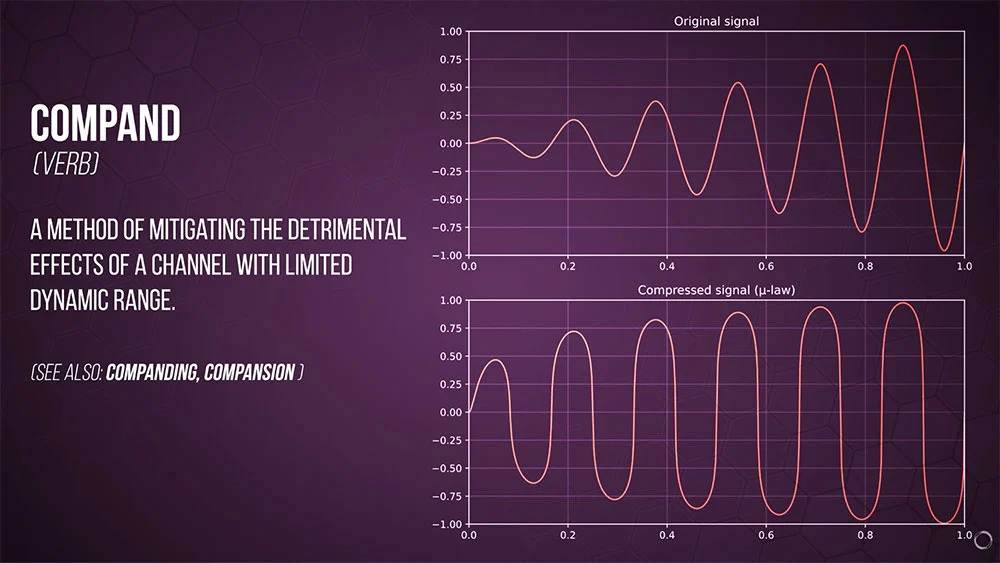
Traditional analog UHF systems, to transmit audio within a limited dynamic range, must employ ‘companding’ – compressing the signal at the transmitter and expanding it at the receiver. Curtis Judd explains that while this process solves transmission issues, it inevitably introduces artifacts like ‘breathing’ or ‘pumping’ sounds into the audio, especially noticeable in quiet passages. Digital UHF systems, such as the Saramonic K9, transmit audio as digital signals (0s and 1s), completely bypassing the need for companding. This allows them to deliver the same pure, dynamically accurate sound quality as 2.4GHz digital systems, while also benefiting from the transmission stability of the UHF band, offering an ideal solution for professionals seeking uncompromised audio fidelity.
32-bit Float Recording and the “Digital Cliff”
32-bit float recording is a revolutionary technology in digital wireless microphones that effectively prevents audio clipping and provides lossless backups when facing the ‘digital cliff,’ serving as the ultimate safeguard for audio security.
Curtis Judd particularly highlights the importance of 32-bit float recording, especially when dealing with the ‘digital cliff’ – a signal dropout phenomenon unique to digital systems. He points out that when a digital wireless signal is suddenly lost due to interference, traditional recordings would result in immediate clipping or silence. However, if the transmitter supports internal 32-bit float recording, even if the wireless signal drops, the audio stored internally on the transmitter remains complete and unclipped.
“This means that even if your wireless signal hits that digital cliff and cuts out at the receiver, you'll have a pristine, high-quality backup recording stored right on the transmitter itself. This ensures you have usable audio regardless of the condition of your wireless transmission. And while internal recording isn't exclusive to digital transmitters, it's much easier and more common to find in digital devices. ”
This technology provides unprecedented peace of mind and flexibility for professional recording, a powerful feature often absent in 2.4GHz systems.
Professional Features That Matter in Real Workflows
Professional digital UHF systems offer more precise control over gain and more flexible connectivity options in their interface design, meeting the demands of complex workflows.
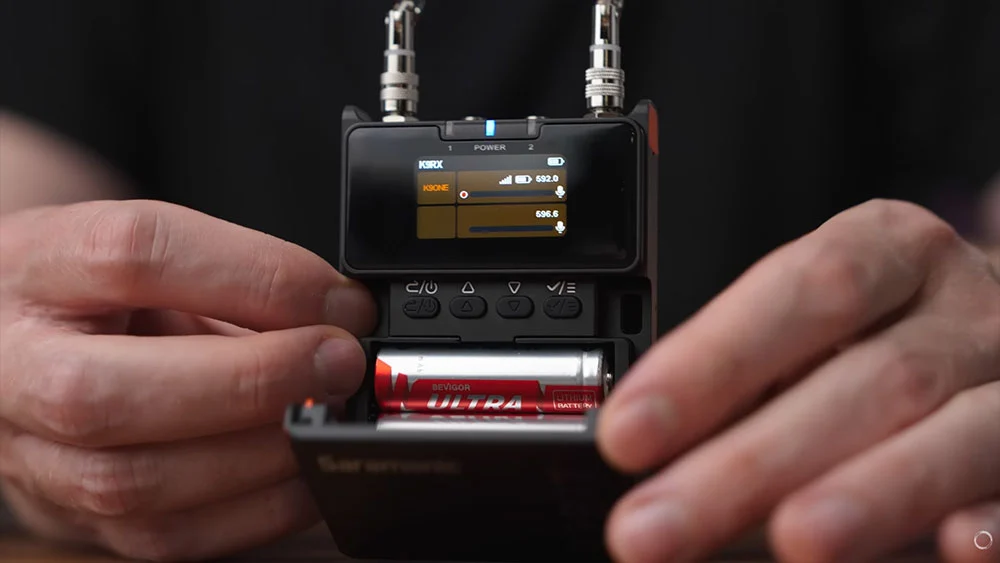
The video showcases the Saramonic K9’s advantages in these areas. For instance, the K9’s transmitter is equipped with a headphone monitoring jack, allowing users to monitor audio in real-time during recording to ensure sound quality. Its receiver provides dual output interfaces, enabling flexible audio routing to adapt to different cameras or recording devices. Curtis Judd also mentions that the K9’s settings buttons are cleverly hidden within the battery compartment cover, effectively preventing accidental changes during shooting. These seemingly minor design choices reflect a deep understanding of workflow efficiency and reliability in professional equipment, aspects that compact 2.4GHz systems often sacrifice for portability.
Portability vs. Reliability: The Real Trade-off
Digital wireless systems generally exhibit measurable audio latency, while compact 2.4GHz systems boast unparalleled portability.
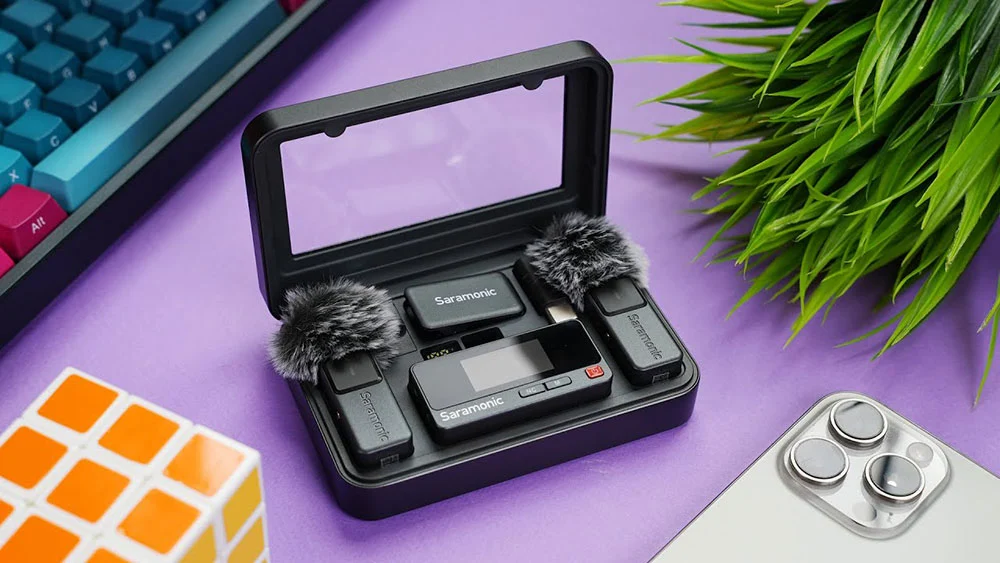
Curtis Judd notes that digital systems, to achieve stable signal transmission and pure sound quality, must encode and decode signals, which inevitably introduces some latency. While the Saramonic K9 has significantly optimized latency, it’s still a consideration in professional real-time monitoring scenarios. Meanwhile, 2.4GHz systems have gained popularity among content creators for their compact size, ease of use, and integrated charging cases, making them ideal for vlogging and daily shoots. Professional digital UHF systems, though larger, prioritize durability and power flexibility; for example, the K9 supports both AA batteries and USB-C power, greatly extending operating time. This design divergence reflects the trade-offs between portability and professional reliability across different product lines.
Which Wireless System Fits Your Workflow?
To help you more intuitively understand the characteristics of different wireless microphone systems, we have compiled the following comparison table to assist you in making the best choice based on your needs.
| Feature/Requirement | 2.4GHz Compact Systems | Digital UHF Systems |
|---|---|---|
| Target Users | Vloggers, Live Streamers, Online Educators, Individual Creators | Professional Film/TV Production Teams, Large Event Recording, News Reporting, Broadcast Institutions |
| Typical Environment | Small indoor spaces, open outdoor areas, good line-of-sight, less interference | Complex indoor (multiple walls), crowded areas, mobile shooting, multiple devices coexisting |
| Core Needs | Portability, plug-and-play, easy to use, high cost-effectiveness | Signal stability, audio purity, high fault tolerance, professional feature expansion |
| Main Advantages | Compact, simple operation, integrated charging, affordable | Strong signal penetration, excellent anti-interference, lossless audio, 32-bit float recording |
| Potential Limitations | Prone to Wi-Fi/Bluetooth interference, relies on line-of-sight, signal easily drops | Larger size, generally higher price, relatively more complex operation |

Editor’s Take: Choosing the Right Wireless System
When selecting a wireless microphone, there are several non-intuitive findings and usage conditions that all content creators should consider.
Firstly, the ‘digital cliff’ effect in digital systems is their biggest hidden risk. While analog systems gradually introduce noise as the signal weakens, a digital system’s sound can instantly disappear or become fragmented once the signal drops below a certain threshold. Therefore, for digital systems, monitoring signal indicators and maintaining sufficient signal headroom are crucial. 32-bit float recording can save overloaded audio but cannot recover a completely lost signal.
Secondly, the ‘convenience’ of 2.4GHz systems often masks their limitations in complex RF environments. Many vloggers favor the lightness and plug-and-play nature of 2.4GHz systems but overlook their vulnerability in challenging radio environments. In shopping malls, exhibitions, large events, or even just a coffee shop with numerous Wi-Fi signals, the 2.4GHz band can be far more congested than imagined. In such cases, even short-distance transmission can suffer severe interference. My advice is that if you cannot guarantee a clean radio environment for your shoot, or if you need to record through crowds or walls, investing in a more professional UHF system will be a wise decision to avoid rework and ensure content quality.
Finally, do not overlook the professional value in the details. The Saramonic K9’s antenna trimming guide, mentioned in the video, may seem minor but reflects professional equipment’s pursuit of ultimate performance and reliability. Antenna trimming ensures the device achieves optimal resonance for specific frequencies, maximizing signal reception efficiency. This is a feature often sacrificed in consumer-grade products for simplicity and cost reduction, but for professionals, it is critical for smooth operations.

FAQ: Common Questions About Wireless Audio
If UHF is so good, why do people still buy 2.4GHz microphones?
The advantage of 2.4GHz lies in its global compatibility, license-free operation, and extremely low chip cost, allowing devices to be very compact.
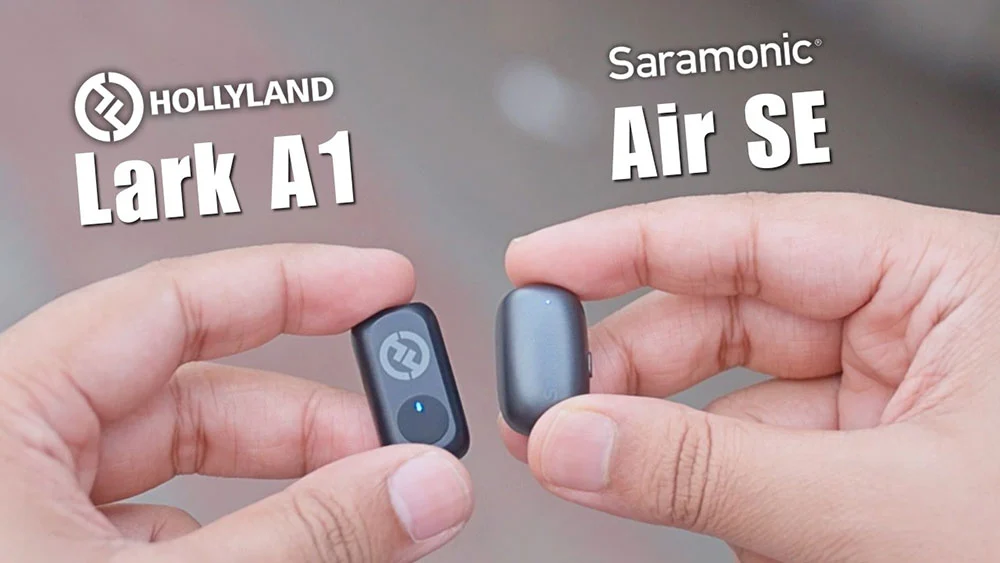
For simple live streams or close-range vlogging, its convenience is indeed unparalleled. In relatively simple environments with less demanding signal stability requirements, compact 2.4GHz systems, like Saramonic Air SE with their excellent portability, ease of use, and relatively affordable price, are an ideal choice for vloggers, live streamers, and individual content creators.
What is the ‘Digital Cliff’?
The ‘digital cliff’ refers to a phenomenon where a digital wireless signal, upon weakening to a certain extent, does not degrade gradually like an analog signal but instead suddenly cuts out completely or becomes fragmented, leading to instantaneous audio loss.
Unlike analog signals that gradually introduce noise as they weaken, the ‘all-or-nothing’ nature of digital signals means that in fringe signal areas, users have almost no buffer time to adjust or recover. This is why devices like the Saramonic K9 include internal backup recording, to cope with sudden signal loss.
Can 32-bit Float recording really prevent clipping?
Yes, 32-bit float recording effectively prevents audio clipping and provides virtually infinite dynamic adjustment headroom for post-production.
Technically, the dynamic range of 32-bit float far exceeds the limits of human hearing and even the microphone hardware itself. It records the relationship between the signal and the device’s maximum level, rather than an absolute level. This means that even if the volume setting during recording is too high, causing the signal to ‘clip,’ post-production can still non-destructively adjust the volume to restore clear, undistorted audio.
Do I need a special RF license to use UHF?
This depends on your region and specific usage scenario.
While many modern UHF systems operate in legal civilian frequency bands, in some countries or for specific high-power applications, it is indeed necessary to understand local regulations and potentially apply for a license. For example, the Saramonic K9’s interchangeable frequency feature is designed to better comply with regional requirements.
How do I decide between a 2.4GHz and a UHF wireless microphone?
If you primarily shoot vlogs, live streams, or indoor content, 2.4GHz is usually sufficient; if you need stability in complex environments, digital UHF will be more reliable.
If you are a vlogger, live streamer, or individual content creator primarily shooting in relatively simple, open environments, prioritizing portability, ease of use, and cost-effectiveness, then a compact 2.4GHz system is a good choice. However, if you are a professional filmmaker or event recorder, frequently working in crowded, obstructed, or RF-heavy complex environments, and demand high stability, purity, and post-processing flexibility for your audio, then investing in a digital UHF system will be a wiser and more reliable decision.