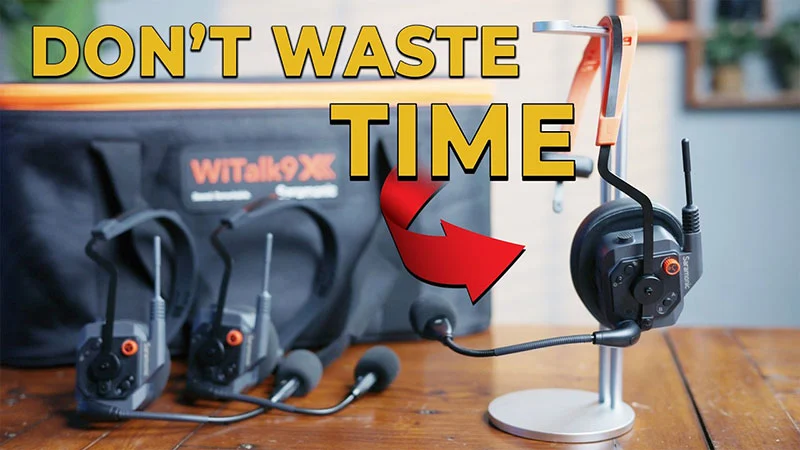



Wireless intercom specifications can tell you how far a system is designed to communicate, how much it weighs, or what kind of noise reduction it uses. But those numbers do not always show what happens once the system is taken into a real production environment.
That is why one filmmaker MarkusSenior put the Saramonic WiTalk9 X through a series of real-world tests during an outdoor scooter shoot.
Instead of testing the intercom from a studio desk, the system was used while filming a moving rider, communicating across increasingly long distances, and working with a drone flying only a few feet away.
The test focused on several practical questions: How useful is its modular headset design during an actual shoot? Can communication remain reliable beyond its rated 400-meter range? And how well does its noise reduction perform when strong production noise is introduced nearby?
How Did WiTalk9 X Perform in Real-World Testing?
The WiTalk9 X was tested throughout an actual filming day. The filmmaker changed headset configurations according to the shooting role, progressively increased communication distance, introduced significant drone noise, and wore the system for an extended period.
Modular Headset Test During a Scooter Shoot
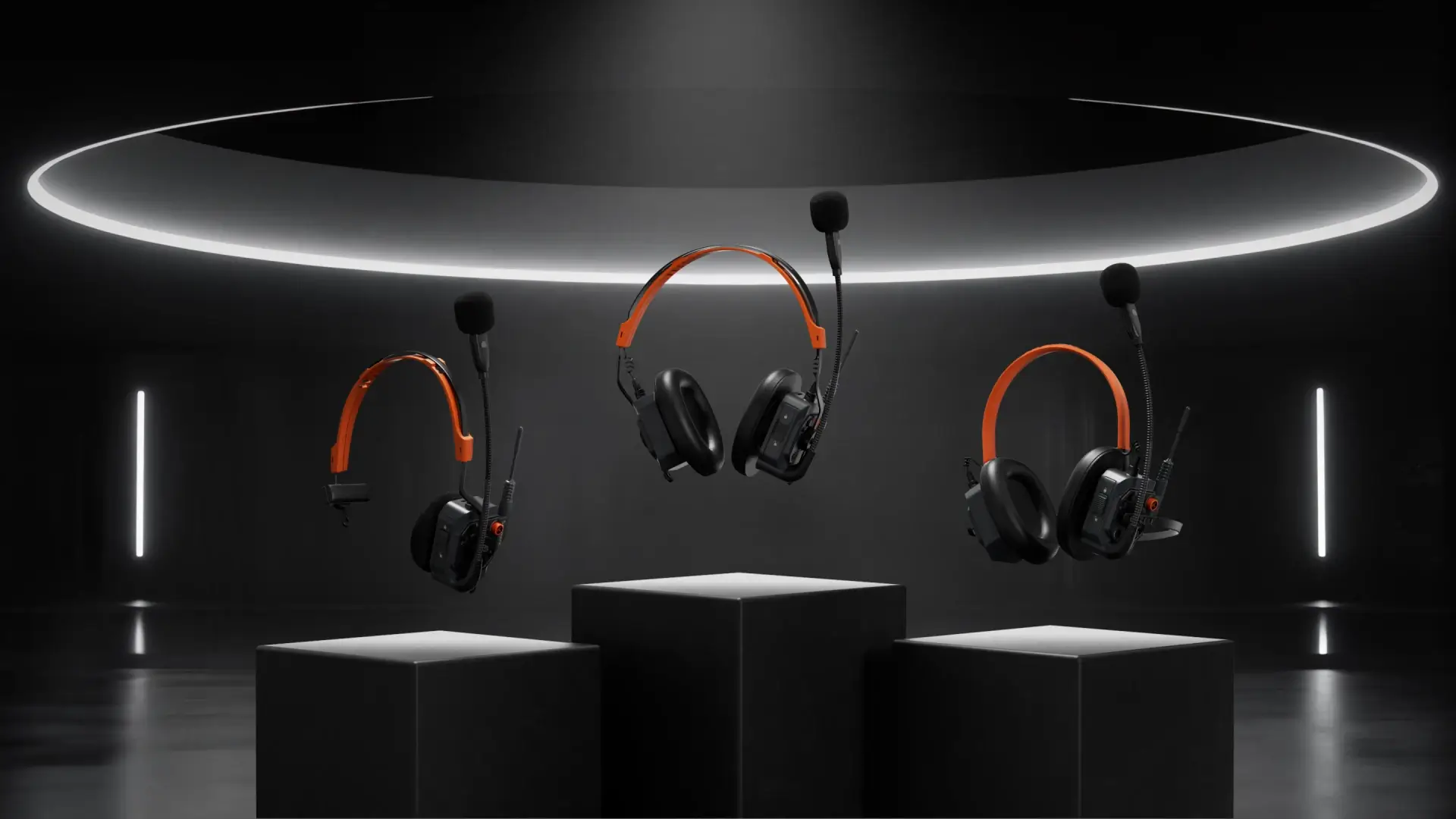
For the scooter sequence, the filmmaker used the single-ear configuration, while the rider used the helmet-ready setup.
The single-ear setup allowed the camera operator to communicate while keeping one ear open to surrounding activity, which is useful during location work where environmental awareness still matters.
The rider had a different requirement. Because the scene involved riding a scooter, the helmet-ready configuration made it possible to stay in communication without changing the protective headgear used for the shoot.
The system also supports a dual-ear configuration for situations where greater acoustic isolation is needed.
Once filming began, the benefit became immediately apparent. The filmmaker could tell the rider when to turn, stop, reposition, or prepare for another take without shouting or walking over between shots.
The key advantage of the modular design was therefore not simply having multiple wearing options, but being able to adapt the same intercom system to different production roles.
Range Test Beyond 400 Meters
The next challenge was communication distance.
Saramonic rates the WiTalk9 X for communication at up to 400 meters / 1,300 feet under line-of-sight conditions.
Rather than ending the test at the rated distance, the filmmaker gradually increased the separation to see how long communication remained usable outdoors.
At approximately 1,100 ft (335 m), both users could still communicate normally.
The distance then increased to around 1,283 ft (391 m) and 1,383 ft (422 m).
The final test reached approximately 1,603 ft, or about 489 meters.
At that point, visual contact had become difficult, but both users reported that they could still hear each other.
This should not be interpreted as a new 489-meter product specification. Wireless performance can vary depending on line of sight, RF congestion, obstacles, terrain, antenna orientation, and other environmental factors.
What the test demonstrates is that, under the open outdoor conditions shown in the video, the WiTalk9 X maintained usable communication beyond its official 400-meter rating.

Noise Reduction Test with a Drone Flying Nearby
Long-distance communication is only useful if speech remains understandable in a noisy environment.
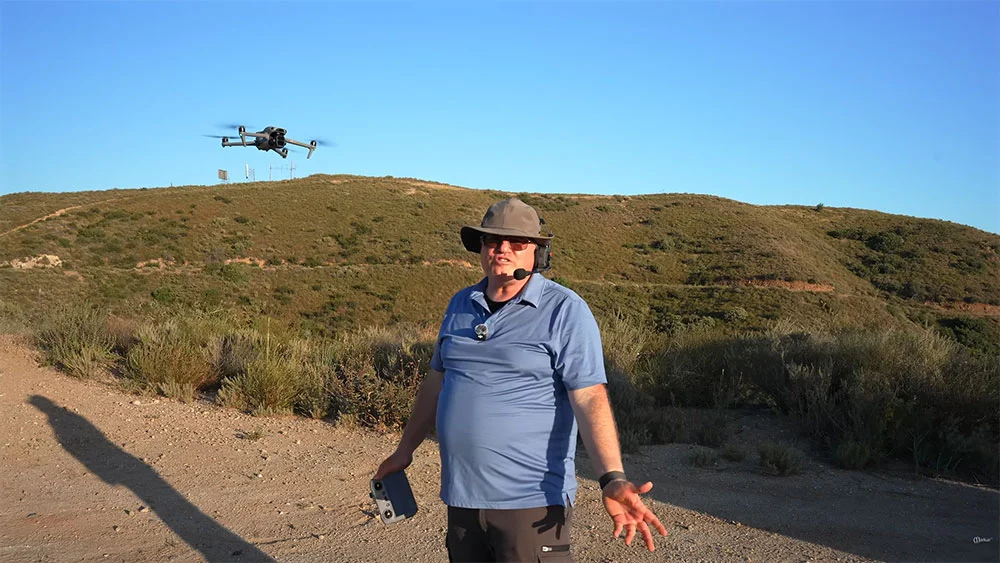
To test this, the filmmaker operated a drone approximately 3–4 feet away from the headset.
With noise reduction switched off, the drone created a challenging communication environment. The filmmaker then enabled noise reduction and compared the result.
Despite the drone operating very close to the headset, speech remained understandable during the test.
The filmmaker also noted that in an environment this loud, the dual-ear configuration could provide additional isolation for the listener.
This type of capability is relevant not only for drone shoots, but also for productions involving:
- vehicles;
- generators;
- machinery;
- powered equipment; or
- other persistent background noise.
Comfort During a Full Shooting Day
Comfort was another practical consideration during the test.
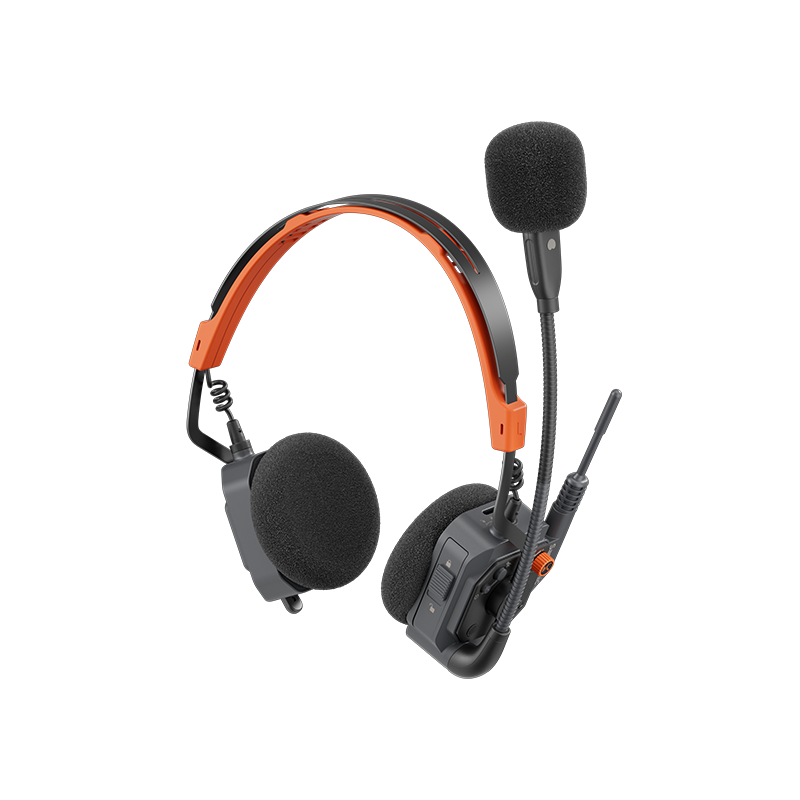
The WiTalk9 X single-ear configuration weighs approximately 172 g including the battery.
After wearing it throughout the shoot, the filmmaker specifically highlighted its lightweight feel.
Weight may seem less important than range or noise reduction when comparing specifications, but intercom headsets are often worn continuously for long periods. In that context, lower weight can make the system less distracting during extended use.
What Stood Out in the WiTalk9 X Test?
The test showed that the WiTalk9 X performed consistently across several different production challenges rather than excelling in only one area.
Its modular design allowed the setup to change with the user's role, while the long-range test showed that communication remained stable across a large outdoor area. In the drone test, noise reduction helped preserve understandable speech under heavy nearby noise.
Just as importantly, the system fit naturally into the shooting process. Once communication became continuous, small adjustments could be made without repeatedly interrupting the production.
That is ultimately where an intercom proves its value: not only in its specifications, but in whether it reduces friction during real work.
About the Saramonic WiTalk9 X
The Saramonic WiTalk9 X is a modular full-duplex wireless intercom system designed for professional production and team communication.
Full-duplex communication allows users to speak and listen simultaneously, creating a more natural conversation than push-to-talk systems.
The WiTalk9 X supports three wearing configurations:
- Single-ear
- Dual-ear
- Helmet-ready
It operates on the 1.9 GHz DECT frequency band and uses an internal and external dual-antenna system designed to maintain a stable wireless connection.
Saramonic rates the system for communication at up to 400 meters / 1,300 feet line of sight.
For noisy environments, the WiTalk9 X incorporates ClearTalk™ 2.0, which combines a directional two-microphone array with AI-powered noise cancellation. According to Saramonic, the system can reduce background noise by up to 40 dB.
The system can support teams of up to nine users without requiring a separate hub, and it can also integrate with the WiTalk BASE ecosystem for larger communication setups.
Who Is the WiTalk9 X Designed For?
The real-world test focused on filmmaking, but the same communication challenges appear in many production environments.
The WiTalk9 X is particularly relevant for teams that need to coordinate across distance, movement, or background noise, including:
- film and commercial productions;
- content creation teams;
- documentary crews;
- vehicle and tracking shoots;
- drone productions;
- sports production;
- live events and performances; and
- outdoor production environments.
Its flexibility also makes it suitable for crews in which different people have different communication requirements during the same production.
The system becomes especially useful once crew members can no longer rely on normal face-to-face conversation to coordinate efficiently.
Conclusion
This field test placed the WiTalk9 X into several realistic production conditions: a moving rider wearing a helmet, increasing outdoor distance, strong nearby drone noise, and extended wear throughout a shooting day.
The results showed that the system remained practical across each of those conditions.
More importantly, it became part of the production workflow without demanding constant attention. Communication stayed available when the crew needed it, allowing the filmmakers to spend less time managing communication and more time focusing on the shoot.