


💡 Key Takeaways
- Full-duplex intercom systems enable real-time, hands-free team communication, significantly enhancing collaboration efficiency and safety.
- Communication range is a basic threshold, while signal stability is the core guarantee in complex environments.
- "Hearing accurately" is more crucial than "just hearing"; noise cancellation aims to highlight human voice, not absolute silence.
- For long wear times, headset comfort and battery life are as impactful on productivity as audio quality.
- System selection should be workflow-driven: the larger the team, the more the system should function "like a network," not "like a device."
Quick Recommendation (For Busy Readers)
If you're short on time and want quick buying advice:
- Small Teams (2–5 people): Opt for hub-free systems for simplicity, ease of use, and rapid deployment.
- Medium Teams (6–15 people): Prioritize stability and initial scalability, balancing flexibility and reliability.
- Large Teams (15+ people): Choose base station or cascaded systems for professional-grade large-scale collaboration.
- Noisy Environments: Invest in systems with powerful ENC, NCA, or AI noise cancellation for accurate command delivery.
- Long Shifts: If wearing for over 4 hours continuously, comfort is almost as important as audio quality.
From “Can You Hear Me?” to Seamless Team Communication
In fast-paced professional collaborations, communication breakdowns are the primary killer of efficiency. Whether on a film set, during large event execution, or in industrial command centers, traditional half-duplex (Push-to-Talk, PTT) intercom modes often trap teams in an inefficient cycle of "you speak, I listen; I speak, you listen." Button-press communication leads to interruptions, command delays, and distorted information in noisy environments, frequently resulting in a flurry of "Can you hear me?" confirmations.
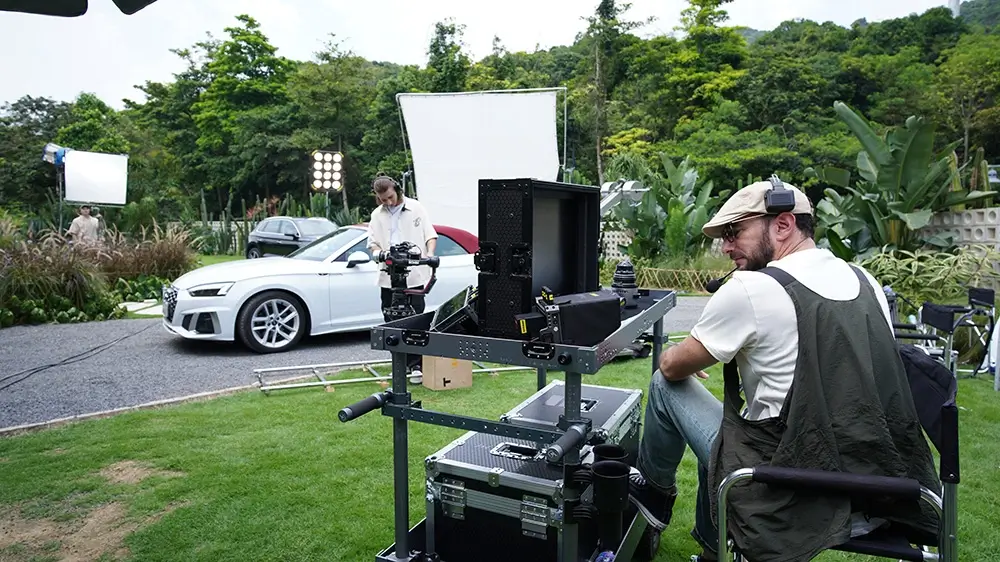
The advent of Full-Duplex Wireless Intercom Headset Systems has completely revolutionized this bottleneck. They allow team members to engage in real-time, two-way, hands-free conversations, much like a phone call, significantly boosting communication efficiency and fluidity. This technological breakthrough not only frees up hands but also enables teams to focus on their core tasks. This article, based on the latest 2026 technological trends and practical experience, provides an in-depth buying guide.
Key Buying Factors: What Actually Matters in Real-World Use
Choosing the right intercom system for your team is far more than just comparing spec sheets. In real-world scenarios, several dimensions determine the actual value of the equipment.
1. Communication Range & Signal Stability
When selecting a wireless intercom system, "maximum communication range" is undoubtedly one of the core metrics users prioritize—and for good reason, as it directly determines whether the system can cover your specific use case (e.g., film sets, event venues, or industrial areas). However, in practical use, we need to further consider: "Can this range be stably achieved in complex environments?"
Most manufacturers' stated communication ranges are typically measured in ideal Line-of-Sight (LOS) conditions. Real-world working environments, however, are often filled with various interference factors—walls, metal structures, dense crowds, Wi-Fi signals, etc.—all of which can significantly impact actual performance.
Therefore, a more practical purchasing logic is: first ensure the communication range "meets your needs," then evaluate the signal's "stability performance" in complex environments.
- Communication Range determines if you "can use it";
- Signal Stability determines if you "can use it well."
In environments with more interference, systems utilizing dedicated frequency bands (e.g., 1.9GHz DECT) typically offer more stable connectivity because they avoid the crowded 2.4GHz band. Such systems are less prone to drops, lags, or disconnections in real-world operations.
Expert Tip: A mature choice isn't solely about pursuing the "longest range," but rather, once range requirements are met, prioritizing systems that remain stable in real-world conditions.
2. Audio Clarity & Noise Cancellation
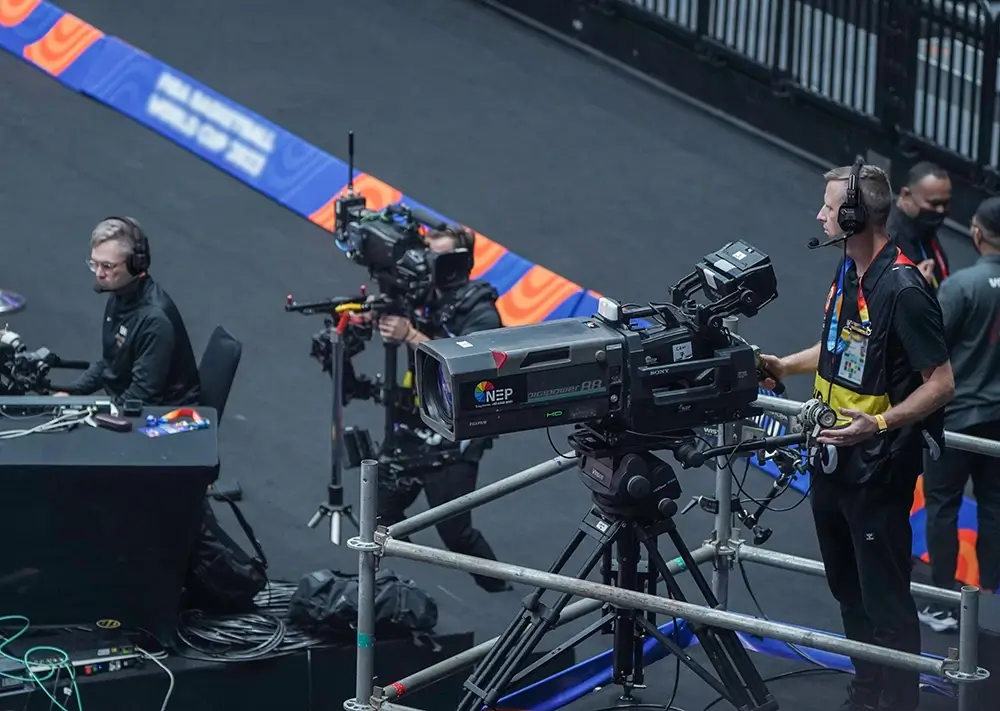
In professional settings, the key to communication isn't just "being heard," but "being understood accurately." Especially in high-noise environments like concert venues, construction sites, or backstage at events, unclear audio can lead to repeated instructions (reducing efficiency) or misunderstood commands (increasing risk).
We recommend focusing on these three technical dimensions:
- Microphone Solution (Determines "Pickup Quality"): Single microphones have limited pickup capabilities; dual or triple microphone arrays, through spatial pickup differences, significantly improve human voice recognition, better distinguishing "human voice vs. ambient noise."
- Noise Cancellation Technology Type (Key Differentiator):
- ENC (Environmental Noise Cancellation): Basic ambient noise reduction, suitable for general environments.
- NCA (Noise Cancellation Algorithm) / Proprietary Algorithms: Manufacturer-optimized algorithms, more focused on "human voice enhancement," such as Saramonic's ClearTalk™.
- AI Noise Reduction: Uses models to identify human voices, performing better in extremely complex environments.
- Sound Tuning (Often Overlooked): The ideal state is when noise is suppressed while the human voice remains clear and natural, rather than aggressive noise cancellation leading to distorted or muffled sound.
Selection Logic: Prioritize systems with "high human voice clarity" over those with the "quietest background." The essence of communication is information transfer, not the pursuit of absolute silence.
3. Comfort for Long Working Hours
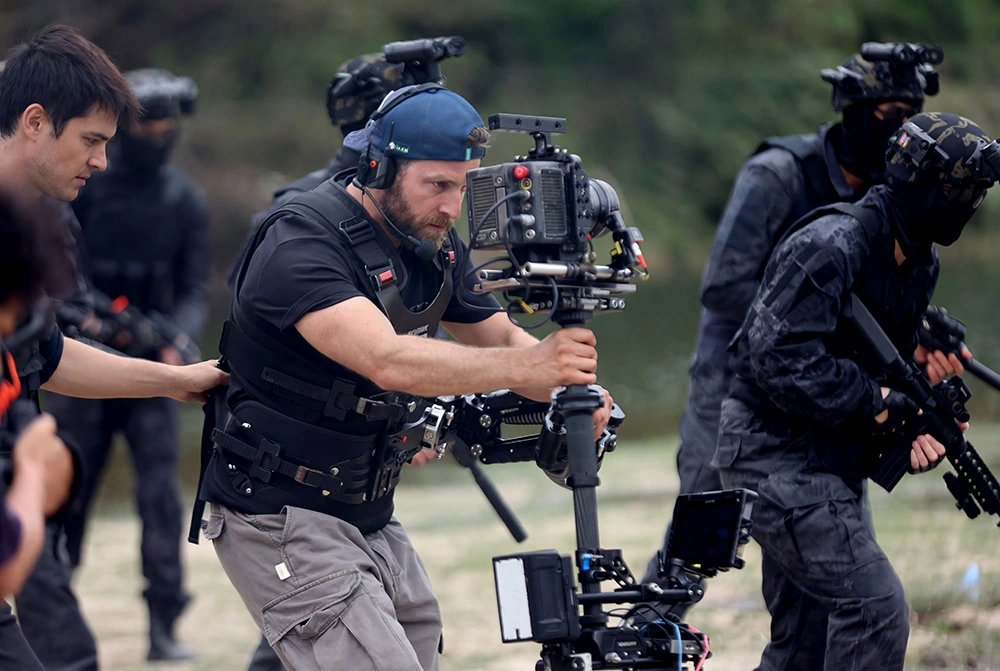
For film crews or event execution teams, working 8-12 hours continuously is common. In such cases, comfort directly impacts team members' attention and work quality. Neglecting this can quickly lead to fatigue from head pressure and ear stuffiness.
When selecting, consider four dimensions:
- Headset Type: Single-ear is suitable for security or director teams needing environmental awareness; dual-ear is for roles requiring immersion and focused communication.
- Weight: Experience shows that lightweight designs (≤200g) are more suitable for all-day wear.
- Headband Structure: Pay attention to even pressure distribution, adjustability, and the absence of noticeable "pressure points."
- Earcup Material: Prioritize skin-friendly, breathable materials to prevent heat buildup during prolonged wear.
Practical Standard: If you need to wear the headset continuously for more than 4 hours, comfort is almost as important as audio quality.
4.Scalability & Security
Team sizes are not static, and system scalability determines your return on investment. When evaluating a system, consider whether it supports expansion through base station cascading. This capability allows multiple hubs to be interconnected, effectively raising the ceiling on the number of simultaneous users—an essential feature for teams that may grow from a small crew to a large-scale production. Furthermore, compared to crowded 2.4GHz bands versus DECT technology, systems based on the latter typically offer a more controlled spectrum environment and can support encrypted communication in some professional setups, thereby enhancing communication reliability and security.
Best Intercom Systems by Team Size
| Team Size | Usage Characteristics | Recommended System Type | Core Advantages | Points to Note |
|---|---|---|---|---|
| Small Teams (2–5 people) | Rapid deployment, lightweight communication | Hub-free systems | Easy to use, portable, low cost | Limited scalability, general stability in complex environments |
| Medium Teams (6–15 people) | Multi-task collaboration, group communication | Systems supporting grouping/relay/light cascading | Balance of stability and flexibility | Performance differences noticeable with multiple simultaneous communications |
| Large Teams (15+ people) | Multi-level command, large-scale collaboration | Base station / Multi-system cascading | High stability, strong scalability | Complex deployment, higher cost |
Key Takeaway: The larger the team, the more the system should function "like a network," not "like a device."
Case Study: Saramonic WiTalk9 X — Redefining Scalability and Adaptability
As we look toward 2026, the Saramonic WiTalk9 X stands out as a prime example of how next-generation intercom systems address the diverse needs of professional crews. It moves beyond being a simple "headset" to becoming a modular, intelligent communication hub.
1. Industry-First Modular Design: One System, Three Forms
The most striking innovation of the WiTalk9 X is its modular headset architecture. Crews no longer need to buy separate systems for different roles.
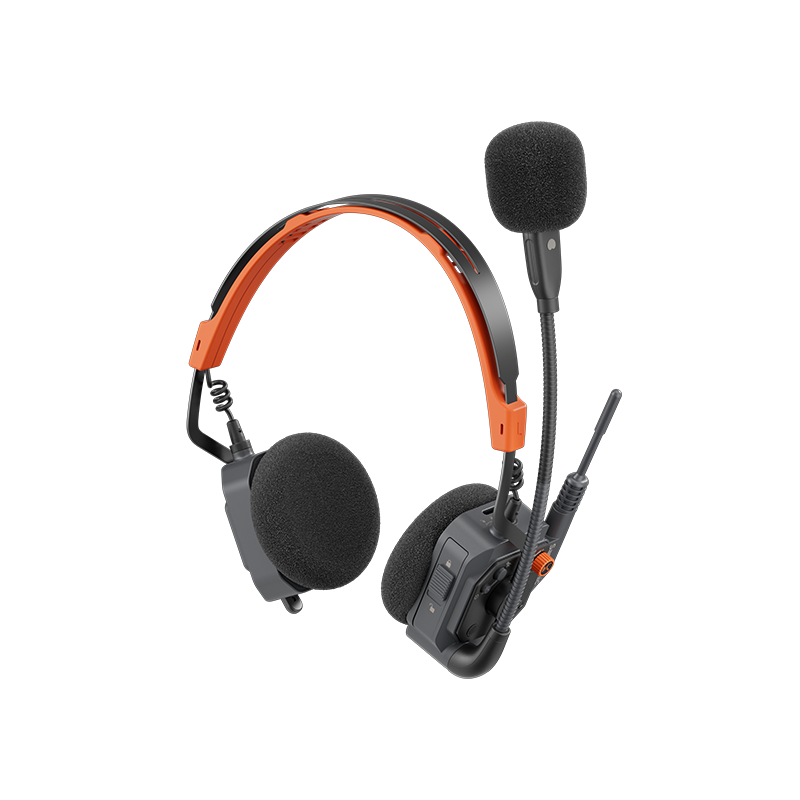
- Adaptability: Within 10 seconds, the headband components can be detached to switch between single-ear, dual-ear, or helmet-ready configurations.
- Lightweight Comfort: At just 172g (6 oz) for the single-ear version, it hits the "sweet spot" for all-day wearability mentioned earlier in our guide.

2. "True AI" Noise Cancellation (ClearTalk™ 2.0)
While standard ENC filters steady background noise, the WiTalk9 X features a dedicated AI chip trained on over 700,000 noise samples.
- Intelligent Isolation: It suppresses up to 40dB of complex or sudden noise (like construction or drone motors) while preserving 16kHz high-definition human voice clarity.
- Result: Commands remain intelligible even in the most chaotic environments, fulfilling the "hearing accurately" requirement of professional workflows.
3. Unmatched Scalability: From 9 to 64 Users
The WiTalk9 X solves the "return on investment" concern by growing with your team:
- Hub-free Operation: Starts as a native 9-person full-duplex system right out of the box.
- Base Station Cascading: By integrating the WiTalk BASE, the system expands to 16 users. For massive productions, you can cascade up to 4 bases, supporting a staggering 64-person network with up to 8 role-based groups.
- Remote Collaboration: Via USB-C, the base connects to Zoom or Teams, allowing a director in another city to talk to the local crew in real-time.
4. Rugged Reliability for the Field
- Signal Stability: Utilizing 1.9GHz DECT with a dual-antenna diversity system, it maintains a stable 400m (1,300ft) range while avoiding interference from Wi-Fi and 5G.
- Weather Resistance: With an IPX4 waterproof rating, it remains operational in rainy conditions.
- Power Management: 9–12 hours of battery life with hot-swappable spares ensures zero downtime during long event shifts.
Expert Verdict: The Saramonic WiTalk9 X is more than just a spec-sheet leader; its modularity and AI-driven clarity make it the most versatile and future-proof investment for production teams in 2026.
Final Thoughts: Choose Based on Workflow, Not Just Specs
There is no single "best" equipment, only the "most suitable solution." When making your selection, always return to your use case, team size, and workflow. Specifications are important, but they should ultimately serve your practical needs. Browse our complete wireless intercom system solutions.
To learn more about the latest news from Saramonic, join in our official social media: Facebook, Youtube, Instagram, X, Facebook Group.
FAQ
What is the main difference between full-duplex and traditional walkie-talkies?
A: Full-duplex allows simultaneous two-way conversation (like a phone call), while traditional walkie-talkies are half-duplex (push-to-talk), where only one person can speak at a time, leading to a generational gap in communication efficiency.
Do walls or metal structures significantly affect signal quality?
A: Yes, walls and metal structures can attenuate and reflect wireless signals, affecting quality and range. However, systems operating on the 1.9GHz DECT band typically offer better penetration and interference resistance than traditional 2.4GHz devices.
Does noise cancellation make human voices sound unnatural?
A: Excellent systems (like WiTalk9X) use proprietary algorithms to suppress noise while preserving human voice details. It's recommended to prioritize sound tuning that emphasizes "human voice clarity."