
💡 Key Takeaways
- An M-S stereo microphone is designed to capture both focused direct sound and natural ambience, making it well suited for documentary filmmaking, music recording, field recording, and immersive content creation.
- Proper microphone placement has a greater impact on recording quality than stereo width alone. Positioning the microphone correctly for the subject and environment is essential for achieving a balanced recording.
- Different recording scenarios require different techniques. Dialogue, acoustic performances, environmental soundscapes, and outdoor video production each benefit from different microphone distances and positioning strategies.
- M-S recording offers exceptional workflow flexibility. Depending on your project, you can monitor and record a decoded stereo signal for immediate use or capture Raw M-S for maximum control during post-production.
- Understanding how to use an M-S microphone is more important than simply understanding how it works. Good recording technique helps preserve realistic space, maintain clear subject focus, and reduce unnecessary post-production.
Once you understand the basics of M-S stereo recording, the next step is learning how to apply it in real-world productions. Whether you're recording documentary dialogue, acoustic performances, environmental soundscapes, or outdoor video, successful M-S recording depends on more than simply choosing the right microphone. Microphone placement, recording workflow, and the balance between direct sound and ambience all play an important role in shaping the final result.
In this guide, we'll explore practical techniques for using an M-S stereo microphone, including positioning tips, recording mode recommendations, and best practices for several common recording scenarios.
How Does an M-S Stereo Microphone Work During Recording?
An M-S stereo microphone records two independent signals at the same time: the Mid channel captures the primary sound source, while the Side channel captures the surrounding ambience from both sides. During stereo decoding, these signals are combined to create a stereo image whose width can be adjusted without changing the clarity of the main subject.
This ability to separate direct sound from spatial information is what makes M-S recording so flexible. Instead of committing to a fixed stereo image during recording, you can decide later how much of the surrounding environment should be heard in the final mix.
If you're new to M-S recording and would like to learn more about how Mid and Side channels work, how stereo decoding creates Left and Right channels, and how M-S compares with other stereo recording techniques, read our guide What Is an M-S Stereo Microphone?. In this article, we'll focus on the practical techniques that help you get the best results in real-world recording scenarios.
How Should You Position an M-S Stereo Microphone?
Proper microphone placement is the single most important factor in achieving natural M-S recordings. While stereo width can often be adjusted later, the balance between the direct sound and the surrounding environment is largely determined at the moment of recording.
Rather than thinking about "how wide" your recording should be, it's often more useful to ask a different question:
How much of the environment should the listener experience alongside the main subject?
The answer varies depending on what you're recording.
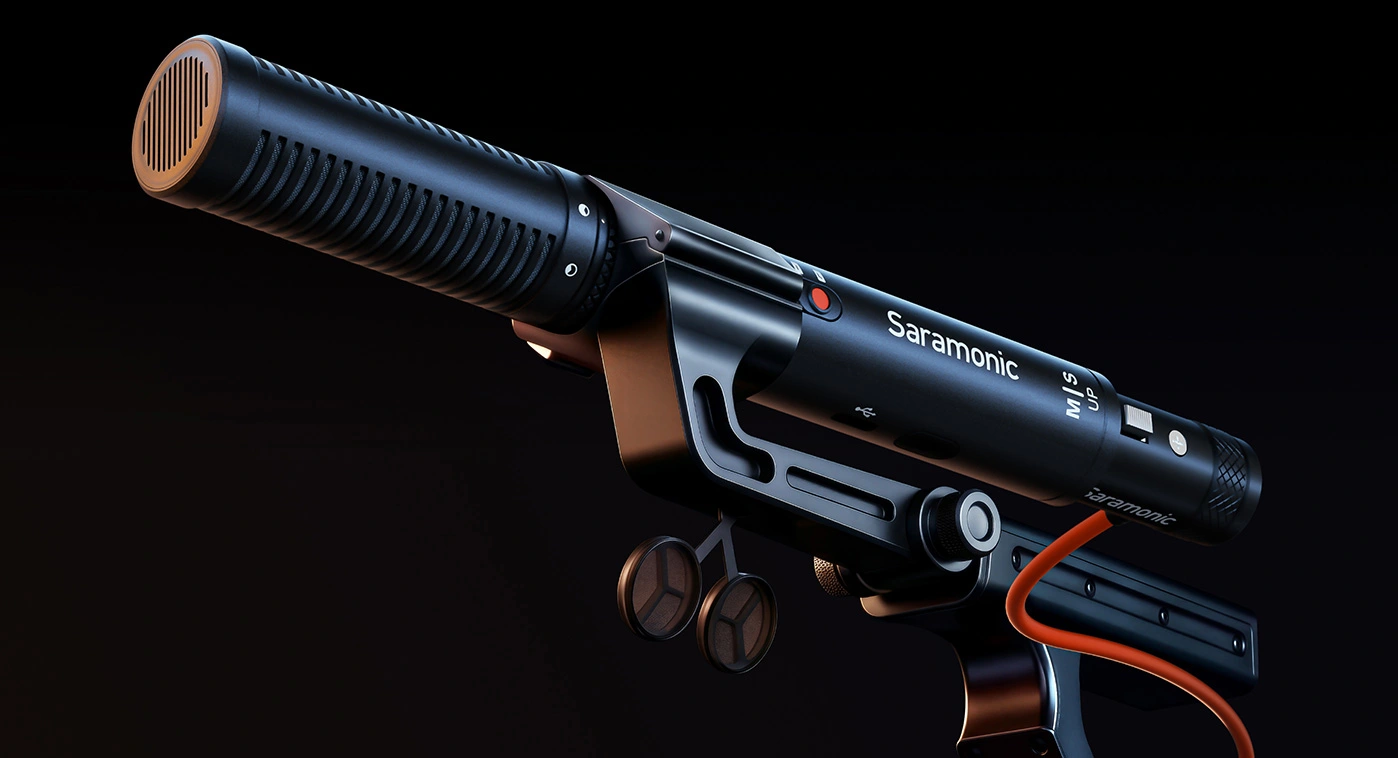
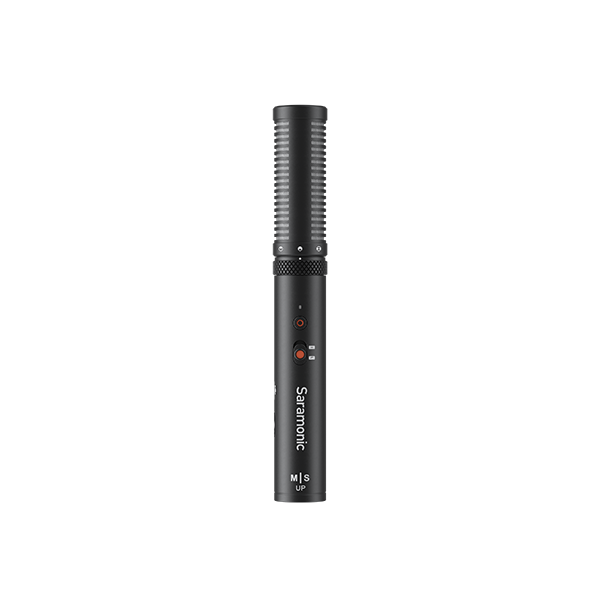
This placement principle can be applied directly with an integrated M-S microphone such as the Saramonic SG MS1 M-S stereo shotgun microphone. Its forward-facing cardioid Mid capsule should be aimed toward the primary subject, while the Figure-8 Side capsule captures spatial information from both sides of the microphone.
Moving the SG MS1 closer to the subject increases the relative prominence of the Mid signal, creating a more focused recording. Moving it farther away allows more room tone, reflections, and environmental detail to enter the overall stereo image.
Recording Documentary Dialogue
For documentary filmmaking and location sound, the priority is clear, intelligible dialogue while still preserving enough ambience to make the scene feel authentic.
Position the microphone as you would a traditional shotgun microphone. Place the Mid capsule directly toward the speaker's mouth, typically just outside the camera frame, and keep the microphone as close as practical without entering the shot.
Reducing the recording distance increases speech clarity while naturally reducing excessive room reflections. The Side capsule will continue to capture environmental information, allowing the finished recording to retain the atmosphere of the location instead of sounding unnaturally dry.
This workflow is especially useful when filming interviews, observational documentaries, or ENG productions where viewers should hear both the subject and the environment without either overwhelming the other.
Recording Acoustic Performances
Acoustic music recording benefits from a different approach because the performance space is often part of the listening experience.
Instead of placing the microphone extremely close to the instrument, position it far enough away to allow the room to contribute naturally to the recording. This distance helps preserve the relationship between the performer, the instrument, and the acoustic environment.
For solo instruments, the microphone is commonly positioned slightly above or in front of the performer rather than directly pointing at the sound hole or bell. This generally produces a more balanced stereo image while avoiding an overly narrow or exaggerated sound.
Concert halls, churches, recital venues, and live acoustic sessions often benefit from this technique because listeners expect to hear the natural reflections of the performance space.
Recording Ambient Sound and Soundscapes
Field recording focuses less on an individual sound source and more on recreating the acoustic character of an environment.
Instead of moving close to a specific sound, choose a stable recording position where the overall soundscape feels balanced. Rivers, forests, city streets, parks, transportation hubs, and wildlife habitats all benefit from allowing the microphone to capture multiple sound layers simultaneously.
Once positioned, avoid unnecessary movement. Even small handling noises or changes in microphone orientation can alter the stereo image and reduce the realism of the recording.
Longer uninterrupted recordings are also valuable because they provide greater flexibility during editing and allow natural environmental changes to unfold over time.
Recording Outdoor Video Content
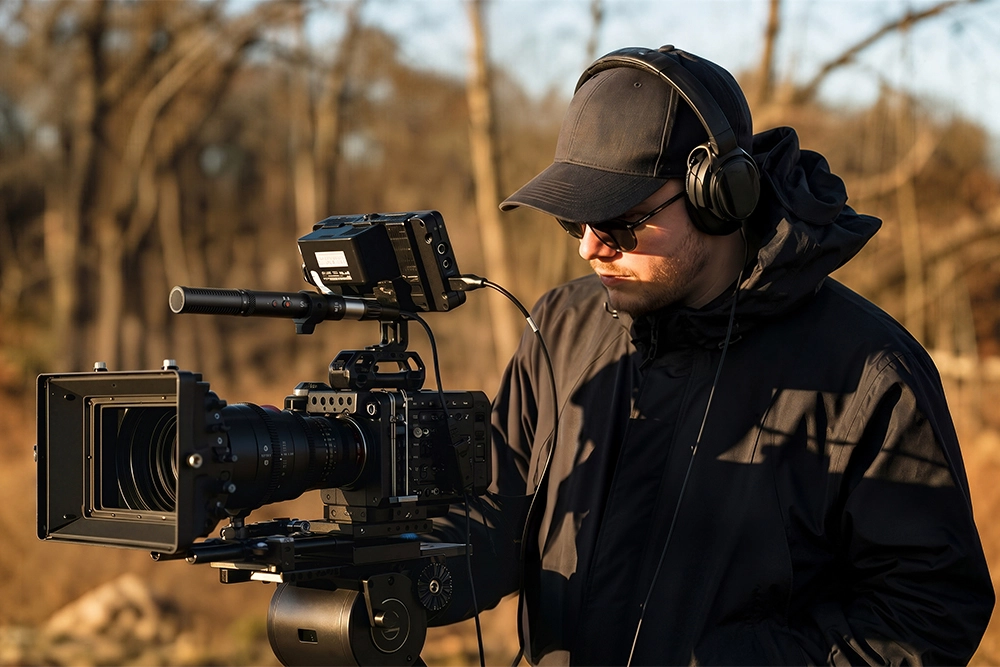
Outdoor creators often need to balance narration with the atmosphere of the location, whether filming travel videos, walking tours, behind-the-scenes content, or lifestyle productions.
Rather than eliminating all background sound, M-S recording allows creators to preserve the feeling of the environment while keeping speech clear. The audience hears not only what the presenter is saying, but also where the recording is taking place.
When working outdoors, keep the microphone as close to the speaker as practical and always use appropriate wind protection. Wind noise affects both the Mid and Side capsules, and excessive wind can quickly overwhelm an otherwise excellent stereo recording.
Placement Principle: The closer the microphone is to your primary subject, the more focused the recording becomes. Increasing the distance gradually allows more of the surrounding environment to become part of the listening experience. The goal isn't simply to maximize ambience—it's to capture the right balance for the story you're telling.
For camera-mounted and mobile field setups, the SG MS1’s 90 g all-metal body can be mounted without adding the bulk of a traditional multi-microphone M-S array. Its XLR, 3.5 mm TRS, and USB-C connections also allow it to work across professional recorders, cameras, computers, and compatible mobile recording setups.
When Should You Record in Decoded Stereo or Raw M-S?
One of the greatest advantages of an M-S stereo microphone is that it can support different recording workflows. Depending on your production timeline and post-production requirements, you may choose to record a ready-to-use stereo signal or preserve the original Mid and Side channels for maximum flexibility later.
Neither approach is universally better. The right choice depends on how much creative control you need after recording.
Choose Decoded Stereo for Faster Production Workflows
Decoded stereo combines the Mid and Side signals into a conventional left and right stereo recording during capture or monitoring. The resulting audio can be edited immediately in virtually any video or audio software without additional processing.
This workflow is often the most efficient choice for projects with tight turnaround times, such as news production, corporate video, event coverage, social media content, or travel filmmaking. When the recording conditions are predictable and the stereo image already sounds natural, there is often little reason to add another post-production step.
Many creators also prefer decoded stereo simply because it allows them to hear the finished stereo image while recording, making it easier to evaluate the overall balance between the subject and the surrounding ambience in real time.
Choose Raw M-S When Flexibility Matters
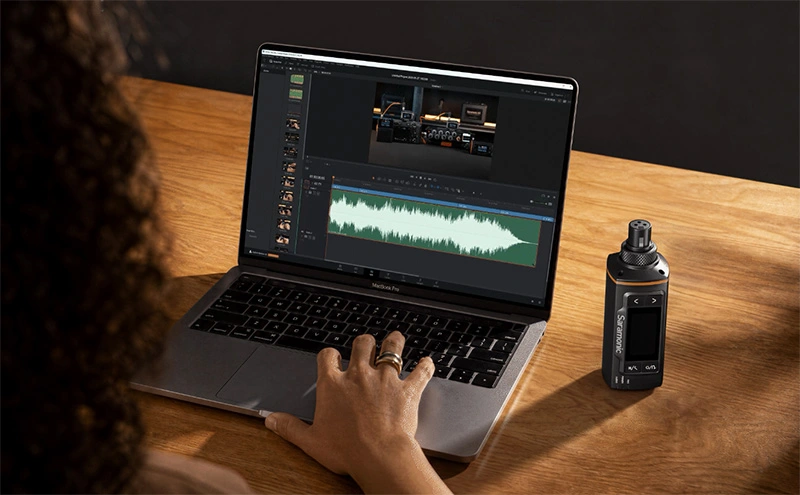
Raw M-S recording preserves the original Mid and Side signals separately instead of converting them into a finished stereo image. While this requires decoding during post-production, it provides significantly greater creative control over the final recording.
Because the Mid and Side channels remain independent, you can adjust the stereo width after recording without affecting the clarity of the main subject. If the ambience feels too subtle, you can increase it. If the recording sounds too spacious for the scene, you can narrow the stereo image while maintaining the direct sound captured by the Mid capsule.
This flexibility makes Raw M-S particularly valuable for documentary filmmaking, narrative production, live music recording, field recording, and sound design, where the final mix often depends on creative decisions made long after recording has finished.
One of the biggest advantages of Raw M-S recording is the ability to adjust stereo width during post-production. Rather than aiming for the widest possible stereo image, use width to support the story you're telling. Dialogue often benefits from a more focused presentation, while ambience and environmental recordings can sound more immersive with a broader stereo image.
Think About Your Final Delivery Before You Press Record
A useful way to choose between these workflows is to consider how the recording will ultimately be used.
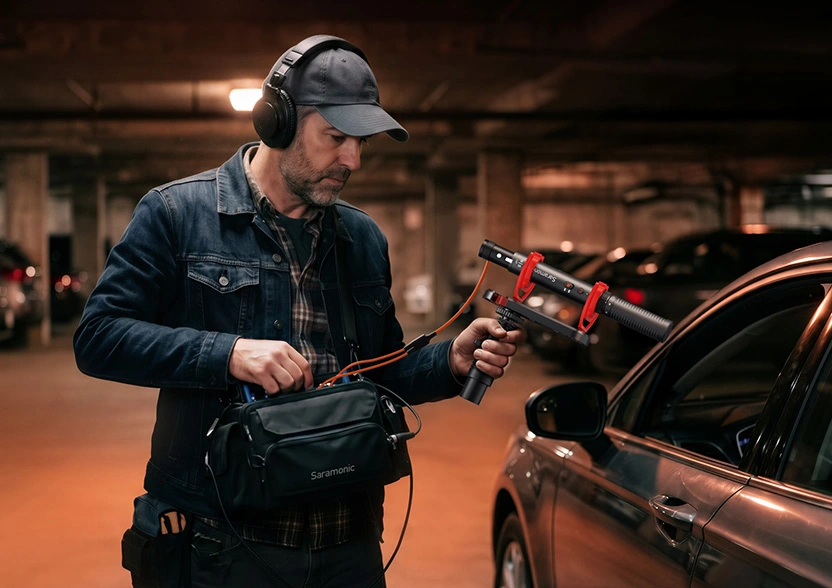
A microphone with selectable output modes can simplify this decision. The Saramonic SG MS1 provides both Decoded L/R and Raw M-S output, allowing creators to choose the workflow that matches the project before recording begins.
Use Decoded L/R when you need to monitor a finished stereo image in real time or deliver standard Left and Right channels with minimal processing. Choose Raw M-S when the ambience, stereo width, or spatial perspective may need to be refined later. The microphone also provides M/S Mono options for situations where a focused Mid signal or bi-directional Side signal is more appropriate than a decoded stereo recording.
| Production Scenario | Recommended Workflow | Why |
|---|---|---|
| News, ENG, corporate video | Decoded Stereo | Ready for immediate editing with minimal post-production. |
| Documentary production | Raw M-S | Allows ambience and stereo width to be refined during editing. |
| Acoustic music recording | Raw M-S | Provides flexibility to match the stereo image to the performance space. |
| Field recording and sound effects | Raw M-S | Preserves maximum spatial information for future projects. |
| Travel videos and online content | Decoded Stereo | Produces polished stereo recordings without additional workflow complexity. |
Workflow Tip: If you are unsure how much stereo ambience the final mix will need, Raw M-S preserves more adjustment flexibility. You can reduce the Side level later to narrow the stereo image, but you cannot recreate spatial information that the microphone did not capture clearly at the source.
What Common Mistakes Should You Avoid When Recording with an M-S Stereo Microphone?
M-S stereo is often described as one of the most flexible stereo recording techniques available. However, that flexibility also means its full potential depends on how it's used. Many disappointing M-S recordings aren't caused by the microphone itself—they're the result of recording habits carried over from conventional mono or stereo workflows.
Understanding these common mistakes can help you capture recordings that sound natural, translate well across different playback systems, and remain flexible during post-production.
Treating an M-S Microphone Like a Standard Shotgun
An M-S stereo shotgun microphone can often be positioned similarly to a traditional mono shotgun microphone, particularly when the Mid capsule is used to capture dialogue or another focused subject. However, the Side channel adds spatial information, so its role should be evaluated for each scene rather than assumed to be necessary.
If the goal is maximum dialogue isolation, the Mid signal may remain the priority and the Side level can be kept subtle. When the surrounding environment contributes to the story, a carefully balanced Side signal can help the dialogue feel grounded in a real space without distracting from the subject.
Positioning the Microphone Too Close in Every Situation
Moving the microphone closer usually improves direct sound, but it also reduces the sense of space that makes M-S recordings feel immersive.
For dialogue, close placement is often appropriate. For acoustic music, environmental recording, or natural ambience, however, leaving enough distance for the room or landscape to become part of the recording generally produces more realistic results.
The best recordings rarely maximize either isolation or ambience—they find an appropriate balance between the two.
Assuming Wider Stereo Always Sounds Better
M-S recording makes stereo width adjustable, but that doesn't mean every recording should be as wide as possible.
Excessive stereo width can pull attention away from the primary subject, reduce mono compatibility, and create an unnatural listening experience, especially on headphones. A convincing stereo image should support the story rather than call attention to itself.
Ignoring the Acoustic Environment Before Recording
Every recording location has its own acoustic character.
Before pressing Record, spend a moment simply listening to the environment. Air-conditioning systems, traffic, electrical hum, wind, birds, audience noise, or nearby conversations may become far more noticeable once stereo ambience is introduced.
Choosing a slightly different recording position often improves the final result more than any adjustment made during editing.
Choosing the Wrong Recording Mode for the Project
Both decoded stereo and Raw M-S have their advantages, but selecting the wrong workflow can create unnecessary work later.
If the project requires immediate delivery with minimal editing, decoded stereo is often the most practical choice. If the recording will undergo detailed post-production or may be reused in future projects, preserving the original Mid and Side signals provides greater creative flexibility.
Thinking about the final delivery before recording usually leads to a more efficient workflow.
Monitoring Only the Subject
Many recordists naturally focus on dialogue or the main performance while monitoring through headphones.
However, successful M-S recordings depend just as much on the quality of the surrounding ambience. Listening for distracting background sounds, changing environmental conditions, or unexpected spatial changes during recording can prevent problems that are difficult—or impossible—to remove later.
Forgetting That Silence Is Part of the Recording
Environmental recordings aren't defined only by obvious sounds. Moments of relative quiet often create the sense of realism that connects different scenes during editing.
Allowing the recorder to continue running before and after the primary action captures valuable room tone and environmental ambience, giving editors greater flexibility when building smooth, natural transitions.
Good M-S recording isn't about creating the widest stereo image—it's about capturing a believable relationship between your subject and its environment. The most successful recordings are often the ones where listeners stop noticing the microphone and simply experience the space.
Conclusion
An M-S stereo microphone is one of the most versatile tools for capturing both direct sound and natural ambience. By choosing the right microphone placement, recording workflow, and stereo width for each situation, you can create recordings that sound clear, immersive, and true to the original environment.
As with any recording technique, experience matters. The more you experiment with different recording scenarios, the better you'll understand how subtle adjustments can shape the final listening experience.
Frequently Asked Questions
Do I always need to decode an M-S stereo recording?
No. If your microphone or recorder can output decoded left/right stereo, the recording can be used immediately without additional processing. Raw M-S recording only needs to be decoded when you want to preserve separate Mid and Side channels for greater control during post-production.
Can an M-S stereo microphone also record mono?
Yes. Because the Mid channel contains the primary sound source, M-S recordings generally fold down to mono very well. This excellent mono compatibility is one reason M-S recording remains popular in broadcast, documentary, and film production.
Is M-S stereo better than X-Y recording?
Neither technique is universally better. X-Y recording creates a fixed stereo image during recording, while M-S recording allows you to adjust stereo width during post-production and offers superior mono compatibility. The best choice depends on your recording workflow, production goals, and how much flexibility you want during editing.
If you're deciding between these two stereo recording techniques, read our guide M-S Stereo vs. X-Y Stereo: What's the Difference? for a detailed comparison of their pickup patterns, stereo imaging, mono compatibility, and ideal recording applications.
Is an M-S stereo microphone suitable for beginners?
Yes. Many modern M-S microphones offer decoded stereo modes that work much like a conventional stereo microphone. As your recording experience grows, you can explore Raw M-S workflows to gain more creative control during post-production.
What types of projects benefit most from M-S stereo recording?
M-S stereo is particularly well suited for documentary filmmaking, location sound, acoustic music recording, field recording, sound design, podcasts, and outdoor video production—any situation where preserving both the primary subject and the surrounding acoustic environment enhances the final production.