

💡 Key Takeaways
- An M-S stereo microphone uses two capsules: a directional Mid capsule for the main sound source and a Figure-8 Side capsule for stereo ambience.
- M-S recording separates center sound and spatial information: this allows creators to adjust stereo width during post-production.
- M-S stereo microphones combine directional focus with spatial realism: allowing creators to capture both the subject and surrounding environment in documentaries, filmmaking, field recording, and live performances.
- M-S recording provides excellent mono compatibility: the center Mid signal remains clear when stereo audio is converted to mono.
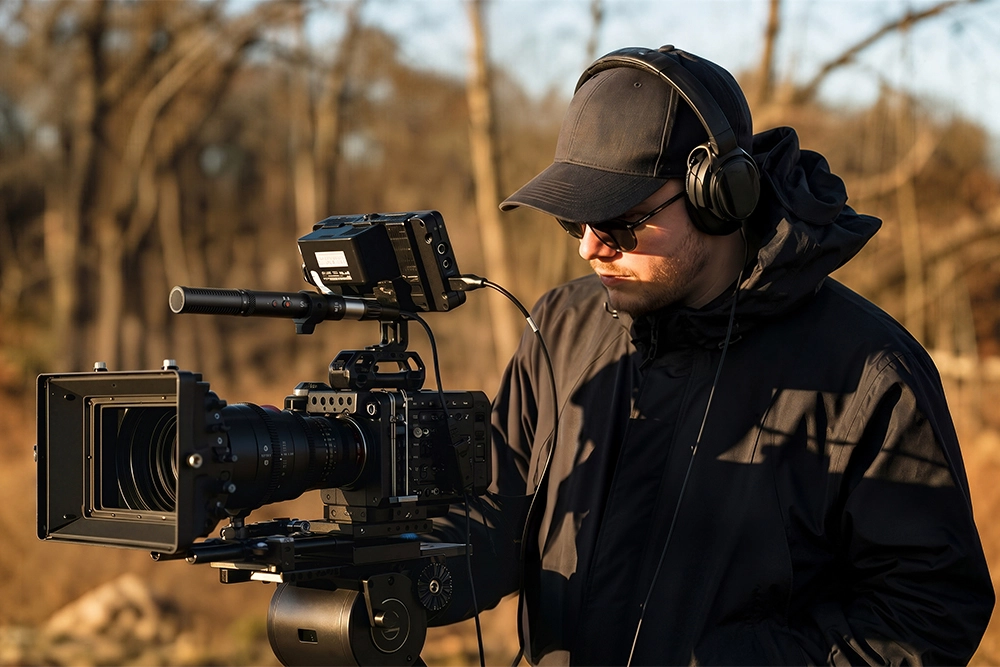
In professional field recording, creators often need to capture both the main sound source and the atmosphere of the surrounding environment. An M-S (Mid-Side) stereo microphone addresses this challenge by combining a forward-facing Mid capsule with a side-facing Figure-8 capsule, allowing creators to record focused subject audio and natural stereo ambience in the same take.
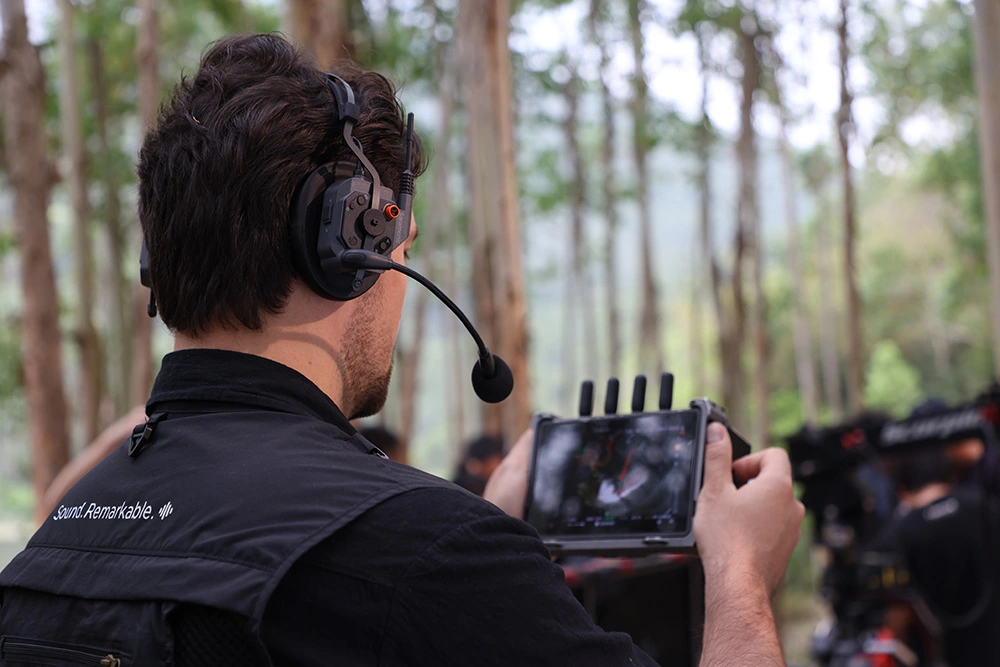
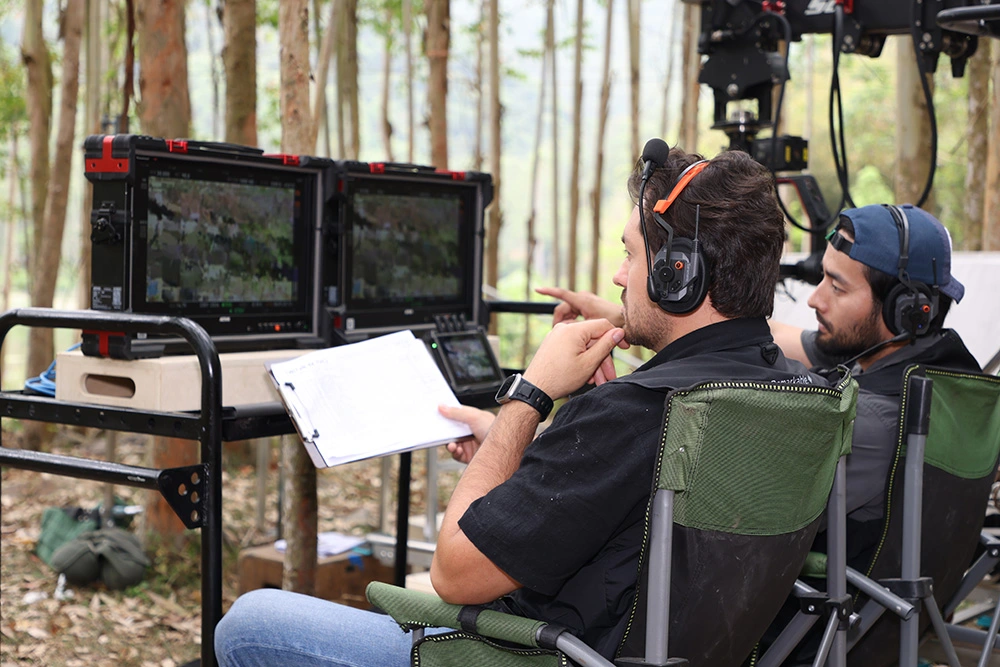
Unlike traditional shotgun microphones that mainly focus on directional sound pickup, M-S stereo microphones provide greater control over spatial information, stereo width, and post-production flexibility. This makes M-S recording especially valuable for filmmakers, documentary crews, field recordists, and content creators who need realistic and immersive audio in real-world production environments.
What Is an M-S Stereo Microphone?
An M-S stereo microphone is a microphone system that uses two capsules—a Mid capsule and a Side capsule—to capture direct sound and spatial information separately before creating a stereo image.
Unlike traditional stereo recording methods that directly capture fixed Left and Right channels, M-S recording separates audio into two independent components:
- Mid (M): The center signal that captures the primary sound source.
- Side (S): The stereo information that captures the surrounding acoustic environment.
During stereo decoding, these two signals are combined to create the final Left and Right channels.
This approach gives creators more flexibility because the stereo image can be adjusted after recording instead of being permanently fixed during capture.
Compared with other stereo recording techniques such as A-B (spaced pair) or X-Y (coincident pair), M-S recording provides a unique advantage: it separates the center image from the stereo information, giving creators more control over the final sound perspective.
How Do Mid and Side Capsules Capture Audio?
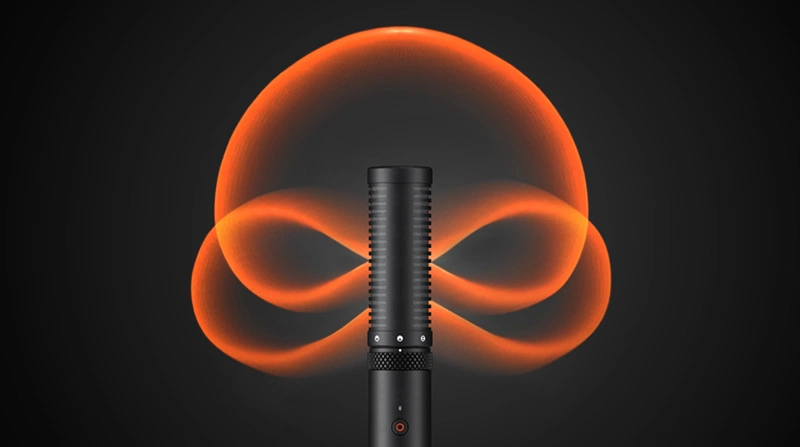
An M-S microphone uses two capsules arranged in a coincident configuration to separate the soundfield into direct and spatial components.
- Mid Capsule (Center Signal): Facing the primary sound source, the Mid capsule uses a directional pickup pattern to capture focused audio, such as dialogue, vocals, or instruments, while maintaining center clarity.
- Side Capsule (Ambient Signal): Positioned at a 90° angle, the Figure-8 Side capsule captures sound from the left and right sides while rejecting sound from the front and rear, creating stereo width and spatial depth.
How Does Mid-Side Stereo Decoding Work?
M-S recording captures separate Mid and Side signals, which are then decoded into standard Left and Right stereo channels.
Left Channel = Mid + Side
Right Channel = Mid - Side
Because the Mid and Side signals remain independent until decoding, creators can control the stereo image during post-production by adjusting the Side channel level to create a narrower or wider soundstage.
Some modern M-S microphones allow creators to choose how this decoding is handled. The Saramonic SG MS1 M-S stereo microphone, for example, can output Raw M-S signals for post-production control or decode them internally into standard Left and Right stereo channels for real-time monitoring and faster delivery.
This allows users to preserve full stereo-width flexibility when post-production control is important or record a ready-to-use stereo signal when speed and simplicity matter more.
Why Do Professionals Use M-S Stereo Microphones?
Why Is Stereo Width Adjustment Important in M-S Recording?
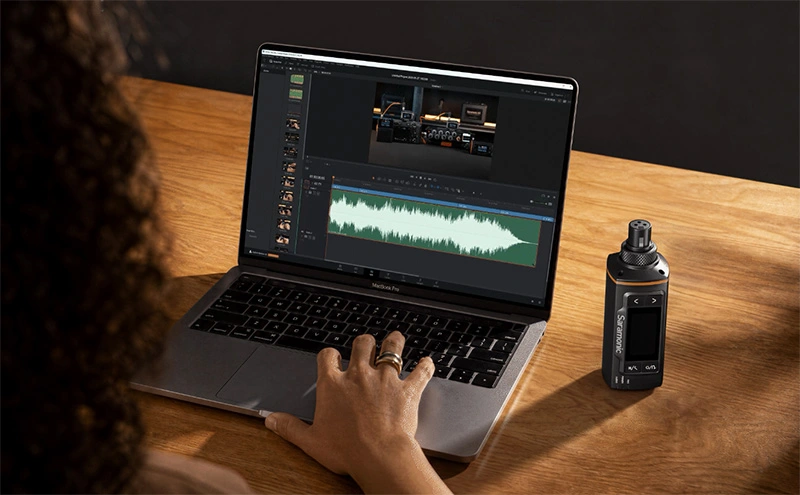
M-S recording allows creators to adjust stereo width after recording by controlling the relationship between the Mid and Side signals.
This flexibility is one of the biggest advantages of the M-S microphone technique. Instead of deciding the final stereo perspective during recording, creators can adjust the spatial feeling later during mixing or post-production.
For example:
- Reducing the Side signal: Creates a narrower and more focused sound image that keeps attention on the main subject.
- Increasing the Side signal: Creates a wider and more immersive stereo image that emphasizes the surrounding environment.
A narrower stereo image may work better for dialogue-focused scenes, while a wider stereo image can enhance:
- Nature recordings
- Concert ambience
- Large acoustic spaces
- Immersive sound design
This flexibility allows creators to follow a simple workflow: record first and decide the stereo perspective later.
Why Does M-S Recording Provide Better Mono Compatibility?
M-S microphones provide excellent mono compatibility because the Side information naturally cancels when the stereo signal is combined into mono.
When Left and Right channels are summed together:
(Mid + Side) + (Mid - Side) = 2 × Mid
The Side information disappears, leaving the original Mid signal that contains the primary sound source.
This means the main subject audio remains clear when the recording is played through:
- Mono broadcast systems
- Mobile devices
- Small speakers
- Online platforms
For professional productions, this provides a reliable workflow where creators can enjoy stereo depth without sacrificing mono playback compatibility.
How Does the Saramonic SG MS1 Apply M-S Stereo Recording in Real Workflows?
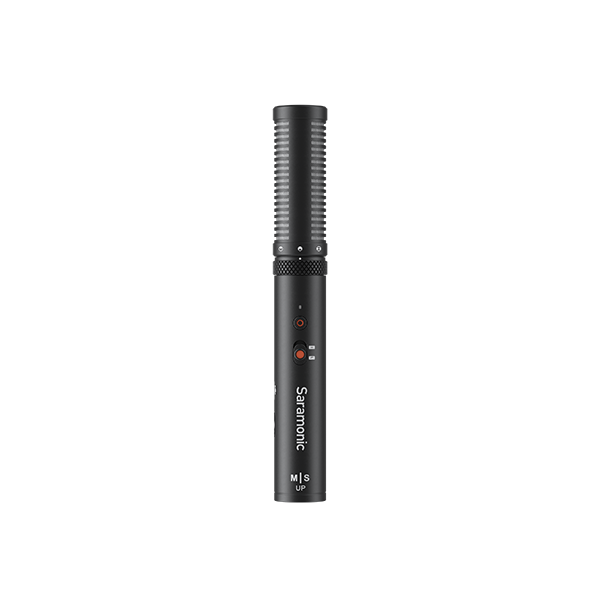
The Saramonic SG MS1 M-S stereo shotgun microphone brings the Mid-Side technique into a compact microphone designed for filmmaking, documentary production, live performance, field recording, and soundscape capture.
Its cardioid Mid capsule focuses on dialogue, instruments, and other primary sound sources, while the Figure-8 Side capsule captures ambience from both sides of the microphone. Together, they allow creators to record the subject and the surrounding acoustic space in the same take.
The SG MS1 provides three selectable output modes for different workflows:
- Raw M-S: Preserves the original Mid and Side signals so stereo width can be adjusted during post-production.
- Decoded L/R: Converts the M-S signals into standard Left and Right stereo channels in real time, making it easier to monitor and deliver usable stereo audio with minimal post-production.
- M/S Mono: Allows users to select a focused cardioid Mid signal or a bi-directional Side signal for applications that do not require a decoded stereo image.
Creators can also adjust stereo width, gain, and output mode through the Saramonic System App while monitoring real-time levels. This makes it possible to refine the stereo perspective before recording while still choosing Raw M-S when greater post-production control is required.
With its compact 90 g all-metal body, the SG MS1 can be mounted on cameras and mobile recording rigs without requiring the larger multi-microphone setups traditionally associated with professional stereo recording.
Conclusion: Why Does M-S Recording Matter?
M-S stereo recording provides a practical balance between directional clarity and immersive spatial sound.
By combining a focused Mid capsule with a Figure-8 Side capsule, M-S microphones allow creators to capture the subject and the surrounding environment in the same take. For filmmakers, documentary crews, and field recordists, an M-S stereo shotgun microphone offers a flexible recording workflow that preserves creative control from production to post-production.
FAQ
What is an M-S microphone?
An M-S microphone is a stereo microphone system that uses a Mid capsule and a Side Figure-8 capsule to capture direct sound and surrounding stereo information separately.
How does Mid-Side stereo recording work?
Mid-Side recording works by combining a forward-facing Mid signal with a Side signal during stereo decoding to create Left and Right stereo channels with adjustable stereo width.
How is M-S recording different from traditional stereo recording?
M-S recording separates the center signal and stereo information, allowing creators to adjust stereo width after recording. Unlike fixed stereo techniques, M-S provides greater flexibility during post-production.
How is an M-S microphone different from a traditional shotgun microphone?
A traditional shotgun microphone mainly focuses on directional sound pickup, while an M-S stereo shotgun microphone also captures spatial information from the surrounding environment.
Can an M-S microphone record mono audio?
Yes. The Mid capsule can provide a focused mono recording, while the Side capsule adds stereo information when a wider sound image is required.
Does an M-S microphone require post-production decoding?
Not always. Some M-S microphones provide decoded stereo output, while others allow creators to record raw Mid and Side signals for advanced editing and stereo control.
Why can M-S microphones capture both the subject and the environment?
M-S microphones combine a directional Mid capsule (which isolates the main subject dialogue) with a Figure-8 Side capsule (which captures surrounding ambient sound). This allows creators to record focused dialogue and immersive spatial atmosphere simultaneously in a single take.