


💡 Key Takeaways
- M-S and XY are two of the most widely used stereo microphone techniques, but they are designed for different recording workflows rather than competing for the same purpose.
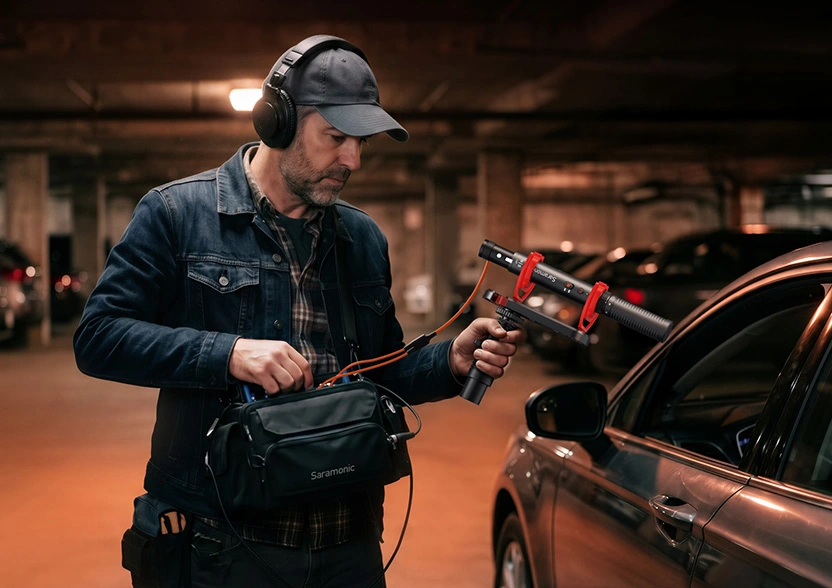
- M-S stereo recording offers adjustable stereo width and excellent mono compatibility, making it a preferred choice for filmmaking, documentary production, field recording, and broadcast.
- XY stereo creates a fixed stereo image directly from its two angled capsules, making it especially suitable for concerts, live music, and workflows where creators prefer to commit to the stereo perspective during recording.
- Choosing between M-S and XY depends on your production needs, including how much control you want during post-production and the type of content you're recording.
M-S and XY are two of the most widely used stereo microphone techniques, but they are designed for different recording workflows. Both can produce natural, immersive stereo recordings, yet they differ in how they capture spatial information and how much control they offer during post-production.
Rather than asking which technique is universally better, it's more useful to understand which one best fits your recording needs. This guide compares M-S and XY stereo recording to explain their differences, strengths, and ideal applications, helping you choose the right technique for your next project.
What Is M-S Stereo Recording?
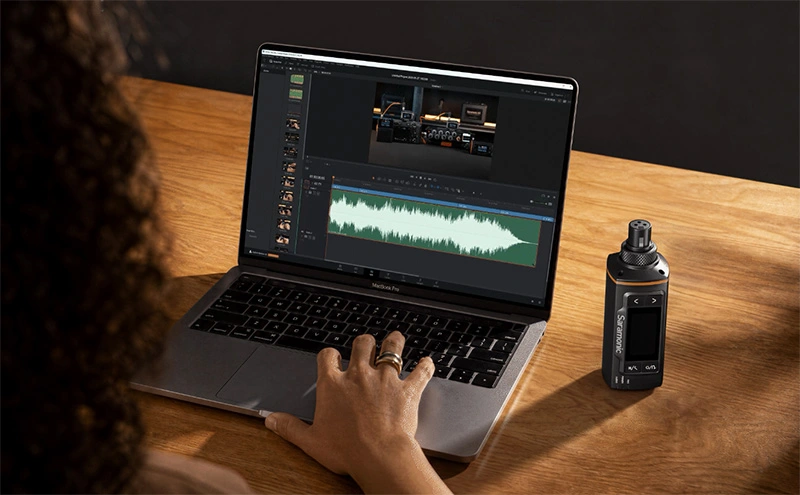
M-S (Mid-Side) stereo recording is a stereo microphone technique that uses a directional Mid microphone and a figure-8 Side microphone to capture both direct sound and spatial ambience. Because the stereo image is created during decoding, the stereo width can be adjusted after recording, providing greater flexibility during post-production.
If you'd like to learn more about how M-S stereo recording works, including signal decoding and microphone design, read our guide What Is an M-S Stereo Microphone?.
What Is XY Stereo Recording?
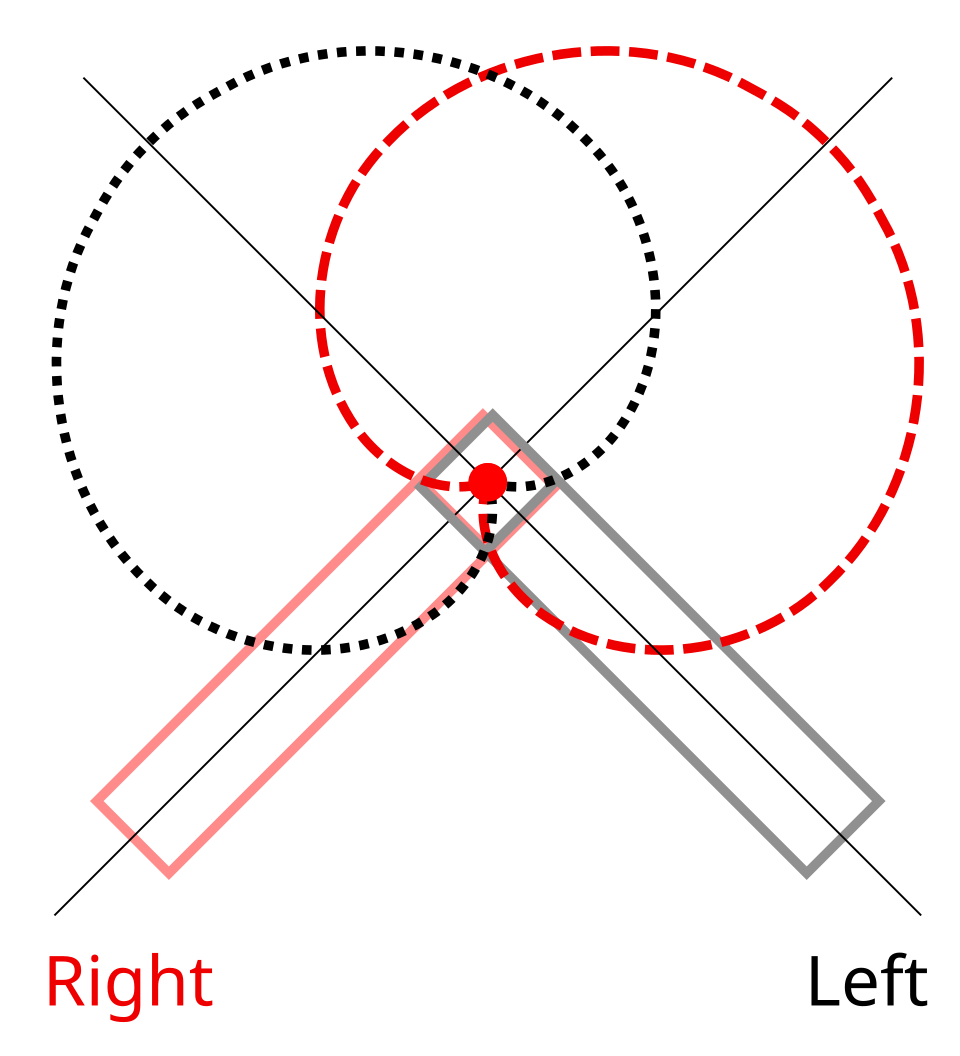
XY stereo recording is a coincident microphone technique that uses two directional microphone capsules positioned at the same point and angled toward opposite sides of the sound field.
The capsules are typically arranged between 90° and 135°. One capsule primarily captures the left side of the soundstage while the other captures the right, producing a stereo recording immediately without any decoding.
Because both capsules occupy nearly the same physical position, sound waves reach each microphone at almost the same time. This minimizes phase differences and helps create a stable stereo image with accurate sound localization.
Unlike M-S recording, the stereo width is determined during recording. Once captured, the relationship between the left and right channels remains largely fixed, making XY a straightforward technique for creators who want reliable stereo recordings without additional post-production adjustments.
What Are the Differences Between M-S and XY Stereo?
Although both techniques produce stereo recordings, they differ in microphone design, workflow, stereo imaging, and creative flexibility.
| Feature | M-S Stereo | XY Stereo |
|---|---|---|
| Microphone configuration | One directional Mid capsule + one Figure-8 Side capsule | Two directional capsules arranged at an angle |
| Stereo image | Created during decoding | Captured directly during recording |
| Stereo width | Adjustable after recording | Fixed after recording |
| Post-production flexibility | Excellent | Limited |
| Mono compatibility | Excellent | Very good |
| Setup and workflow | May require decoding, although integrated M-S microphones can simplify setup | Simple, with stereo captured directly |
| Typical applications | Film, documentary, field recording, broadcast | Concerts, live music, rehearsals, quick stereo recording |
The most important distinction is not sound quality but flexibility. M-S allows you to decide how wide the stereo image should be after recording, while XY commits that decision during the recording itself.
How Do M-S and XY Stereo Sound Different?
M-S and XY can both produce natural stereo recordings, but they create different listening experiences because they capture spatial information in different ways.
M-S Stereo Produces a More Flexible Sense of Space
Imagine recording an interview in a busy city square. Besides capturing the speaker's voice clearly, you also want to preserve enough background ambience to communicate the atmosphere without distracting from the conversation.
This is where M-S recording excels. Because the stereo width can be adjusted after recording, editors can decide later whether the environment should sound intimate or expansive. Narrowing the Side signal creates a more focused recording, while increasing it reveals more of the surrounding acoustic environment.
Rather than locking the stereo image during production, M-S recording leaves creative decisions until editing, which is particularly valuable when working on documentaries, films, or other productions where the final storytelling direction may evolve.
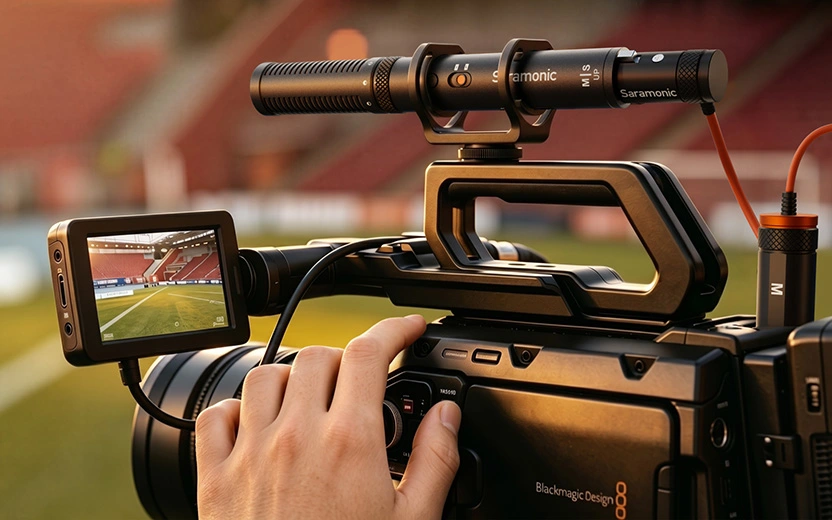
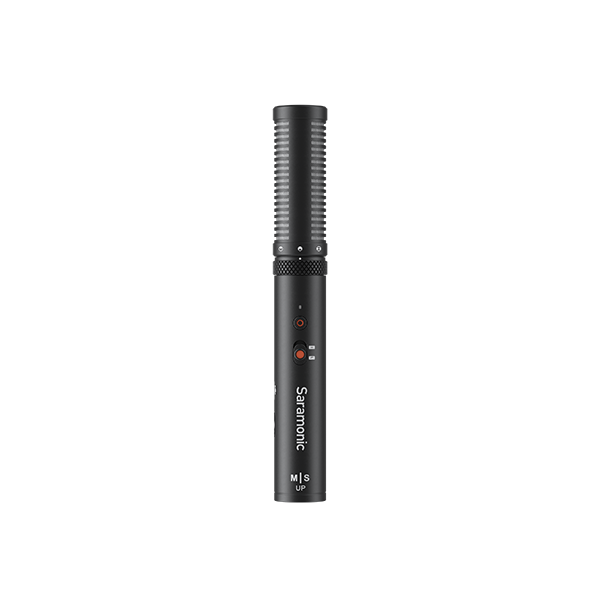
This flexibility can be implemented in different ways depending on the microphone. For example, the Saramonic SG MS1 M-S stereo shotgun microphone allows creators to record Raw M-S signals when they want to adjust stereo width during post-production.
It can also output internally decoded Left and Right stereo channels for real-time monitoring and faster delivery. This gives users the option to preserve the defining flexibility of M-S recording or work with a ready-to-use stereo signal when the production requires a simpler workflow.
XY Stereo Creates a Stable and Consistent Stereo Image
XY recording takes a different approach. The stereo image is established during recording, producing a balanced and predictable result that requires little additional processing.
Because both capsules occupy nearly the same point in space, instruments and sound sources are positioned naturally across the stereo field with excellent phase coherence. This makes XY especially popular for live performances, concerts, acoustic instruments, and other situations where creators want recordings that sound finished immediately.
Although the stereo width cannot be adjusted later as easily as M-S, many creators appreciate XY for its straightforward workflow and dependable stereo imaging.
Neither Technique Sounds Universally Better
It's important to understand that neither M-S nor XY is inherently superior in terms of sound quality. Both are capable of producing professional stereo recordings when used appropriately.
In general, M-S emphasizes flexibility, allowing creators to shape the stereo image during post-production, while XY emphasizes consistency by delivering a stable stereo recording directly from the microphone. The better choice depends less on how the recording sounds and more on how you prefer to work.
What Are the Best Recording Applications for M-S and XY?
Both M-S and XY stereo recording perform exceptionally well when used in the right situations. Rather than asking which technique is better overall, it's more useful to consider which one best matches your recording environment, production workflow, and creative goals.
| Recording Scenario | Recommended Technique | Why It Works Best |
|---|---|---|
| Documentary interviews | M-S Stereo | Capture clear dialogue while adjusting ambience during post-production. |
| Film production | M-S Stereo | Provides greater flexibility when editing scenes recorded in changing environments. |
| Nature and wildlife recording | M-S Stereo | Preserves environmental detail while allowing stereo width to be refined later. |
| ENG and broadcast | M-S Stereo | Excellent mono compatibility and adaptable stereo imaging. |
| Sound effects and ambience libraries | M-S Stereo | Offers greater creative control when designing immersive soundscapes. |
| Concert recording | XY Stereo | Produces a natural stereo image with minimal setup and processing. |
| Live music performances | XY Stereo | Captures stable stereo localization directly during recording. |
| Choirs and acoustic ensembles | XY Stereo | Maintains accurate instrument placement and phase coherence. |
| Fast-paced content creation | XY Stereo | Ready-to-use stereo recordings reduce editing time. |
These recommendations are not strict rules. Many experienced recordists use both techniques depending on the production. However, if your work regularly involves unpredictable environments or extensive post-production, M-S generally offers more creative flexibility. If your priority is speed and simplicity, XY remains one of the most reliable stereo recording techniques available.
For creators whose work spans several of these M-S applications, a compact microphone such as the Saramonic SG MS1 can provide a more practical alternative to assembling separate Mid and Side microphones. Its cardioid Mid capsule captures the primary subject, while its Figure-8 Side capsule records spatial ambience from both sides.
The microphone’s selectable Raw M-S and Decoded L/R outputs also allow the same device to support both post-production-focused projects and faster recording workflows.
Conclusion
M-S stereo is generally the better choice for creators who need maximum flexibility, while XY stereo is ideal for those who prioritize simplicity and speed.
If you regularly work on documentaries, film productions, or field recordings where the stereo image may need adjustment later, M-S offers clear advantages. If you want a straightforward workflow and a ready-to-use stereo recording, XY remains an excellent option.
Frequently Asked Questions
Is M-S stereo better than XY stereo?
Neither technique is universally better. M-S stereo is generally preferred for filmmaking, documentary production, and field recording because it offers adjustable stereo width and greater post-production flexibility. XY stereo is often the better choice for concerts, live performances, and creators who want a simple, ready-to-use recording workflow.
Does M-S recording require decoding?
Yes. Traditional M-S recordings must be decoded into left and right stereo channels. However, many modern M-S stereo microphones and recorders can perform this decoding automatically or provide real-time stereo monitoring while recording.
Can an M-S stereo microphone also record mono?
Yes. M-S recording has excellent mono compatibility because the Mid microphone captures the primary sound source. This makes M-S a popular choice for broadcast and television production, where mono compatibility remains important.
Is XY stereo easier to use than M-S?
Generally, yes. XY recording produces a finished stereo image directly from the microphone, eliminating the need for stereo decoding or post-production adjustments. This makes it an accessible option for beginners and fast-paced productions.
Which stereo microphone technique is better for documentary filmmaking?
M-S stereo is often the preferred choice for documentary production because it captures focused dialogue and natural ambience simultaneously while allowing the stereo width to be adjusted during editing. This flexibility helps filmmakers adapt recordings to different storytelling needs.
Can I use an M-S stereo microphone for music recording?
Absolutely. While M-S stereo is widely associated with film and broadcast production, it can also be used to record acoustic performances, orchestras, choirs, and live music. Many engineers choose M-S when they want greater control over the stereo image during mixing.