



💡 Key Takeaways
- 32-bit float recording helps recover many recordings affected by unexpected level spikes, provided the microphone capsule and analog circuitry themselves were not overloaded.
- Plug-on XLR transmitters often operate in unpredictable recording environments where perfect gain adjustment is not always possible.
- Onboard 32-bit float recording provides an independent backup even if wireless transmission encounters unexpected problems.
- For documentary filmmaking, ENG, location sound, live events, and corporate production, 32-bit float recording significantly reduces the risk of losing irreplaceable audio.
Professional audio production often allows only one chance to capture a critical moment. Whether recording a documentary interview, covering breaking news, filming a live event, or capturing dialogue on location, missing audio is rarely an option. Yet even with modern wireless systems, sudden and unpredictable changes in recording levels remain one of the most difficult challenges in field production.
This is why 32-bit float recording has become one of the most important advances in modern field recording. Instead of focusing only on sound quality, it provides a wider safety margin for handling unexpected level spikes that would normally cause irreversible clipping.
Its value becomes even more apparent when used in plug-on XLR transmitters. Unlike compact lavalier systems, plug-on transmitters are commonly paired with professional handheld, shotgun, and boom microphones in fast-moving production environments where audio levels can change dramatically within seconds.
This guide explains why 32-bit float recording matters specifically for plug-on XLR transmitters, how it differs from traditional recording formats, and when it provides the most practical benefits in real-world production workflows.

What Makes Plug-on XLR Transmitters Different?
A plug-on XLR transmitter is a wireless transmitter that connects directly to the XLR output of a professional microphone, allowing the microphone to transmit audio wirelessly without requiring a long XLR cable. It effectively converts many wired microphones into wireless microphones while preserving familiar professional workflows.
Unlike compact wireless lavalier systems, which are usually attached to a single speaker throughout a recording session, plug-on transmitters are designed to work with a wide variety of professional microphones across constantly changing production environments. A single transmitter may be connected to a handheld interview microphone in the morning, a shotgun microphone during an afternoon documentary shoot, and a stage microphone later that evening.
This flexibility also creates additional recording challenges. Every microphone has different sensitivity characteristics, maximum sound pressure levels (Max SPL), and intended applications. Recording levels that work perfectly for one microphone—or one speaker—may be completely unsuitable for the next.
Field productions also tend to be far less predictable than studio recordings. Subjects move unexpectedly, interview distances change, performers alter their vocal intensity, and environmental noise can increase without warning. In many situations, the sound recordist has only seconds to react—or no opportunity at all.
These constantly changing conditions are exactly why plug-on transmitters place greater demands on recording systems than many fixed studio setups. Instead of capturing a carefully controlled signal, they are expected to accommodate rapid and sometimes extreme changes in audio level while maintaining clean, usable recordings.
As a result, technologies that provide greater recording flexibility—such as onboard recording and 32-bit float recording—offer particularly meaningful advantages for plug-on wireless workflows.
How Does 32-bit Float Recording Help Protect Audio?
32-bit float recording is a digital recording format designed to preserve a much wider usable recording range than traditional fixed-point recording formats, giving editors significantly greater flexibility when adjusting recording levels during post-production.
Unlike traditional 24-bit recording, which requires engineers to carefully set recording gain before capture, 32-bit float recording allows many recordings affected by unexpected level spikes to be recovered later by reducing gain during editing—provided that the microphone capsule and analog front-end were not overloaded before the signal reached the recorder.
An easy way to understand the difference is to compare audio recording with digital photography.
A traditional 24-bit recording is similar to capturing a JPEG image. If bright highlights become completely overexposed, much of the lost detail cannot be recovered because the information was never preserved. By comparison, a 32-bit float recording is more like photographing in a RAW format. Although the image may initially appear overexposed, much of the original information remains available, allowing exposure to be adjusted later while recovering details that would otherwise appear lost.
The same principle applies to audio. A recording that initially appears distorted because playback levels exceed normal monitoring limits may still contain recoverable information inside the recorded file. By reducing clip gain inside compatible editing software, editors can often restore clean waveforms that would have been permanently clipped in traditional recordings. Rather than eliminating the need for good recording practices, 32-bit float recording provides valuable insurance against the unexpected. It offers greater flexibility when reality refuses to follow the carefully planned recording levels established before production begins.
This additional margin of safety is precisely why the technology has become increasingly common in professional field recorders—and why it is now finding its way into advanced plug-on XLR transmitters designed for demanding production environments.
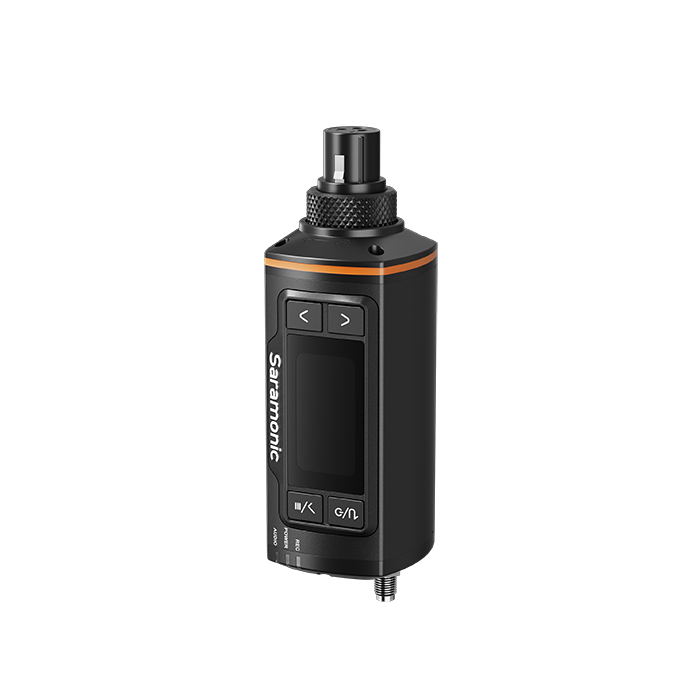
One example is the Saramonic K9 XTX digital UHF wireless XLR transmitter, which combines 32-bit float onboard recording with professional XLR microphone connectivity. When connected to a handheld, shotgun, or boom microphone, it can create a local recording directly at the transmitter, preserving an independent audio file alongside the wireless production workflow.
This is particularly valuable when a sudden shout, performance peak, or unexpected change in microphone distance causes recording levels to rise beyond what was anticipated during setup. Provided the microphone capsule and analog input stage have not overloaded, the 32-bit float file may retain enough information for the level to be corrected during post-production.

How Do You Recover a 32-bit Float Recording During Editing?
Recovering a 32-bit float recording is typically a straightforward process because the additional recording information is already contained within the original audio file.
If a recording initially appears clipped during playback, the file itself may still contain usable audio data. In many cases, the apparent distortion results from playback levels exceeding normal monitoring limits rather than permanent damage to the recorded signal.
A typical recovery workflow looks like this:
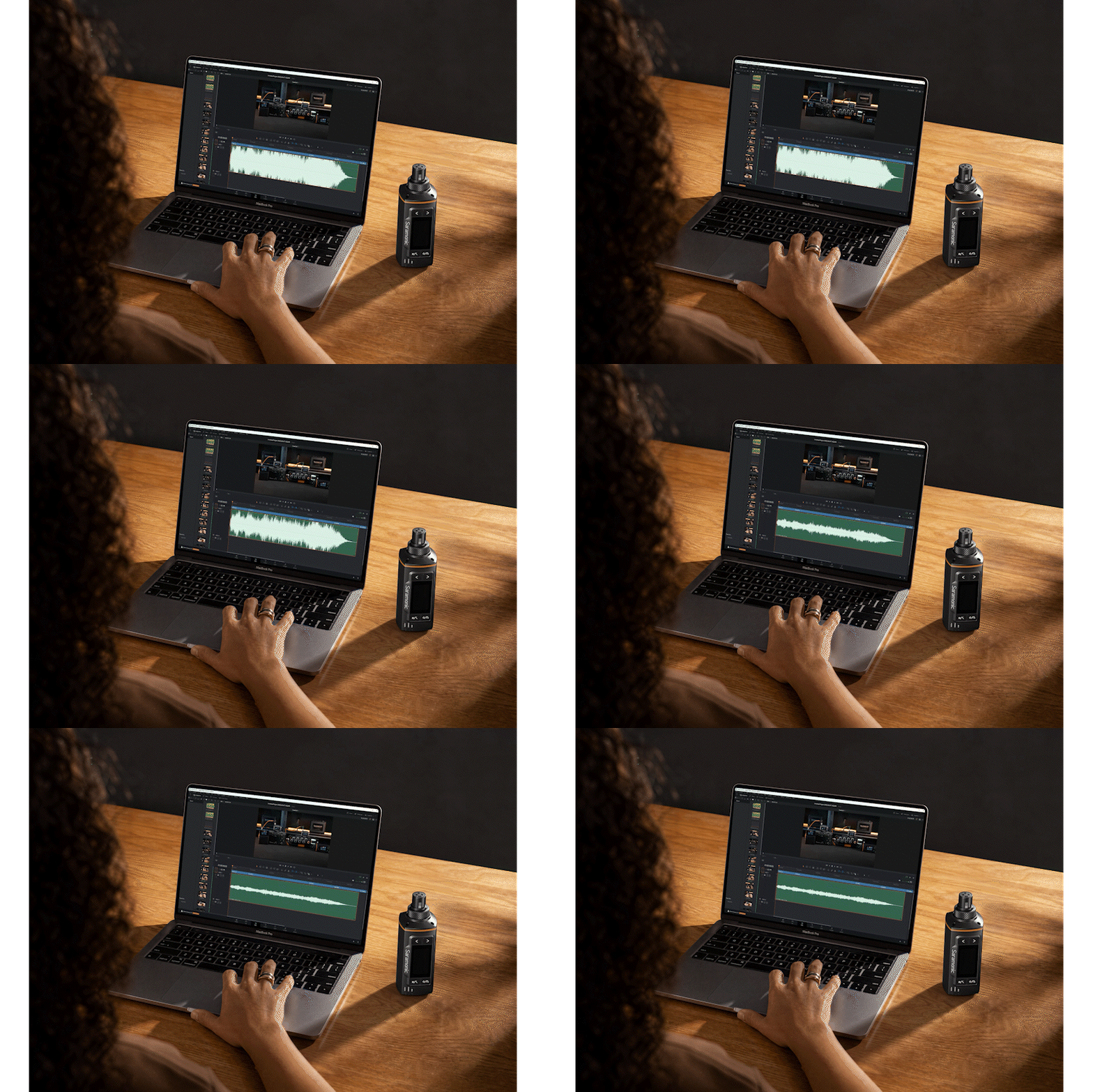
- Import the original 32-bit float WAV file into compatible editing software such as Adobe Premiere Pro, DaVinci Resolve, Final Cut Pro, or a digital audio workstation (DAW).
- Review the waveform and identify sections that appear overloaded.
- Reduce clip gain or input gain rather than applying heavy limiting or distortion repair.
- Listen carefully to confirm that the waveform returns to a clean, natural shape.
- Continue editing and mixing as you would with any other production audio.
The process is often surprisingly simple. What initially looks like a clipped waveform may recover cleanly after reducing gain because the recording preserved considerably more information than a traditional fixed-point file.
It is important to remember, however, that recovery has practical limits. If the microphone capsule itself distorted because the sound pressure exceeded its physical capabilities, or if the analog circuitry clipped before the signal reached the recorder, that distortion cannot be reversed by any recording format.
For that reason, 32-bit float recording should be viewed as an additional safeguard rather than a replacement for proper microphone selection, placement, monitoring, and gain staging.
Common Misconceptions About 32-bit Float Recording
| Myth | Reality |
|---|---|
| 32-bit float recording makes audio impossible to clip. | It greatly improves recoverability, but microphone capsules and analog circuitry can still overload. |
| You never need to adjust recording gain. | Good gain staging still improves monitoring, workflow, and overall recording quality. |
| 32-bit float improves wireless transmission reliability. | It protects recorded audio, not the RF link between the transmitter and receiver. |
| Only beginners benefit from 32-bit float recording. | Many experienced location sound professionals use it to reduce production risk during unpredictable shoots. |
| 32-bit float replaces good microphone technique. | Proper microphone selection, placement, and monitoring remain essential for professional results. |
When Is a 32-bit Float Plug-on XLR Transmitter Worth It?
A 32-bit float plug-on XLR transmitter is most valuable when recording conditions are unpredictable and important moments cannot be repeated. Rather than improving the inherent sound quality of your microphone, its greatest advantage is reducing the risk of losing critical audio when recording levels change unexpectedly.
| Recording Workflow | Is 32-bit Float Worth It? | Why |
|---|---|---|
| Studio Recording | Usually Optional | Recording levels are predictable, and retakes are generally possible. |
| Podcast & Voice-over | Usually Optional | Input gain can be monitored and adjusted throughout the session. |
| Corporate Interviews | Recommended | Provides additional protection for important presentations and executive interviews. |
| Documentary Filmmaking | Highly Recommended | Emotional moments and unscripted conversations usually cannot be recreated. |
| ENG & Broadcast Journalism | Highly Recommended | Interview subjects and recording levels often change without warning. |
| Wedding Videography | Highly Recommended | Key moments such as vows and speeches only happen once. |
| Live Event Production | Highly Recommended | Performers and audiences can create sudden, unpredictable volume changes. |
| Location Sound Recording | Highly Recommended | Changing microphone distance and dynamic performances make perfect gain staging difficult. |
In these situations, a transmitter such as the Saramonic K9 XTX can serve two related purposes. It sends the XLR microphone signal to the main receiver while creating a local 32-bit float recording for post-production. This gives the production team a separate recording path when capturing interviews, wireless boom audio, live performances, or other moments that may be difficult or impossible to repeat.
The onboard file should still be treated as part of a complete production workflow rather than a substitute for monitoring. Crews must continue to select an appropriate microphone, manage its placement and power requirements, monitor the transmitted signal, and confirm that recording has started correctly.
Conclusion
32-bit float recording is a major advancement in modern field recording because it directly addresses one of the biggest challenges in production audio: unpredictable real-world sound levels. By increasing post-production flexibility, 32-bit float recording reduces the impact of unexpected level changes that would otherwise compromise a take. For plug-on XLR transmitters, this is especially important. For productions where audio cannot be recreated, that added reliability can be a decisive advantage.
To learn more about the latest news from Saramonic, join in our official social media: Facebook, Youtube, Instagram, X, Facebook Group.
Frequently Asked Questions
Does 32-bit float recording improve wireless transmission quality?
No. 32-bit float affects how audio is recorded internally, not how audio is transmitted wirelessly between the transmitter and receiver. Wireless range, RF stability, and signal reliability depend on the wireless system itself.
Do I still need to set gain when using 32-bit float recording?
Yes. While 32-bit float recording is more forgiving than traditional recording formats, proper gain staging still helps optimize monitoring, workflow efficiency, and overall recording quality.
Can 32-bit float recording fix a distorted microphone?
No. If a microphone capsule distorts because the sound pressure level exceeds its physical limits, the distortion is captured before the recorder receives the signal. No recording format can restore information that was never captured correctly.
Why is onboard recording important if my wireless system is reliable?
Onboard recording provides an independent backup that remains available if a camera stops recording, a cable becomes disconnected, a receiver loses power, or other workflow issues occur. Many professionals view onboard recording as an additional layer of protection rather than a replacement for wireless transmission.
Is 32-bit float recording only useful for beginners?
No. Although beginners benefit from its forgiveness, many experienced location sound professionals also use 32-bit float recording because it helps reduce production risk in unpredictable recording environments.
Does every plug-on XLR transmitter support 32-bit float recording?
No. Many plug-on transmitters either use traditional recording formats or do not offer onboard recording at all. Support for 32-bit float recording varies between manufacturers and product models.
Can 32-bit float recording replace a dedicated field recorder?
It depends on the workflow. For some productions, onboard 32-bit float recording may provide sufficient backup recording capability. Larger productions may still prefer dedicated field recorders for advanced routing, monitoring, metadata management, and multi-channel recording.
Should I choose a plug-on transmitter with 32-bit float recording?
If your work involves unpredictable audio levels, one-time recordings, or situations where missing audio could jeopardize a project, 32-bit float recording can provide valuable additional protection and flexibility.
Does 32-bit float recording eliminate audio clipping?
No. While 32-bit float recording greatly reduces the risk of unusable digital clipping, it does not make a recording system impossible to overload.
If the microphone capsule exceeds its maximum sound pressure level (Max SPL), or the analog circuitry clips before the signal reaches the recorder, that distortion cannot be recovered. What 32-bit float recording does provide is significantly greater flexibility during post-production, allowing many recordings affected by unexpected level spikes to be recovered by reducing gain.
It should be viewed as an additional safeguard—not a replacement for proper microphone selection, placement, monitoring, and gain staging.