

💡 Key Takeaways
- A mono shotgun microphone records a single-channel signal and is generally used when clear, focused sound from one subject is the priority.
- A stereo shotgun microphone preserves left-to-right spatial information, making it suitable for ambience, field recording, live performances, and scenes where the environment contributes to the story.
- Stereo and directionality are different characteristics. A stereo shotgun microphone can maintain a focused center while also capturing spatial sound.
- M-S stereo microphones separate the primary sound from surrounding spatial information, allowing creators to adjust stereo width or use the Mid signal for a focused mono result.
- Neither format is universally better. The right choice depends on whether the recording needs to emphasize the subject, the environment, or both.
Shotgun microphones are commonly associated with focused, directional sound, but they do not all produce the same type of recording. Some output a single mono signal, while others capture stereo information that preserves the space around the subject. The choice is therefore not simply about which microphone sounds better. It depends on what the listener needs to hear.
Stereo vs. Mono Shotgun Microphone: Key Differences
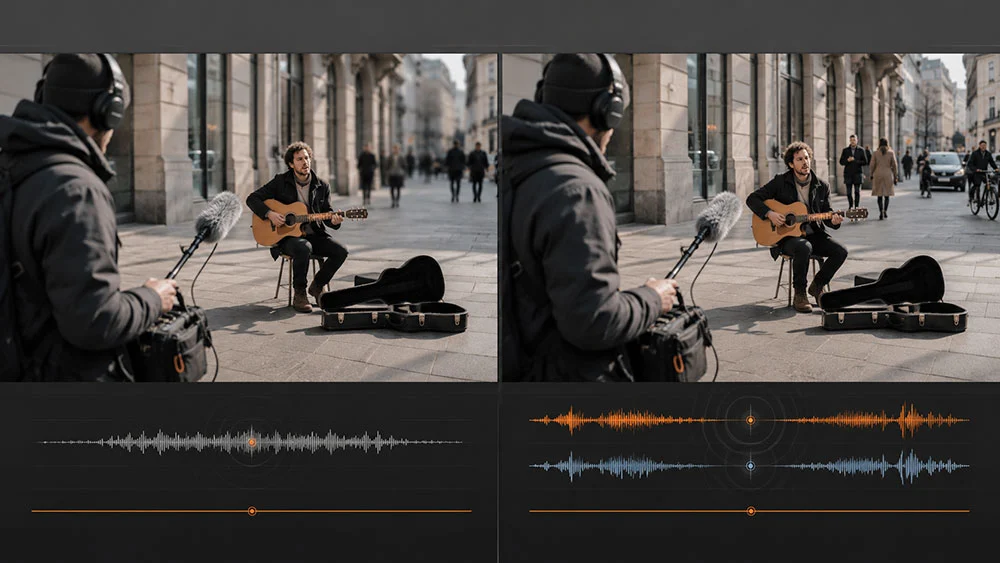
A mono shotgun microphone outputs one channel of audio and is generally used when a clear, focused subject is the priority. A stereo shotgun microphone records two-channel spatial information, preserving left-to-right differences that help listeners perceive the width, direction, and character of a location.
Stereo microphones can use different recording configurations, including X-Y and M-S. Our comparison of M-S and X-Y stereo recording explains how these techniques differ in stereo imaging, workflow, and post-production flexibility.
| Feature | Mono Shotgun Microphone | Stereo Shotgun Microphone |
|---|---|---|
| Output | One-channel signal | Two-channel stereo signal |
| Main purpose | Focused subject capture | Subject and spatial environment |
| Left-to-right information | Not preserved independently | Preserved across stereo channels |
| Dialogue recording | Usually well suited | Depends on the design and mode |
| Ambience recording | Limited spatial representation | Captures width and direction |
| Post-production | Generally simpler | May require stereo balancing or decoding |
| Typical applications | Dialogue, interviews, boom recording, and ENG | Ambience, documentaries, live performances, and field recording |
| Listener experience | Focused and centered | Wider and more immersive |
When Should You Choose a Mono or Stereo Shotgun Microphone?
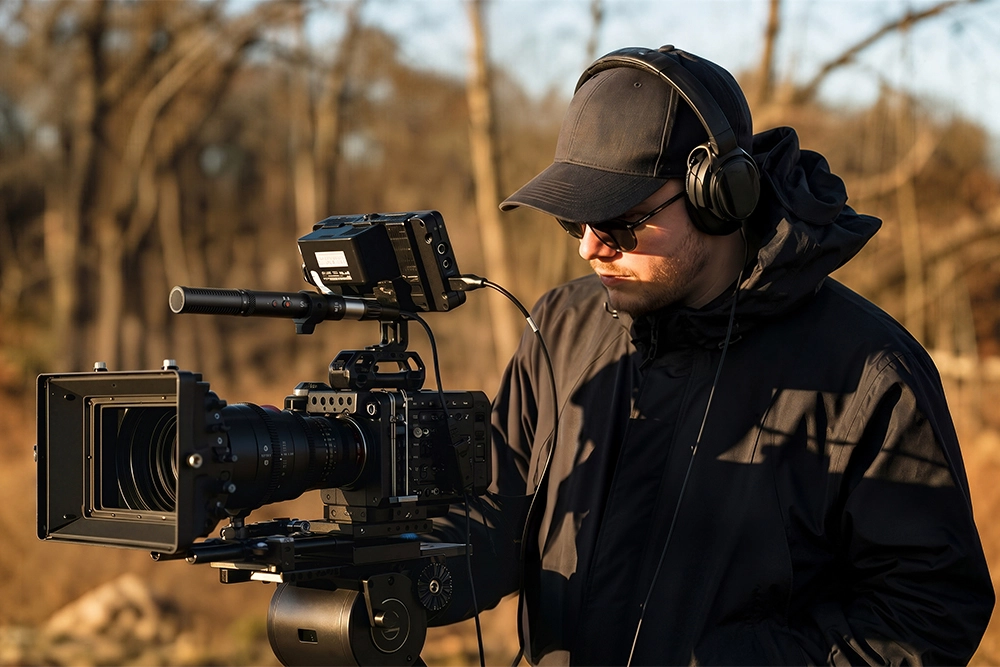
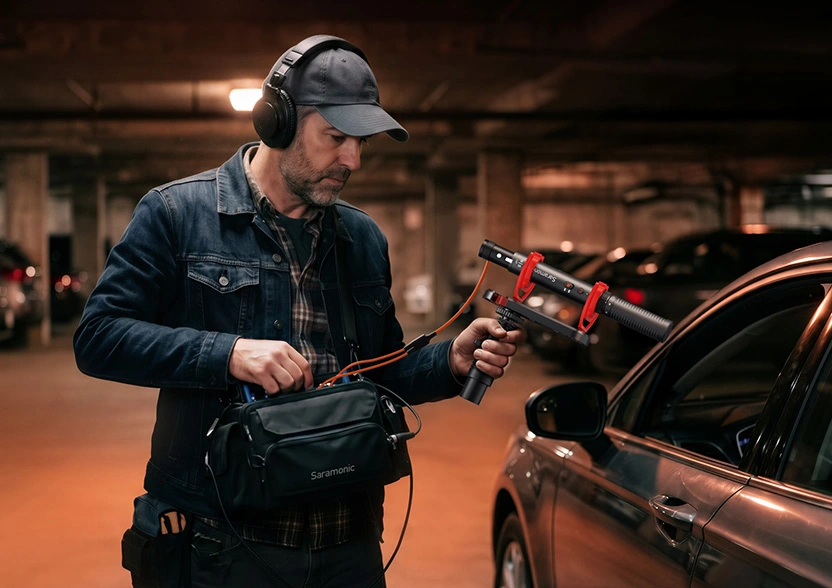
A mono shotgun microphone is generally the better choice when one sound source should remain clear and separate from its environment. This makes mono practical for dialogue, interviews, boom recording, voice-over, and other productions where a focused, easy-to-edit track is the priority.
A stereo shotgun microphone is more useful when the environment carries meaningful spatial or narrative information. It can preserve the width, direction, and movement of locations such as city streets, natural landscapes, live performances, and sporting events.
| Recording Scenario | Recommended Format | Why |
|---|---|---|
| Controlled film dialogue | Mono | Produces a focused, editable voice track |
| Single-person interview | Mono | Keeps attention on the speaker |
| Documentary interview on location | Mono dialogue with separate stereo ambience, or M-S stereo | Use separate tracks for maximum control, or M-S when the subject and location need to be captured together |
| Room tone for dialogue editing | Match the dialogue recording format, often mono | Maintains consistency with the production dialogue track |
| Environmental ambience | Stereo | Preserves the width and spatial character of the location |
| Nature soundscape | Stereo | Captures direction, depth, and movement |
| Sound-effects library | Stereo or M-S | Provides spatial information for sound design |
| Live music | Stereo | Reproduces stage placement and room acoustics |
| News gathering | Mono or decoded stereo | Depends on whether speech focus or location atmosphere is more important |
| Wide establishing shot | Stereo | Supports the scale and movement of the image |
| Voice-over | Mono | Spatial information is usually unnecessary |
| Run-and-gun filmmaking | M-S stereo | Captures focused and spatial information in one setup |
These recommendations are not strict rules. A mono dialogue recording can be combined with separately recorded stereo ambience, while a stereo recording can be narrowed when a more focused result is required.
Does the environment need to be experienced as part of the scene, or does it only need to sit behind the subject?
If the environment is incidental, mono may be enough. If it helps explain the location or support the story, stereo is usually more valuable.
Can an M-S Stereo Shotgun Microphone Record Both Stereo and Mono?
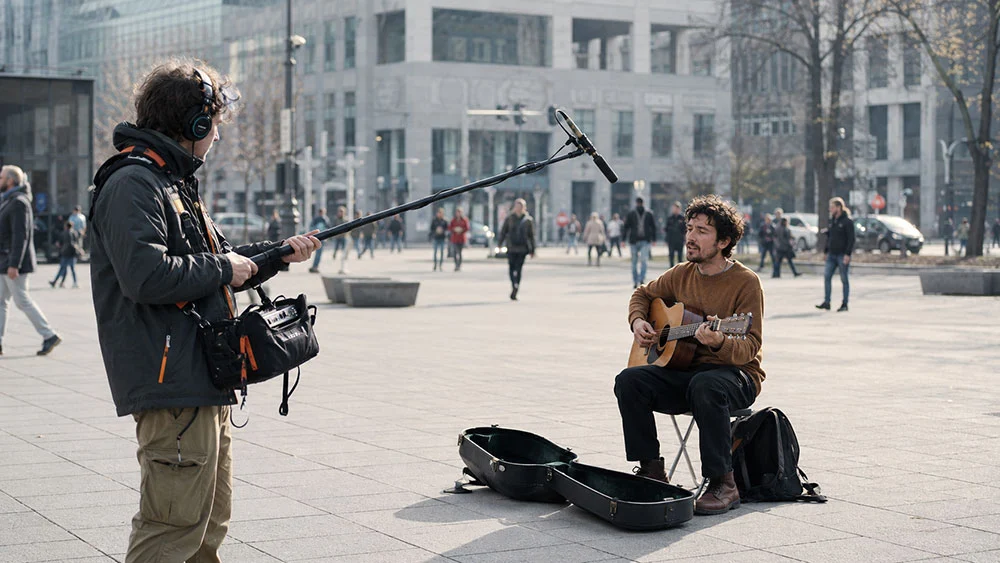
An M-S stereo microphone uses a Mid capsule to capture the primary sound source and a Side capsule to capture spatial information from both sides.
Unlike conventional left/right stereo recording, these components remain separate until they are decoded into a stereo image. If you are new to this method, our guide to how M-S stereo microphones work explains the capsule configuration, decoding process, stereo-width control, and mono compatibility in more detail.
Properly decoded M-S recordings have strong mono compatibility. When the left and right channels are combined, the opposing Side components cancel while the Mid signal remains.
This makes M-S useful for productions that want immersive stereo while retaining a clear center and reliable mono playback.
How Does the Saramonic SG MS1 Support Both Stereo and Mono Workflows?
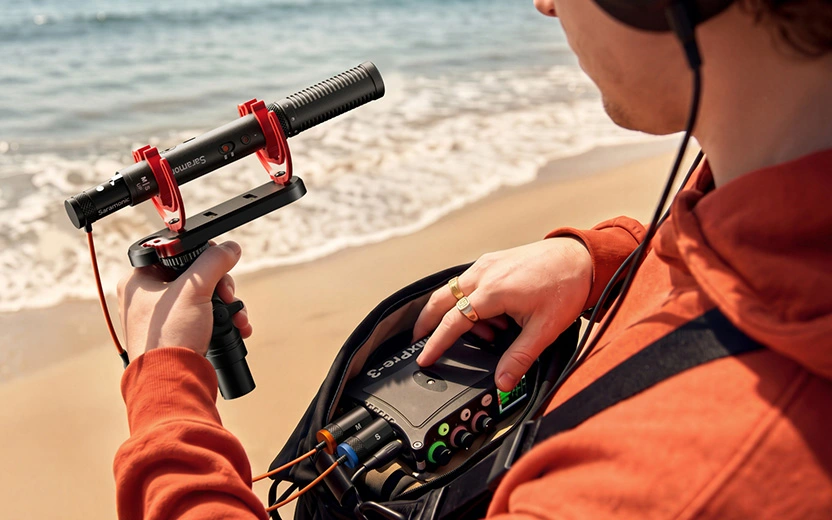
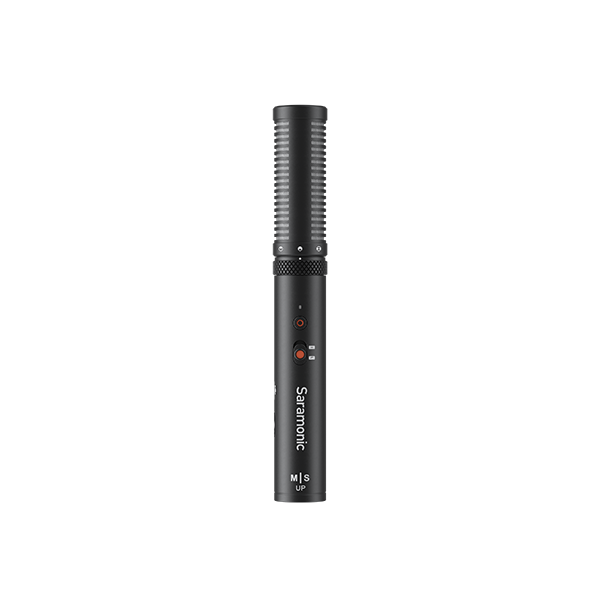
The Saramonic SG MS1 M-S stereo shotgun microphone is an ultra-compact and lightweight stereo condenser microphone designed to capture focused center detail and natural surrounding ambience.
Its cardioid Mid capsule and Figure-8 Side capsule work together to produce coherent stereo sound while preserving control over the relationship between the primary subject and the surrounding acoustic space. The microphone provides three selectable output modes for different recording needs:
- M/S Mono: Allows users to choose either cardioid or bi-directional mono recording. Cardioid mono is recommended for dialogue, vlogging, and focused sound sources, while bi-directional mono is suitable for two-person interviews when the participants are positioned on opposite sides of the microphone, as well as sound-effects recording for film or gaming.
- Raw M-S: Records unprocessed Mid and Side signals through the XLR output. This mode is suitable for music, ambience, and field recording when maximum control over stereo width is required during post-production.
- Decoded L/R: Converts the Mid and Side signals into standard left and right stereo channels in real time. It is suitable for television production, news gathering, broadcasting, and other workflows that require natural stereo sound with minimal post-production.
The SG MS1 also allows users to adjust stereo width, gain, and output mode through the Saramonic System App while monitoring real-time audio levels. Its selectable modes and app-based controls make it suitable for documentary filmmaking, independent productions, live performances, field recording, sound effects, soundscape recording, and outdoor content.
Choosing the right output mode is only part of the recording process. Microphone placement, distance, and the balance between the subject and surrounding ambience also affect the final result. For practical recommendations, see our guide on how to use an M-S stereo microphone in dialogue, music, ambience, and field-recording workflows.
Conclusion: Should You Choose Stereo or Mono?
Choose a mono shotgun microphone when the priority is a clear, focused, and easy-to-edit recording of one primary subject. It is generally the more practical option for dialogue, interviews, boom recording, voice-focused video, and productions that capture ambience separately.
Choose a stereo shotgun microphone when the surrounding environment is part of the story. Stereo is better suited to ambience, documentaries, live performances, sound effects, nature, and scenes where width and movement should be preserved.
If your work regularly requires both, an M-S stereo shotgun microphone provides a flexible option. It can preserve a focused center while capturing adjustable spatial information, allowing the recording to support mono, ready-to-use stereo, or post-production-focused workflows.
Frequently Asked Questions
Is a Stereo Shotgun Microphone Better Than a Mono Shotgun Microphone?
Not universally. Stereo is more suitable when spatial information and environmental realism matter. Mono is usually more practical when the goal is focused dialogue or a single isolated subject.
Are All Shotgun Microphones Mono?
No. Many conventional shotgun microphones output a mono signal, but stereo shotgun microphones also exist. They use multiple capsules or configurations such as M-S to capture spatial information.
Is Mono or Stereo Better for Field Recording?
Stereo is often more useful for field recording because it preserves direction, width, and movement within the environment. Mono may still be preferable when the goal is to isolate one specific sound source.
Can Stereo Audio Be Converted to Mono?
Yes, but the phase relationship between the channels should be checked. Properly decoded M-S recordings generally have strong mono compatibility because the Side components cancel while the Mid signal remains.