


💡 Key Takeaways
- A plug-on transmitter becomes part of the microphone's power path. Depending on its design, it may generate regulated 48V phantom power, pass existing power through the system, or disable power entirely for microphones that do not require it.
- Most professional shotgun microphones require stable 48V phantom power, which only certain plug-on transmitters can generate and maintain.
- Compatibility depends on the entire signal chain: microphone power requirement → transmitter power capability → power stability under real-world load.
- Many “no sound” problems are caused by phantom power issues rather than wireless RF failure.
- Battery life, heat generation, and voltage stability all affect real-world phantom power performance.
- Understanding phantom power compatibility before purchasing equipment can prevent costly recording failures in the field.
What Does It Mean When a Plug-On Transmitter “Powers” a Shotgun Microphone?
A plug-on transmitter functions as an active component of the audio setup rather than a passive XLR adapter, meaning it directly impacts both power delivery and signal integrity. When paired with a condenser shotgun microphone, the transmitter must supply the electrical power needed for the microphone's internal electronics while simultaneously converting the audio signal into a wireless transmission.
Depending on its design, a plug-on transmitter may:
- Generate regulated 48V phantom power
- Supply lower-voltage bias power
- Pass externally supplied power where the system architecture allows
- Disable power entirely for dynamic microphones
This is why compatibility cannot be determined by connector type alone. Two devices may share the same XLR connector but still be electrically incompatible.
For a broader overview of how these systems work, see What Is a Plug-On XLR Transmitter.

How Does a Plug-On Transmitter Generate 48V Phantom Power?
Most wireless transmitters operate on relatively low-voltage batteries. However, professional condenser microphones require 48V phantom power. To bridge this gap, professional plug-on transmitters use an internal DC-to-DC boost converter that steps the battery voltage up to a regulated 48V phantom power supply.
The simplified power path looks like this:
Battery → DC-DC Converter → Regulated 48V Phantom Power → Microphone
The stability and efficiency of this conversion process directly affect microphone performance, operating time, and overall system reliability. A poorly regulated power supply can introduce instability, reduce sensitivity, increase noise, or shorten operating time. This is one reason professional plug-on transmitters typically cost more than entry-level wireless solutions.
What Is 48V Phantom Power and Why Do Shotgun Microphones Depend on It?
48V phantom power (P48) is the internationally standardized method of delivering DC power to professional condenser microphones through balanced XLR connections while carrying audio over the same cable.
Shotgun microphones depend on phantom power for several critical functions:
- Polarizing the condenser capsule
- Powering internal preamplifier circuits
- Maintaining consistent sensitivity
- Preserving low self-noise performance
- Supporting wide dynamic range operation
Without stable phantom power, microphone performance may degrade significantly or fail altogether.

Compatibility Matrix: How Microphones and Plug-On Transmitters Interact
Microphone Types
Pure 48V Condenser Microphones
- Require full phantom power
- Will not operate correctly without 48V support
- Common in professional shotgun microphones
Dual-Powered Microphones
- Can operate using either internal batteries or phantom power
- Offer greater flexibility in field production
- Phantom power often helps preserve internal battery life
Low-Voltage / Electret Microphones
- Operate on lower-voltage bias power
- Common in compact video and lavalier microphones
- Usually require adapters or dedicated interfaces
Dynamic Microphones
- Do not require external power
- Frequently used in handheld interview applications
- Compatible with virtually all plug-on transmitters because they do not require phantom power
Plug-On Transmitter Types
Professional-Grade Transmitters
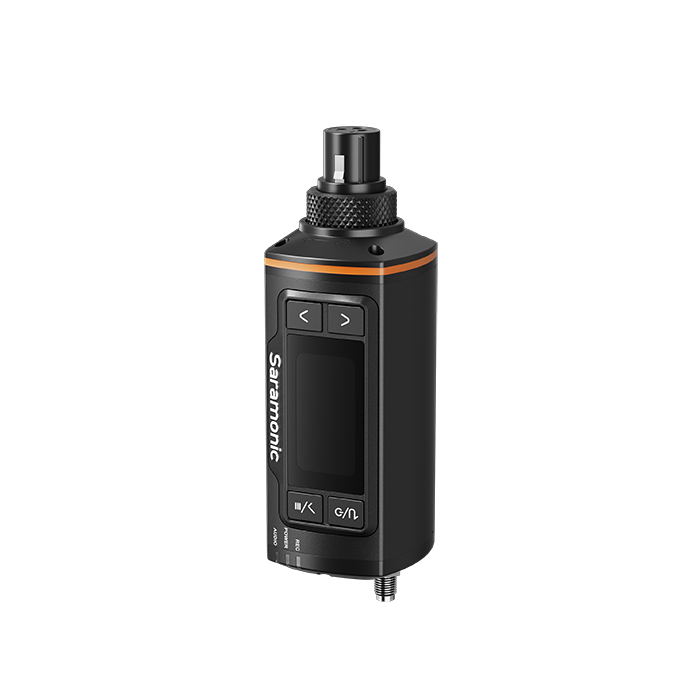
Professional plug-on transmitters are designed for film, broadcast, ENG, and location sound workflows. Depending on the model, they may provide regulated 48V phantom power or multiple selectable microphone-power levels for use with different XLR microphones.
For example, the Saramonic K9 XTX wireless XLR transmitter provides selectable 3V, 5V, 12V, 24V, and 48V power and can also disable microphone power for dynamic microphones and line-level sources. This gives crews greater flexibility, but the selected setting must still match the connected microphone’s official requirements.
Entry-Level Transmitters
- Typically do not generate 48V phantom power and therefore cannot operate most professional shotgun microphones directly
- Intended for dynamic microphones or self-powered condensers
- May not support professional shotgun microphones
Quick Compatibility Reference
The table below provides a quick way to determine whether a microphone can typically be used with a plug-on transmitter. Always confirm your microphone's power requirements and the transmitter's phantom power specifications before deployment.
| Microphone Type | Requires 48V Phantom Power? | Compatible with Any Plug-On Transmitter? |
|---|---|---|
| Professional Condenser Shotgun Microphone | Yes | No. Requires a transmitter with regulated 48V phantom power. |
| Dual-Powered Shotgun Microphone | Optional (Can also use an internal battery) | Usually yes when powered by its internal battery. Phantom power is recommended when available. |
| Electret / Bias-Powered Microphone | No | Depends on the adapter or interface being used. |
| Dynamic Microphone | No | Yes. Compatible with virtually all plug-on transmitters because no phantom power is required. |

Real-World Workflow Scenarios
Documentary and ENG Boom Pole Recording
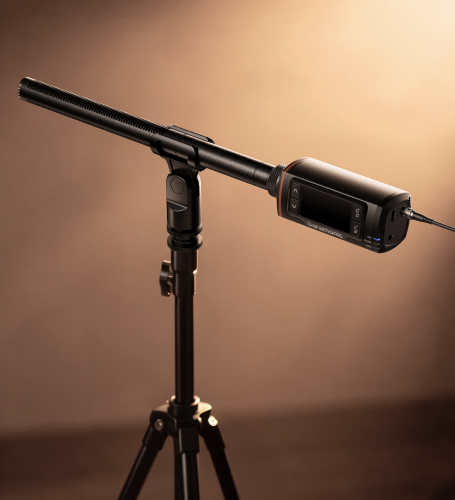
A shotgun microphone mounted on a boom pole is connected to a plug-on transmitter to eliminate long XLR cable runs.
In this workflow:
- Stable phantom power is critical
- Runtime planning becomes important
- Battery management directly affects recording reliability
For documentary crews, stable phantom power is often just as important as wireless range because microphone performance depends on both.
A professional implementation of this workflow can involve connecting the Saramonic K9 XTX digital UHF plug-on transmitter directly to a boom-mounted XLR shotgun microphone. Crews can select the microphone-power setting required by the specific mic, transmit the signal through the K9 wireless system, and create a local 32-bit float recording with timecode support for an additional production safeguard.
This does not remove the need to verify microphone compatibility, monitor the audio, or manage batteries. It does, however, combine microphone powering, wireless transmission, onboard recording, and synchronization within the same boom workflow.
Run-and-Gun Camera Setups
Compact shotgun microphones are frequently used on cameras for fast-moving productions.
In these situations:
- Lightweight equipment is prioritized
- Phantom power demands remain significant
- Battery consumption becomes a major operational consideration
Step-by-Step Compatibility Check (Decision Framework)
Step 1: Identify Microphone Power Requirements
Review the microphone specifications and determine whether it requires:
- 48V phantom power
- Dual-power operation
- Low-voltage bias power
- No external power
Step 2: Verify the Transmitter’s Microphone-Power Options
Review the transmitter specifications and compare them directly with the microphone manufacturer’s stated requirements. Check for:
- The required phantom-power or microphone-power voltage
- Whether the power setting is selectable or fixed
- Whether microphone power can be disabled
- Runtime with the required power setting enabled
- Support for mic-level and line-level input sources
Some transmitters only provide fixed 48V phantom power, while models such as the Saramonic K9 XTX offer several selectable power levels. More options can improve compatibility, but they do not eliminate the need to choose the correct setting.
Step 3: Evaluate Real-World Power Performance
Consider:
- Battery life under load
- Voltage stability
- Thermal performance
- Runtime reduction with phantom power enabled
Specifications alone do not guarantee reliable field performance.
What Happens When Compatibility Is Wrong?
Compatibility failures typically produce predictable symptoms, even when the wireless connection itself appears to be functioning normally. Common issues include:
- No audio despite an active RF connection
- Extremely weak microphone output
- Increased noise floor
- Intermittent signal loss
- Sudden audio degradation as the transmitter battery drains
Because the RF link may remain active, these symptoms are often mistaken for wireless interference. In many cases, however, the underlying cause is a microphone power or compatibility issue rather than an RF transmission problem. If you're already troubleshooting one of these symptoms, see our complete guide: 7 Common Wireless XLR Transmitter Problems and Fixes.
Why Plug-On Transmitters and Shotgun Mics Must Be Treated as a System
A plug-on transmitter and shotgun microphone form a single integrated recording system.
The microphone depends on the transmitter for power, while the transmitter depends on the microphone load characteristics to maintain stable operation.
As a result:
- Electrical compatibility determines functionality
- Power stability determines reliability
- RF transmission only matters after audio integrity is established
For a workflow-focused comparison between wireless transmitter styles, see Plug-On vs Bodypack Transmitter.
Conclusion
A plug-on transmitter can successfully power a shotgun microphone only when its phantom power capability matches the microphone's electrical requirements. In practice, reliable operation depends less on wireless transmission than on maintaining stable, properly regulated phantom power throughout the recording session.
Understanding microphone power requirements, transmitter capabilities, and real-world operating conditions makes it much easier to build a dependable wireless XLR system and avoid common compatibility issues before they affect a production.
To learn more about the latest news from Saramonic, join in our official social media: Facebook, Youtube, Instagram, X, Facebook Group.
Frequently Asked Questions
Can a plug-on transmitter power a shotgun microphone?
Yes, when the transmitter supplies the voltage and powering method required by the microphone. Many professional condenser shotgun microphones use 48V phantom power, but requirements vary, so always check both product specifications before connecting them.
Why is my shotgun microphone not working with a plug-on transmitter?
The most common cause is phantom power incompatibility rather than RF failure.
Can phantom power damage a microphone?
Properly supplied phantom power is generally safe for compatible condenser microphones and most modern balanced dynamic microphones. However, certain vintage, unbalanced, incorrectly wired, or ribbon microphones may be vulnerable. Always consult the manufacturer’s documentation before enabling it.
Can phantom power damage a ribbon microphone?
Most modern ribbon microphones include protection circuitry, but some vintage or unbalanced ribbon microphones may be vulnerable. Always consult the manufacturer's documentation before enabling phantom power.
Does phantom power reduce battery life?
Yes. Enabling phantom power substantially increases power consumption and typically reduces operating time.