

💡 Key Takeaways
- Core Connection: A plug-on transmitter connects directly to an XLR microphone, while a bodypack transmitter is designed for lavalier, headset, or instrument microphones through a dedicated cable.
- Best for Plug-On: Run-and-gun street interviews, ENG reporting, and wireless boom microphone setups.
- Best for Bodypack: Weddings, corporate presentations, live events, and any hands-free recording scenario.
- Audio Quality Fact: Audio quality depends more on the microphone capsule and underlying wireless transmission technology than on the transmitter's physical form factor.
- The Hybrid Approach: Many professional wireless microphone ecosystems support both plug-on and bodypack transmitters simultaneously for maximum on-set flexibility.
Switching from a wired to a wireless audio setup is one of the most liberating upgrades you can make for your video production. However, as you begin exploring professional wireless microphone systems, you will inevitably face a crucial hardware crossroads: Should you choose a plug-on transmitter or a bodypack transmitter?
While both devices serve the exact same core purpose—capturing audio from a microphone and transmitting it wirelessly to your camera or recorder—their designs, compatible microphones, and operational workflows are fundamentally different. Choosing the wrong transmitter can create unnecessary workflow challenges, while choosing the right one can make recording faster, simpler, and more reliable.
In this wireless microphone system comparison, we'll compare plug-on and bodypack transmitters, explain the key differences, and help you determine which option is best for your specific recording needs.

Plug-On vs Bodypack: What's the Difference?
A plug-on transmitter and a bodypack transmitter are engineered for completely different types of microphones and production environments.
- A Plug-On Transmitter attaches directly to the 3-pin XLR output of a microphone, instantly turning an analog wired microphone into a wireless powerhouse. It is commonly paired with handheld interview microphones or directional shotgun microphones. Most professional models also provide built-in +48V phantom power to drive condenser mics. (If you're completely new to this gear, check out our deep-dive guide: What Is a Plug-On XLR Transmitter and Who Needs One?)
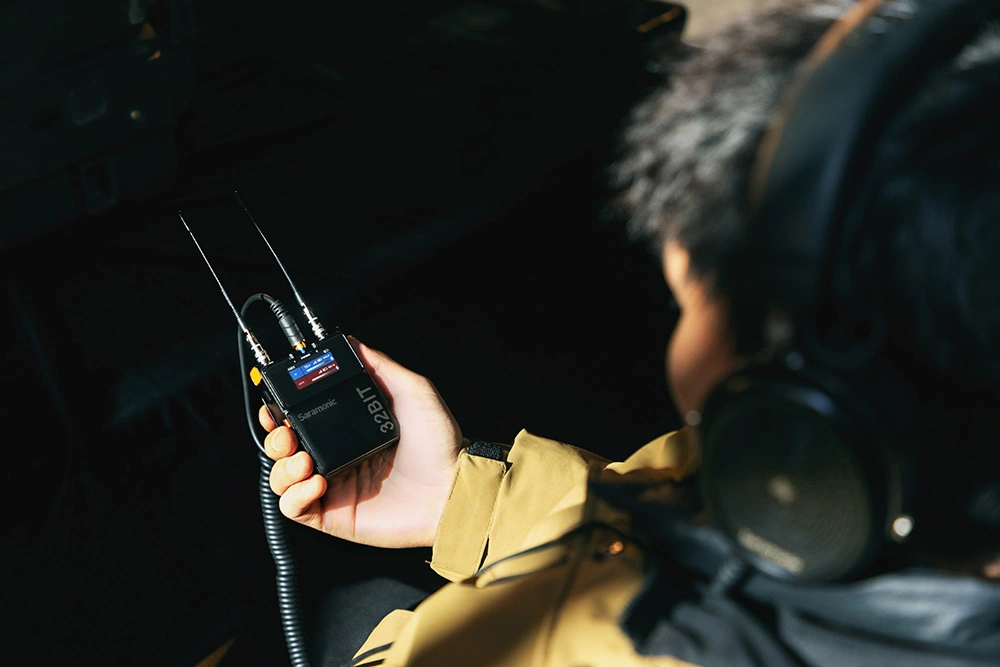
- A Bodypack Transmitter, by contrast, is a compact, lightweight unit that connects to a lavalier (lapel) mic, a headset mic, or an instrument pickup via a short cable. The talent typically wears it on a belt or slips it into a pocket, keeping it completely out of sight.
The following table highlights the essential technical and practical differences between these two transmitter types:
| Feature | Plug-On Transmitter | Bodypack Transmitter |
|---|---|---|
| Typical Microphones | Handheld Mics, Shotgun Mics, Condenser Mics | Lavalier Mics, Headset Mics, Instrument Pickups |
| Hands-Free Operation | No (Requires holding the mic or using a stand) | Yes (100% hands-free) |
| Hidden Microphone Setup | Limited (The unit and mic are highly visible) | Excellent (Easily concealed under clothing) |
| Phantom Power Support | Often Available (+48V) | Rare (Typically offers low 2-5V bias voltage) |
| Battery Life | Good (Shorter if +48V phantom power is on) | Often Longer (Lavalier mics drain very little power) |
| Best For Interviews & ENG | Excellent | Good |
| Best For Weddings & Live Events | Fair | Excellent |
Neither option is inherently better than the other. The right choice depends heavily on the microphones you already own, the environments you record in, and the workflow you prefer.

Which Microphones Are Compatible with Plug-On and Bodypack Transmitters?
Different transmitter types are designed for different categories of microphones. In many cases, the microphones you already own will determine which transmitter type makes the most sense.
Plug-on transmitters work best with:
- Handheld Interview Mics: Dynamic reporter microphones designed for rugged field use.
- Shotgun Microphones: Directional microphones used on boom poles or camera rigs to capture dialogue from a distance.
- Studio Condenser Microphones: High-end microphones that require a steady +48V power source to operate.
Bodypack transmitters work best with:
- Lavalier Microphones: Ultra-small lapel mics that clip onto ties, shirts, or collars for discrete dialogue recording.
- Headset/Earset Microphones: High-isolation mics commonly worn by fitness instructors, stage actors, and public speakers.
- Instrument Pickups: Output cables from acoustic-electric guitars, basses, or electronic instruments for wireless stage performances.
Which Is Better for Interviews, Weddings, and Documentary Production?
When you're out in the field, operational efficiency matters just as much as pure audio specs. Let’s look at how these transmitters perform across different real-world production genres.
Interviews and ENG Reporting
The Winner: Plug-On Transmitter
Why: For fast-paced field journalism and Electronic News Gathering (ENG), speed is everything. Shoving a lavalier mic onto a random passerby on the street is awkward and time-consuming. Slapping a plug-on transmitter onto a rugged dynamic microphone allows a reporter to step out of the news van and start interviewing in seconds. It remains one of the most efficient wireless interview setups available for press conferences, red carpets, and impromptu street interviews.

Weddings and Live Events
The Winner: Bodypack Transmitter
Why: Weddings and live corporate events require absolute discretion and hands-free mobility. You cannot hand a giant handheld microphone to a groom standing at the altar or a CEO presenting slides on stage. A bodypack transmitter combined with a tiny lavalier microphone can be hidden seamlessly inside a suit jacket or clipped onto wardrobe elements, keeping the focus entirely on the speaker while maintaining a clean appearance on camera.
Documentary Production
The Winner: Both (A Hybrid Setup)
Why: Documentary filmmakers rarely shoot the same way twice. For spontaneous, run-and-gun street interviews, a plug-on transmitter on a handheld mic allows the crew to capture conversations instantly. However, for deep, character-driven storytelling or long-form sit-down interviews, a bodypack transmitter with a hidden lavalier is essential for capturing natural, uninterrupted human emotion. Many professional documentary crews carry both systems because different scenes require different recording approaches.
Wireless Boom Pole Setups
Plug-On Transmitter Advantage. If your production involves using a shotgun microphone on a boom pole, a plug-on transmitter can significantly improve mobility and simplify cable management.
By attaching a plug-on transmitter directly to a shotgun microphone, filmmakers can eliminate long XLR cable runs and give boom operators greater freedom of movement. This approach is especially popular in documentary filmmaking, commercial production, and small film crews that need a flexible wireless boom microphone setup.
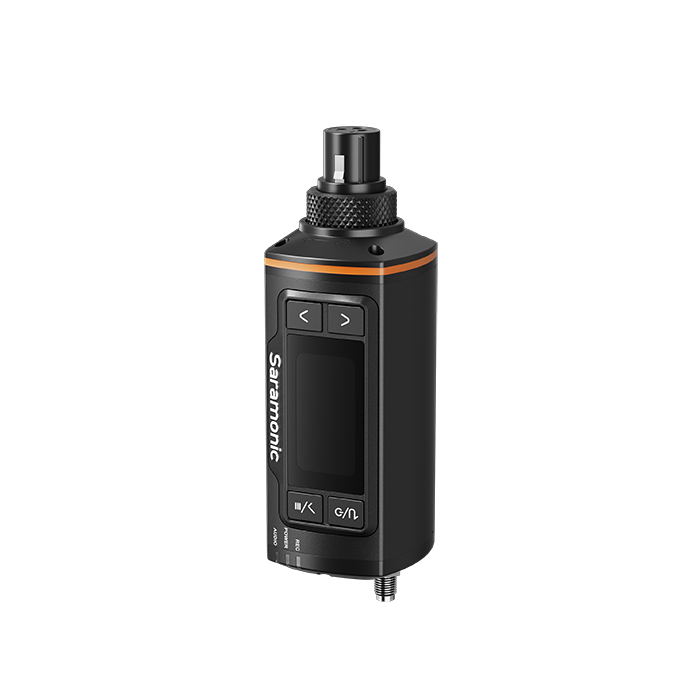
For professional productions that also require reliable digital UHF transmission and an independent recording backup, the Saramonic K9 XTX wireless XLR transmitter can be connected directly to a shotgun microphone at the end of a boom pole. In addition to eliminating long cable runs, it provides adaptive phantom power, 32-bit float onboard recording, and timecode synchronization for more dependable location sound workflows.
When Should You Choose a Plug-On or Bodypack Transmitter?
Choosing between a plug-on transmitter and a bodypack transmitter becomes much easier when you focus on your specific recording requirements.
Choose a Plug-On Transmitter If You:
- Use handheld interview microphones regularly.
- Want to create a lightweight, wireless boom microphone setup.
- Own a collection of professional, high-end wired XLR microphones.
- Use shotgun microphones regularly for film or commercial shoots.
- Need steady +48V phantom power for studio condenser microphones.
Choose a Bodypack Transmitter If You:
- Use lavalier or headset microphones for your content.
- Record weddings, stage performances, or live corporate events.
- Need completely hidden microphone placement for narrative looks.
- Require 100% hands-free operation so your talent can move or gesture freely.
- Record talent for extended periods where heavy gear would cause fatigue.
Can You Use Both in the Same Wireless Microphone System?
Yes, provided the transmitters and receiver belong to a compatible wireless ecosystem.
In professional film, documentary, broadcast, and multi-camera production, relying on only one transmitter type can limit how the crew captures different sources. A bodypack transmitter may be the best option for a concealed lavalier microphone, while a plug-on transmitter is better suited to handheld XLR microphones and wireless boom setups.
The Saramonic K9 system supports this type of hybrid workflow. Crews can use the standard K9 TX bodypack transmitter for lavalier-based dialogue and add the Saramonic K9 XTX digital UHF plug-on transmitter when they need to wirelessly connect a professional handheld, shotgun, or condenser XLR microphone.
For example, during a documentary interview, one channel can receive a concealed lavalier microphone through a K9 bodypack transmitter, while another channel receives a handheld interview microphone or boom-mounted shotgun microphone through the K9 XTX. This allows crews to adapt to different recording situations without changing the core wireless platform or rebuilding the entire audio setup.
Conclusion
Plug-on and bodypack transmitters are designed for different workflows, not different levels of audio quality. The best choice depends on how you record, which microphones you use, and the level of mobility your productions require.
If your production focuses on field interviews, ENG reporting, handheld microphone operations, or wireless boom pole setups, a plug-on transmitter is an indispensable asset for your gear bag. Conversely, if you rely heavily on lavalier microphones, need hidden microphone placement, or regularly record weddings and presentations, a bodypack transmitter remains the practical, industry-standard choice.
Ready to cut the cords on your production set? Explore Saramonic’s professional wireless microphone systems, featuring versatile multi-channel receivers, rugged bodypacks, and broadcast-ready plug-on solutions engineered to elevate your sound to the next level.
To learn more about the latest news from Saramonic, join in our official social media: Facebook, Youtube, Instagram, X, Facebook Group.
Frequently Asked Questions
- Q: Does a plug-on transmitter sound better than a bodypack transmitter?
- A: Not necessarily. Audio quality depends primarily on the microphone capsule itself, gain staging, and the underlying wireless transmission technology (such as UHF vs. 2.4GHz digital encryption), rather than the physical design of the transmitter housing.
- Q: Can a plug-on transmitter power condenser microphones?
- A: Yes, most professional-grade plug-on transmitters feature switchable +48V phantom power specifically to run studio or cinema condenser mics. However, entry-level models might not, so always double-check the specifications before purchasing.
- Q: Which transmitter type is better for documentary filmmaking?
- A: Most documentary crews use both. Plug-on transmitters are ideal for handheld interviews and field reporting, while bodypack transmitters are better suited for long-form character-based storytelling where microphones need to remain discreet.
- Q: Does a plug-on transmitter drain batteries faster when +48V phantom power is on?
- A: Yes. Generating +48V phantom power to run a condenser shotgun microphone requires significantly more electrical energy than transmitting a simple audio signal. If you are using a plug-on transmitter with phantom power engaged, expect your battery runtime to be shorter compared to running a dynamic mic or using a standard bodypack.
- Q: Can I use a plug-on transmitter and a bodypack transmitter together?
- A: Yes. Many professional wireless microphone systems support multiple transmitter types on the same receiver platform, allowing users to combine handheld microphones, lavalier microphones, and boom microphones within a single workflow.