


💡 Key Takeaways
- A plug-on XLR transmitter turns a standard wired microphone into a wireless microphone.
- It connects directly to the microphone's XLR output and transmits audio wirelessly to a receiver.
- Plug-on transmitters are commonly used with handheld microphones, shotgun microphones, interview microphones, and field-production audio setups.
- They allow professionals to keep using their favorite microphones without replacing them with dedicated wireless versions.
You already own a high-quality handheld microphone or shotgun microphone. You trust its frequency response, its reliability, and the way it flatters your talent's voice. The problem is that every recording or live-production setup requires running long XLR cables.
Cables can slow down setup time, limit movement, and create severe trip hazards on busy sets, crowded trade shows, or event venues.
Instead of replacing your existing professional microphone with a dedicated wireless model, a plug-on XLR transmitter (also known as a wireless XLR transmitter) allows you to add wireless capability to your current microphone in seconds. In this guide, we'll explain what a plug-on transmitter is, how it works, who needs one, and when it's a better choice than other wireless microphone systems.

What Is a Plug-On XLR Transmitter?
A plug-on XLR transmitter is a type of professional wireless audio device designed to convert a wired XLR microphone into a wireless microphone system.
It features a standard 3-pin XLR input connector that attaches directly to compatible microphones. Instead of wearing a bodypack with a lavalier mic, you plug this transmitter directly into the base of a standard wired microphone.
It is most commonly paired with:
- Handheld dynamic microphones
- Shotgun microphones (on or off a boom pole)
- Interview/reporter microphones
- Field recording microphones
The signal chain is a wireless conversion pipeline:
Microphone → Plug-on Transmitter (TX) → Wireless Link → Receiver (RX) → Camera / Mixer / Recorder
How Does It Work?
- Step 1: Connect the hardware. You plug the transmitter directly into the 3-pin XLR output at the bottom of your microphone. It locks firmly into place using a standard collar or latch.
- Step 2: Signal Digitization and Modulation. As you speak into the microphone, the transmitter processes the incoming analog microphone signal and encodes it for wireless transmission using either analog modulation or digital encoding, depending on the system design.
- Step 3: Wireless Transmission. The transmitter sends the encoded RF signal wirelessly through the designated frequency band.
- Step 4: Reception. A matching wireless receiver, mounted on your camera, field recorder, or audio mixer, captures the radio signal.
- Step 5: Output. The receiver converts the RF signal back into clean audio and outputs it via an auxiliary or XLR cable straight into your recording device.
Why Do Professionals Use Plug-On XLR Transmitters?
A plug-on transmitter was created to eliminate cable restrictions while allowing professionals to continue using their existing XLR microphones. The plug-on transmitter solved two massive headaches for audio engineers and videographers.
The Problem with Long XLR Cables
Copper cables are reliable, but they are heavy, bulky, and restrictive. Running 50 to 100 feet of XLR cable through a crowded public space requires gaffer tape, cable ramps, and extra setup time. For a solo videographer or an electronic news gathering (ENG) crew, dragging a physical tether makes tracking a moving subject nearly impossible.

The Problem with Replacing Existing Microphones
Before plug-on units, going wireless meant buying an entirely new, dedicated wireless microphone system (like a wireless-specific handheld mic). For professionals who already invested thousands of dollars into industry-standard microphones like the Shure SM58, Sennheiser MD421, or high-end shotgun mics, buying a whole new system just to lose the wire felt like a waste of resources.
The plug-on transmitter acts as a wireless conversion layer between traditional XLR microphones and modern wireless audio systems. It allows creators to retain their preferred XLR microphone, eliminate physical cabling, and significantly improve mobility without changing their existing audio workflow.
Who Should Use a Plug-On XLR Transmitter?
If your production workflow requires high mobility, fast setup times, and uncompromised audio quality, a plug-on transmitter is an invaluable addition to your gear bag. Here is how different professionals use this tool in the field:
1. Filmmakers & Documentary Creators
The Need: Wireless boom pole operation and high-mobility tracking.
Real-World Application: Imagine a boom operator tracking two actors walking down a busy city sidewalk while the camera is across the street on a telephoto lens. Because the shotgun mic on the boom pole uses a plug-on transmitter, the audio flows perfectly to the camera mixer without a single wire obstructing traffic or requiring a secondary "cable wrangler" backing them up.
2. Journalists & Field Reporters
The Need: Rapid response and quick deployment in unpredictable breaking news environments.
Real-World Application: A reporter walks through a crowded trade show floor or a chaotic press conference. Instead of wasting time untangling and running an XLR cord—which creates a severe trip hazard for the crowd—the reporter steps up to a subject instantly, points a classic interview microphone with a plug-on transmitter attached, and captures pristine audio immediately.
3. Corporate Video Production Crews
The Need: Speed, efficiency, and a clean, professional aesthetic on set.
Real-World Application: When interviewing an executive in a high-end corporate office, time is money. Instead of wasting ten to fifteen minutes running and taping down long, bulky cables along the baseboards to keep the room looking clean, the crew sets up a wireless shotgun mic on a C-stand or a wireless handheld mic in under two minutes.

4. Event Production Teams
The Need: Adapting to last-minute audio adjustments during live events.
Real-World Application: An unexpected guest speaker needs to talk from the back of an auditorium, or a temporary podium mic needs to be set up on the fly. The sound engineer can hand over a trusted wired house microphone retrofitted with a plug-on transmitter, instantly turning it into a professional, roaming wireless system without routing new cables to the main mixer.
5. Audio Equipment Rental Companies
The Need: Maximum equipment flexibility and high return on investment (ROI).
Real-World Application: Rental houses favor plug-on transmitters because of their absolute versatility. Instead of stocking multiple dedicated wireless systems, a single plug-on transmitter kit can be rented out alongside dozens of different microphones in their inventory—adapting to a handheld reporter mic rental in the morning and a premium studio shotgun mic rental in the afternoon.
What Features Should You Look for in a Plug-On Transmitter?
A high-quality plug-on transmitter should provide reliable wireless performance, broad microphone compatibility, and sufficient battery life for professional production workflows.
| Feature | Why It Matters | What to Look For |
|---|---|---|
| Phantom Power | Required for condenser microphones. | Switchable phantom power that matches the microphone's power requirements. |
| Wireless Range | Determines how far you can operate without signal loss. | 150–300 ft (50–100 m) line-of-sight range. |
| Audio Quality | Preserves the microphone's original sound quality. | 24-bit / 48kHz digital audio or better. |
| Battery Life | Affects reliability during long recording sessions. | At least 4–6 hours with phantom power enabled. |
| RF Stability | Reduces interference and signal dropouts. | Digital UHF systems for professional environments. |
A Professional Plug-On Transmitter Example
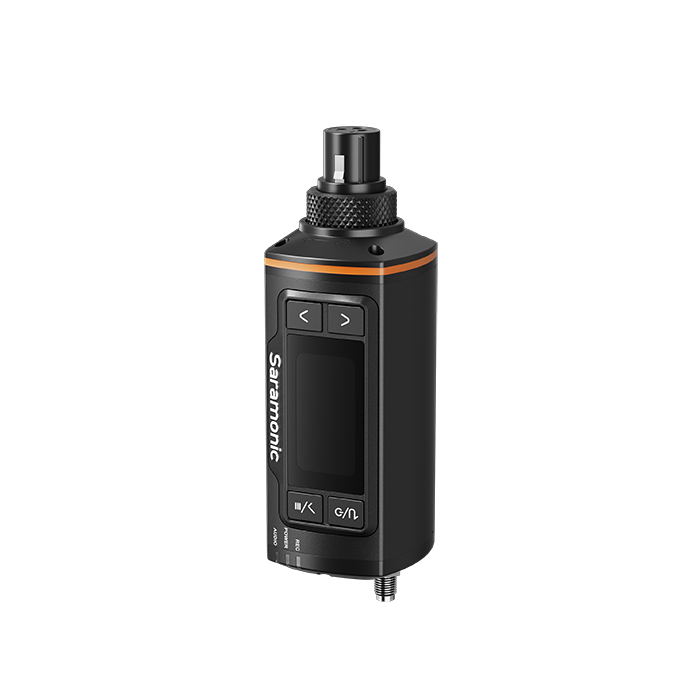
The Saramonic K9 XTX digital UHF wireless XLR transmitter is designed for professional filmmakers, location sound recordists, journalists, and production crews that need more than basic wireless conversion.
It connects directly to standard 3-pin XLR microphones and provides adaptive phantom power from 3V to 48V, allowing it to work with a wide range of dynamic and condenser microphones. As part of the Saramonic K9 system, it also combines digital UHF transmission with 32-bit float onboard recording and timecode synchronization, helping maintain reliable audio and a more efficient post-production workflow in demanding production environments.
Conclusion
A plug-on XLR transmitter is one of the most flexible, cost-effective investments you can make for your professional audio toolkit. Instead of replacing the premium microphones you already trust, it honors your existing gear while granting you absolute wireless freedom.
For filmmakers, field reporters, event production crews, and audio engineers, a high-quality plug-on transmitter provides a practical upgrade that maximizes workflow efficiency on set without sacrificing an ounce of your signature sound quality.
To learn more about the latest news from Saramonic, join in our official social media: Facebook, Youtube, Instagram, X, Facebook Group.
Frequently Asked Questions
Can Any XLR Microphone Work with a Plug-On Transmitter?
Most XLR microphones can work with a plug-on transmitter, including dynamic microphones, shotgun microphones, and many condenser microphones. However, condenser microphones require a transmitter that supports +48V phantom power. Compatibility can also vary depending on the microphone's power and output requirements.
Do plug-on transmitters work with shotgun microphones?
Absolutely. They are a staple configuration for boom pole operators in film and television production to remove physical cabling obstacles on active sets.
Can I turn any XLR microphone into a wireless microphone?
Yes, as long as the microphone uses a standard 3-pin XLR analog output connection. If it is a condenser microphone, you simply need to make sure your plug-on transmitter offers a switchable +48V phantom power option.
What is the difference between a plug-on transmitter and a wireless handheld microphone?
A wireless handheld microphone is a single, unalterable unit with a built-in microphone capsule. A plug-on transmitter is a modular accessory that plugs into any standalone wired XLR microphone you choose.
Are plug-on transmitters good for filmmaking?
Yes. They are widely used in film production for transmitting audio wirelessly from boom microphones directly to the production recorder or camera.